In recent years, advances in dermatological treatments have demonstrated the evolving capabilities of laser technology, particularly in addressing pigmentation disorders like nevus of Ota. This condition, characterized by localized patches of blue or gray skin, can significantly affect the quality of life, leading many individuals to seek effective treatment options. Among the diverse array of dermatological interventions, the utilization of picosecond lasers has gained notable traction due to their precision and effectiveness.
Picosecond lasers represent an innovation in laser technology with the ability to deliver ultra-short pulses of energy to the skin. This rapid delivery mechanism allows for targeted treatment of pigment lesions without causing damage to the surrounding tissues. The mechanism of action hinges on the principle of photomechanical fragmentation, where the laser energy causes micro-explosions within the pigmented cells, effectively breaking them apart and allowing for easier absorption by the body’s natural processes.
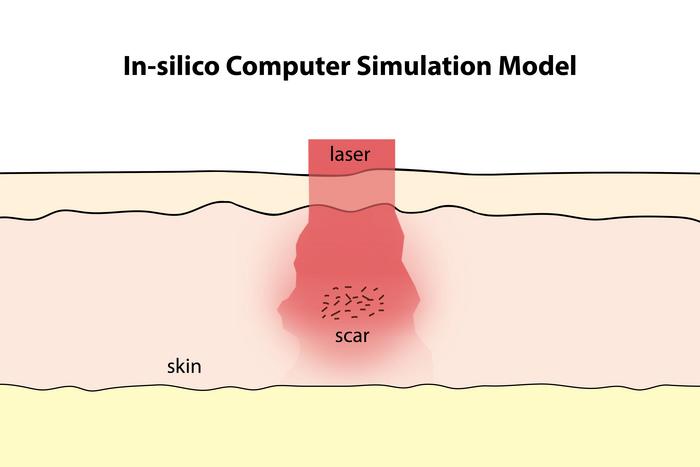
Clinical efficacy is a critical element in evaluating laser treatments, and thus setting appropriate irradiation parameters is paramount. Historically, many studies have reported on the effectiveness of various laser modalities without adequately accounting for the nuances of irradiation techniques. The challenge lies in finding a fine balance in energy delivery; insufficient irradiation may lead to suboptimal results while excessive energy can result in unwanted side effects such as scarring or textural changes in the skin.
.adsslot_yizqnR4KHJ{ width:728px !important; height:90px !important; }
@media (max-width:1199px) { .adsslot_yizqnR4KHJ{ width:468px !important; height:60px !important; } }
@media (max-width:767px) { .adsslot_yizqnR4KHJ{ width:320px !important; height:50px !important; } }
ADVERTISEMENT
To address this void, researchers led by Postdoctoral Fellow Yu Shimojo alongside Professors Toshiyuki Ozawa and Daisuke Tsuruta from Osaka Metropolitan University embarked on a significant project. They established the Excessive Setting Index of Clinical Fluence (EICF), a mathematical model designed to streamline the criteria for effective laser applications in clinical settings. This innovative metric is intended not only to aid practitioners in making informed decisions regarding treatment settings but also to enhance patient safety and treatment outcomes.
The group performed a comprehensive meta-analysis, reviewing existing literature that examined the efficacy of picosecond lasers and nanosecond lasers in treating nevus of Ota. Their analysis provided crucial insights into when and how picosecond laser treatments yield superior results compared to alternative methods. The findings indicate that under well-defined irradiation conditions, picosecond laser treatment exhibits enhanced effectiveness and comparable safety profiles in comparison to traditional nanosecond lasers.
Dr. Shimojo emphasized the significance of this research in providing a scientific framework that elucidates the mechanisms behind treatment outcomes. By understanding the reasons behind both the effectiveness of picosecond treatments and the potential for side effects, clinicians can make better-informed decisions when planning laser treatment protocols.
In practice, implementing the EICF where clinicians evaluate individual parameters according to the standardized framework represents a paradigm shift in how laser treatments could be approached in dermatology. By prioritizing data-driven methodologies over traditional practices, the potential to improve patient outcomes significantly increases as a result of tailored treatment plans.
The validation of picosecond laser efficacy through rigorous analysis underscores the necessity for continual advancements in dermatological research. With technology evolving at a rapid pace, it becomes increasingly crucial for dermatologists and clinicians to stay abreast of innovative techniques and findings that can impact patient care positively.
In conclusion, the collaboration between engineers and medical professionals to create tools such as the EICF reflects an exciting frontier for laser treatments in dermatology. As ongoing research continues to explore these frontiers, potential strategies for enhancing patient care will emerge, ultimately leading to safer and more effective interventions for skin conditions like nevus of Ota.
By publishing these findings in notable journals like JAAD Reviews, the research team not only reinforces the importance of evidence-based practice but also opens the door to further investigations on the interplay between laser parameters and clinical outcomes across a variety of skin conditions.
Continuous exploration in this field promises advancements that could revolutionize dermatological practices, thereby enhancing quality of life for countless individuals. The dedication of researchers to fine-tuning these technologies exemplifies the intersection of science and practical application, paving the way for future innovations that prioritize patient safety and treatment efficacy.
Through the integration of mathematical models, clinical data, and innovative laser technology, researchers are committed to redefining the standards of care in laser treatments for skin pigmentation disorders. The hope remains that as understanding deepens, practices evolve, leading to better health outcomes for patients affected by these conditions.
With ongoing developments, the commitment to refining laser treatment approaches signifies a progressive stride in addressing skin discoloration issues effectively and safely.
Subject of Research: Not applicable
Article Title: Association between irradiation parameters and outcomes for picosecond laser treatment of nevus of Ota: An in-silico-supported meta-analysis
News Publication Date: 20-Jun-2025
Web References: Not applicable
References: Not applicable
Image Credits: Osaka Metropolitan University
Keywords
Picosecond laser, nevus of Ota, dermatology, skin treatment, laser efficacy, irradiation parameters, clinical outcomes, mathematical modeling, plastic surgery, cosmetic surgery.
Tags: advancements in dermatological laser treatmentsclinical efficacy of laser interventionseffectiveness of picosecond lasersin-silico meta-analysis for dermatologyinnovations in skin pigmentation treatmentlaser therapy for skin discolorationminimizing skin damage with laser treatmentsoptimizing irradiation parameters in laser treatmentsphotomechanical fragmentation in laser therapyprecision laser technology for pigmentation disorderstargeted laser therapy for skin lesionstreating nevus of Ota