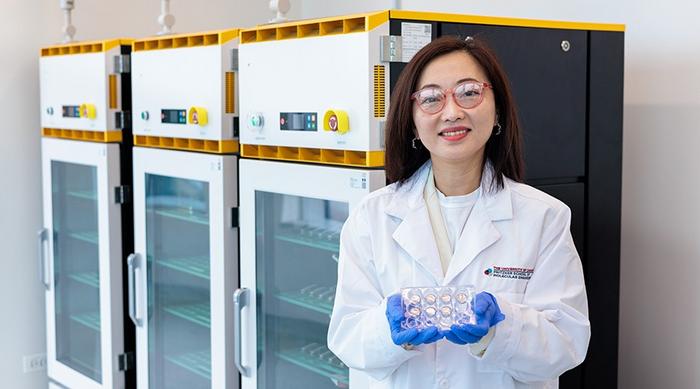
Researchers at the University of Chicago’s Pritzker School of Molecular Engineering have unveiled groundbreaking findings that pivot our understanding of battery technology. This work, led by Professor Y. Shirley Meng and supported by industry partner Thermo Fisher Scientific, sheds light on a critical but historically neglected aspect of battery performance—texture of the metals used in battery electrodes. Specifically, the team found that enhancing the metal’s texture can significantly boost battery performance, which is particularly crucial for applications in electric vehicles (EVs), mobile devices, and renewable energy storage systems.
The advent of electric vehicles and the expanding need for efficient energy storage solutions have accelerated research into battery technology. While much attention has been given to new materials and innovative battery designs, the geometry and texture of the metals used as electrodes has not been sufficiently explored. This newly published study in the journal Joule, however, points to texture as a game-changer, revealing its pivotal role in the efficacy of lithium and sodium as battery materials.
The research team led by Prof. Meng discovered that soft metals like lithium and sodium possess unique characteristics that make them suitable for use as negative electrodes; lithium is touted as the ideal anode material for next-generation rechargeable batteries. However, prior to this study, there was no comprehensive understanding of how the orientation of metal grains—essentially, its texture—correlates with the performance of rechargeable batteries. This gap in knowledge has now been addressed, with implications that could reshape battery design and manufacturing.
In a significant breakthrough, the research revealed that inserting a thin layer of silicon between lithium metal and its current collector effectively improved the desired texture of the metal. This seemingly small alteration yielded remarkable results, enhancing the battery’s rate capability by nearly a factor of ten in solid-state batteries using lithium metal. Such an improvement translates to faster charging and discharging rates, a necessity for modern electronic devices and EVs.
The ideal texture of battery anodes facilitates rapid movement of atoms along the surface plane, which is vital for speedy energy transfer during charging and discharging processes. This study highlights that careful modification of the surface texture can go a long way in bolstering the battery’s power density—a critical aspect for applications requiring quick energy bursts, such as acceleration in electric vehicles.
One of the core challenges the researchers faced was in studying the texture of soft metals, which was complicated by the metals’ inherent reactivity and the intricacies of microscopy techniques. The innovative use of milling within a plasma focused ion beam (PFIB) combined with scanning electron microscopy (SEM) and electron backscatter diffraction (EBSD) mapping allowed the team to observe and assess texture in unprecedented ways. This innovative methodology provided clarity on the interaction between materials at a microscopic level, enabling a deeper understanding of how texture influences battery performance.
Moving forward, the research team has engaged with LG Energy Solution’s Frontier Research Laboratory to translate these laboratory findings into commercial applications. This partnership indicates the industry’s recognition of the importance of academic collaborations in staying ahead in the fast-evolving battery market. A commitment to innovation is necessary as global demand for electric vehicles and energy storage solutions continues to escalate.
Indeed, the findings of Prof. Meng and her team offer a new lens on battery technology, emphasizing that sometimes it is the minute details—like metal texture—that can result in substantial advancements in battery performance. These insights not only enhance our comprehension of electrochemical processes but also pave the way for the next generation of efficient energy storage solutions that our society increasingly demands.
As work continues in this arena, expectations are high. The implications of these discoveries extend far beyond individual batteries; they signal a strategic shift toward more sustainable and efficient energy systems that can support the shift to renewable energy and electrification of transportation.
In summary, the pioneering work on metal texture presented by the University of Chicago’s Pritzker School of Molecular Engineering signifies an important step forward in battery science. This research not only addresses existing gaps in our understanding but also holds the promise of practical applications that can lead to transformative energy technologies.
Subject of Research: The impact of metal texture on rechargeable battery performance
Article Title: Grain selection growth of soft metal in electrochemical processes
News Publication Date: February 10, 2025
Web References: Joule
References: Original research published in the journal Joule
Image Credits: UChicago Pritzker School of Molecular Engineering / John Zich
Keywords
Energy storage, battery technology, lithium, sodium, solid-state batteries, metal texture, electrochemical processes.
Tags: battery technology advancementselectric vehicle battery performanceenhanced metal textures for batteriesgame-changing battery electrode geometryimplications of battery metal textureoptimal electrode materials for batteriesPritzker School of Molecular Engineering findingsrenewable energy storage innovationsresearch in battery efficiencysodium and lithium as battery materialsThermo Fisher Scientific partnershipUniversity of Chicago battery research