• HOME
  • NEWS
  • EXPLORE
    • CAREER
      • Companies
      • Jobs
    • EVENTS
    • iGEM
      • News
      • Team
    • PHOTOS
    • VIDEO
    • WIKI
  • BLOG
  • COMMUNITY
    • FACEBOOK
    • INSTAGRAM
    • TWITTER
Thursday, June 25, 2026
BIOENGINEER.ORG
No Result
View All Result
  • Login
  • HOME
  • NEWS
  • EXPLORE
    • CAREER
      • Companies
      • Jobs
        • Lecturer
        • PhD Studentship
        • Postdoc
        • Research Assistant
    • EVENTS
    • iGEM
      • News
      • Team
    • PHOTOS
    • VIDEO
    • WIKI
  • BLOG
  • COMMUNITY
    • FACEBOOK
    • INSTAGRAM
    • TWITTER
  • HOME
  • NEWS
  • EXPLORE
    • CAREER
      • Companies
      • Jobs
        • Lecturer
        • PhD Studentship
        • Postdoc
        • Research Assistant
    • EVENTS
    • iGEM
      • News
      • Team
    • PHOTOS
    • VIDEO
    • WIKI
  • BLOG
  • COMMUNITY
    • FACEBOOK
    • INSTAGRAM
    • TWITTER
No Result
View All Result
Bioengineer.org
No Result
View All Result
Home NEWS Science News

Engineers investigate a simple, no-bake recipe to make bricks from Martian soil

Bioengineer by Bioengineer
April 27, 2017
in Science News
Reading Time: 2 mins read
0
Share on FacebookShare on TwitterShare on LinkedinShare on RedditShare on Telegram
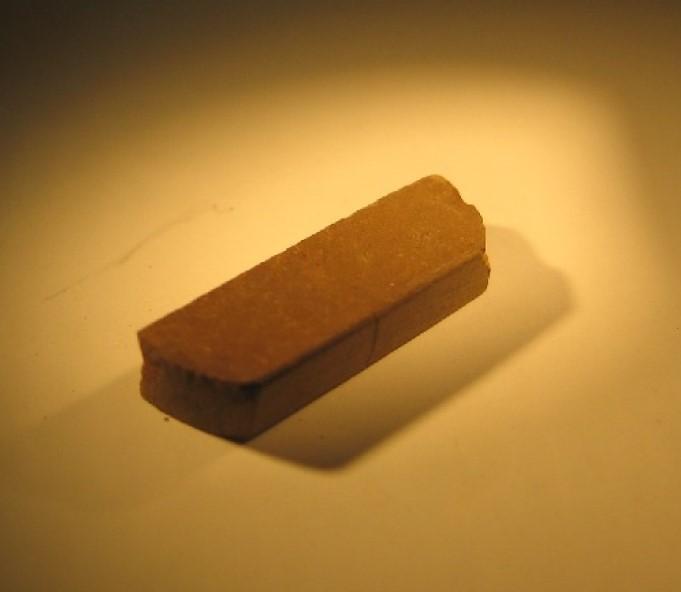
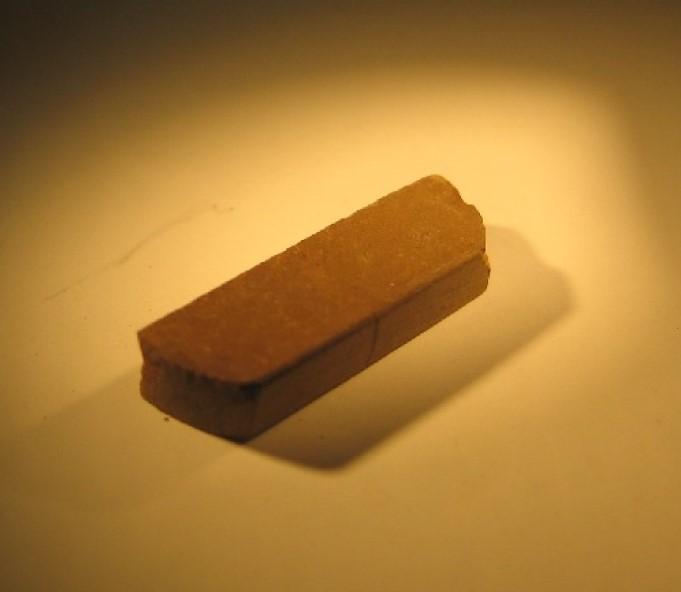
IMAGE

Credit: Jacobs School of Engineering/UC San Diego

Explorers planning to settle on Mars might be able to turn the planet's red soil into bricks without needing to use an oven or additional ingredients. Instead, they would just need to apply pressure to compact the soil–the equivalent of a blow from a hammer.

These are the findings of a study published in Scientific Reports on April 27, 2017. The study was authored by a team of engineers at the University of California San Diego and funded by NASA. The research is all the more important since Congress passed a bill, signed by President Donald Trump in March 2017, directing NASA to send a manned mission on Mars in 2033.

"The people who will go to Mars will be incredibly brave. They will be pioneers. And I would be honored to be their brick maker," said Yu Qiao, a professor of structural engineering at UC San Diego and the study's lead author.

Proposals to use Martian soil to build habitats for manned missions on the planet are not new. But this is the first that shows astronauts would need minimal resources to do so. Previous plans included nuclear-powered brick kilns or using complex chemistry to turn organic compounds found on Mars into binding polymers.

In fact, the UC San Diego engineers were initially trying to cut down on the amount of polymers required to shape Martian soil into bricks, and accidently discovered that none was needed. To make bricks out of Mars soil simulant, without additives and without heating or baking the material, two steps were key. One was to enclose the simulant in a flexible container, in this case a rubber tube. The other was to compact the simulant at a high enough pressure. The amount of pressure needed for a small sample is roughly the equivalent of someone dropping 10-lb hammer from a height of one meter, Qiao said.

The process produces small round soil pallets that are about an inch tall and can then be cut into brick shapes. The engineers believe that the iron oxide, which gives Martian soil its signature reddish hue, acts as a binding agent. They investigated the simulant's structure with various scanning tools and found that the tiny iron particles coat the simulant's bigger rocky basalt particles. The iron particles have clean, flat facets that easily bind to one another under pressure.

Researchers also investigated the bricks' strengths and found that even without rebar, they are stronger than steel-reinforced concrete.

Researchers said their method may be compatible with additive manufacturing. To build up a structure, astronauts could lay down a layer of soil, compact it, then lay down an additional layer and compact that, and so on.

The logical next step for the research would be to increase the size of the bricks.

###

Media Contact

IOANA PATRINGENARU
[email protected]
858-822-0899
@UCSanDiego

http://www.ucsd.edu

############

Story Source: Materials provided by Scienmag

Share12Tweet8Share2ShareShareShare2

Related Posts

International Team Including Dresden Scientists Develops Novel Designer Proteins for Advanced Study of Living Tissue

June 25, 2026

How Socioeconomic Factors Shape Lung Cancer Screening Experiences

June 25, 2026

This Famous Butterfly Revealed: Three Distinct Species Hidden in One

June 25, 2026

GW250114 Uncovers Post-Merger Black Hole Clues

June 25, 2026
Please login to join discussion

POPULAR NEWS

  • Saying Goodbye to PGY-6: Pediatric Fellowship Realities

    103 shares
    Share 41 Tweet 26
  • Multi-Hospital Study Reveals Long Covid Burden Is Twice as High as Current Estimates

    92 shares
    Share 36 Tweet 23
  • Detection of EDCs in Breast Milk and Infant Urine Up to Six Months Highlights Early Exposure Risks

    77 shares
    Share 31 Tweet 19
  • New Drug Candidate Developed at McMaster Shows Potential for Treating Brain Cancer

    58 shares
    Share 23 Tweet 15

About

We bring you the latest biotechnology news from best research centers and universities around the world. Check our website.

Follow us

Recent News

International Team Including Dresden Scientists Develops Novel Designer Proteins for Advanced Study of Living Tissue

How Socioeconomic Factors Shape Lung Cancer Screening Experiences

This Famous Butterfly Revealed: Three Distinct Species Hidden in One

Subscribe to Blog via Email

Enter your email address to subscribe to this blog and receive notifications of new posts by email.

Join 82 other subscribers
  • Contact Us

Bioengineer.org © Copyright 2023 All Rights Reserved.

Welcome Back!

Login to your account below

Forgotten Password?

Retrieve your password

Please enter your username or email address to reset your password.

Log In
No Result
View All Result
  • Homepages
    • Home Page 1
    • Home Page 2
  • News
  • National
  • Business
  • Health
  • Lifestyle
  • Science

Bioengineer.org © Copyright 2023 All Rights Reserved.