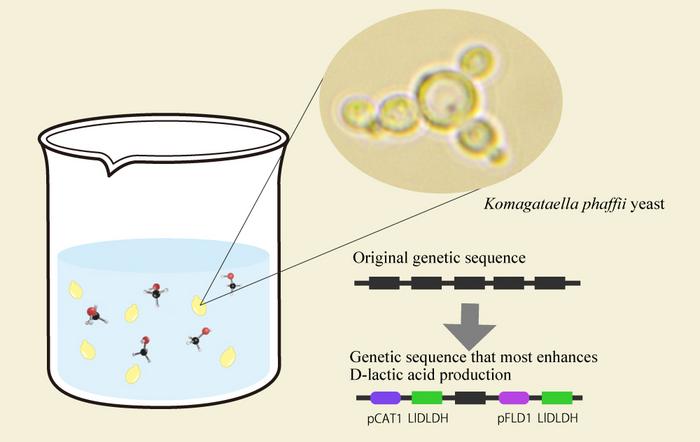
Researchers at Osaka Metropolitan University have made groundbreaking advancements in the production of D-lactic acid through the optimization of yeast fermentation processes. Their innovative approach focuses on genetically engineering the yeast species Komagataella phaffii, enabling it to efficiently convert methanol into D-lactic acid, a critical building block for various biodegradable plastics and pharmaceuticals. This research marks a significant step toward reducing dependence on petroleum-based chemicals, which have long been the standard in the industry.
D-lactic acid is less abundant and more costly compared to its counterpart, L-lactic acid. While numerous lactic acid bacteria primarily generate L-lactic acid, traditional chemical synthesis methods typically yield a mixture containing both forms. However, the innovative team, led by Associate Professor Ryosuke Yamada, targeted K. phaffii for its unique ability to utilize methanol as a carbon source, which is fundamentally important for enhancing D-lactic acid production.
The essence of this study lies in the meticulous identification of the optimal combinations of D-lactate dehydrogenase (D-LDH) genes and effective promoters within the K. phaffii yeast. D-LDH enzymes are integral to the conversion of precursor molecules into D-lactic acid, while promoters are essential in regulating gene expression. This engineered yeast, capable of metabolizing methanol, is designed to maximize the yielding potential of the D-lactic acid production process drastically.
Through an extensive experimental procedure, the researchers assessed five distinct D-LDH genes alongside eight different promoters. Through rigorous testing, they successfully identified a combination that enhanced D-lactic acid production by an impressive 1.5 times when compared to traditional methanol-based methods. This is a pivotal advancement, highlighting the enhanced efficiency of the engineered yeast strain, which has achieved the highest yield of D-lactic acid ever reported from methanol as the sole carbon source.
The implications of this study reach far beyond the lab and into the broader context of sustainability and environmental conservation. The ability to generate chemicals from renewable sources such as methanol addresses a critical need in the global community struggling with fossil fuel reliance. As discussions around the depletion of fossil fuels and the pressing concerns of environmental impact intensify, the development of eco-friendly biotechnological solutions becomes increasingly paramount.
Yamada emphasizes the advancements this research brings, showcasing that by intelligently optimizing both gene and promoter combinations, researchers can significantly amplify the efficiency of microbial production systems. This presents an attractive alternative to the traditional, petroleum-driven chemical manufacturing processes that have dominated the industry for decades.
Moreover, the study, published in the journal Biotechnology for Biofuels and Bioproducts, offers a detailed analysis of the methodology employed, contributing valuable insights into the future of biochemical production. The combination of advanced genomic techniques and the ecological advantages of using microorganisms like K. phaffii presents a compelling case for sustainable solutions in commercial chemical production.
The researchers’ work is crucial not only for the efficient synthesis of D-lactic acid but also for its broader applications, as lactic acid itself plays a vital role in numerous industries, ranging from food and cosmetics to pharmaceuticals and bioplastics. As the global market for biodegradable materials grows, the importance of efficient D-lactic acid production cannot be overstated.
In summary, Osaka Metropolitan University’s research team has effectively paved the way for a more sustainable biotechnology landscape, leading the way in eco-friendly production methods that promise to reshape the future of chemical manufacturing. The potential to produce key compounds from renewable resources heralds a new era for industrial processes, where environmental considerations are at the forefront of innovation, making this study a beacon of hope in addressing the challenges posed by traditional chemical production methods.
Ultimately, the work being done by these researchers represents more than just an academic achievement; it signals a turning point in how we approach the production of essential compounds. By leveraging the capabilities of genetically engineered organisms like K. phaffii, the scientific community can embark on a pathway that aligns with the overarching goals of sustainability and environmental stewardship.
In a world grappling with the consequences of climate change and dwindling natural resources, the endeavor to harness the power of microorganisms offers a promising glimpse into a more sustainable future. As advancements continue, the hope is that biotechnological innovations will contribute to building an eco-friendly economy where biochemical production no longer comes at the expense of the planet.
Given the pressing demands for sustainable solutions and the remarkable breakthroughs being made, ongoing collaboration among researchers can further unlock the vast potential of biotechnological processes. The journey toward fully utilizing renewable carbon sources such as methanol in industrial applications is just beginning, with this study serving as a foundational pillar for future explorations in microbial bioengineering.
By focusing on enhancing the production processes of vital compounds like D-lactic acid, scientists stand at the cusp of profound changes in industrial practices. The implications are extensive, paving the way for a more sustainable, efficient, and ultimately greener future within the realm of biotechnology and beyond.
Subject of Research: D-lactic acid production through yeast optimization
Article Title: Enhancing D-lactic acid production by optimizing the expression of D-LDH gene in methylotrophic yeast Komagataella phaffii
News Publication Date: 22-Dec-2024
Web References: http://dx.doi.org/10.1186/s13068-024-02596-0
References: Biotechnology for Biofuels and Bioproducts
Image Credits: Osaka Metropolitan University
Keywords: D-lactic acid, Komagataella phaffii, biotechnology, sustainable chemistry, enzyme optimization, fermentation, renewable resources, ecological impact.
Tags: Associate Professor Ryosuke Yamada researchbiodegradable plastic production methodsD-lactate dehydrogenase enzyme functionengineered yeast for D-lactic acid productiongenetic engineering in biotechnologyinnovative yeast fermentation techniquesKomagataella phaffii fermentation optimizationmethanol as a carbon sourceoptimizing gene expression in yeastreducing petroleum-based chemical dependencysustainable bioplastic alternativessustainable chemical synthesis advancements