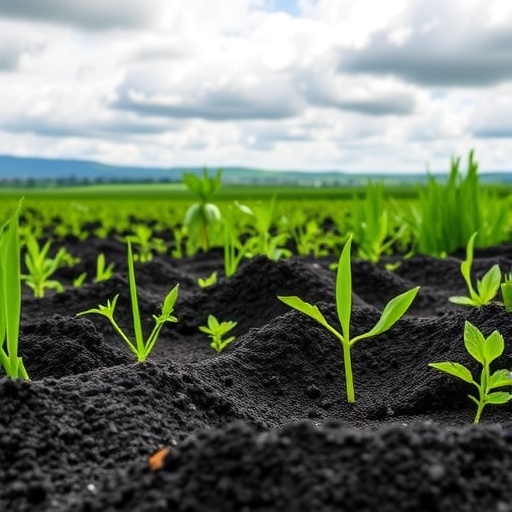
In an ambitious convergence of cutting-edge research and practical engineering, the 23rd Carbon Research International Forum, hosted online on April 24, 2026, spotlighted the transformative potential of engineered biochar in advancing carbon capture technologies and fostering resource recovery. This virtual gathering attracted a global assembly of leading scientists, environmental engineers, and industry stakeholders, all intent on mastering the complexities of sustainable industrial applications that hinge on novel carbonaceous materials. The session, now accessible to the broad scientific community via YouTube, offers an unparalleled opportunity to delve into the latest advances linking fundamental science with scalable environmental technologies aimed at a low-carbon future.
The forum was anchored by a keynote presentation delivered by Professor Wan Azlina Wan Abdul Karim Ghani from Universiti Putra Malaysia (UPM), whose work exemplifies the frontier of biochar engineering. Hosted by Dr. Lim Jun Wei of Universiti Teknologi PETRONAS, the session meticulously dissected the role of biochar not just as a carbon storage medium but as a multifunctional platform for integrating carbon capture, pollutant removal, and energy device enhancement through sophisticated material design and manipulation. The implications of these innovations stretch far beyond conventional approaches toward climate mitigation, embedding biochar at the nexus of science, sustainability, and industrial viability.
Biochar, a carbon-rich residue derived from biomass pyrolysis, has gained scientific prominence due to its intrinsic ability to sequester atmospheric CO₂ while simultaneously providing a medium to recover valuable resources. Professor Wan Azlina underscored the importance of structural engineering at the microscopic and nanoscopic levels to enhance biochar’s surface area, pore architecture, and chemical heterogeneity. By tailoring these properties, researchers can significantly augment biochar’s adsorption capacity and electrochemical performance, positioning it as a viable material for next-generation carbon capture and energy storage technologies.
A core focus of the presentation was the innovative conversion of agricultural and industrial residues into high-efficiency carbon materials using advanced pyrolysis techniques and surface functionalization protocols. This process not only addresses the pressing issue of biomass waste management but also generates functional materials with customized physicochemical properties suitable for diverse industrial applications, such as CO₂ capture membranes, supercapacitor electrodes, and catalytic pollutant degradation platforms. This dual role of waste valorization and environmental remediation defines the transformative promise of engineered biochar technologies.
Professor Wan Azlina’s discourse provided an in-depth exploration of the synergistic hybridization of biochar with nanomaterials, a methodological leap that has unveiled unprecedented functionalities. Integrating metallic nanoparticles, metal oxides, or carbon-based nanostructures into biochar matrices enhances electron transport pathways and active sites for adsorbate interactions. Such hybrid composites demonstrate superior kinetics and selectivity in capturing greenhouse gases and neutralizing environmental contaminants, reinforcing biochar’s adaptability to multifaceted industrial challenges.
In discussing the techno-economic feasibility of scaling these technologies, the forum emphasized the critical need for holistic process optimization frameworks. Professor Wan Azlina highlighted ongoing research at Universiti Putra Malaysia that leverages life cycle analysis and cost-benefit assessments to identify pathways for sustainable and economically viable production of engineered biochars. This integrative approach ensures that emerging carbon capture materials do not remain confined to the laboratory but evolve into practical solutions aligned with industrial sustainability and market readiness.
The session further contextualized Malaysia’s role within the burgeoning global movement toward Green-CCUS—carbon capture, utilization, and storage initiatives aimed at reducing industrial emissions while fostering ecological balance. The research bridges fundamental biomass conversion science with applied reaction engineering and environmental process design, illustrating a seamless translation from academic inquiry to policy-aligned, techno-industrial deployment. Such initiatives herald a new era of circular economy models where carbon is not only sequestered but valorized across interconnected sectors.
Engineered biochar’s versatility extends into energy applications, where its tailored electrochemical properties facilitate its use in energy storage and conversion devices, including batteries, supercapacitors, and fuel cells. The porous structure and conductive nature of modified biochar provide a stable matrix for charge storage and catalysis, enhancing device performance and longevity. This convergence of materials science and environmental engineering paves the way for renewable energy infrastructure deeply integrated with sustainable carbon management.
In terms of pollutant removal, biochar’s affinity for heavy metals, organic contaminants, and other hazardous substances is exponentially increased through precise surface chemistry modifications. The introduction of functional groups and dopants modulates adsorption properties, enabling selective binding and degradation pathways that mitigate environmental pollution. Such capabilities are crucial for water and soil remediation technologies, affirming engineered biochar’s role as an indispensable tool in environmental protection.
Throughout the forum, case studies from Professor Wan Azlina’s laboratory showcased experimental data supporting the scalability and efficacy of these engineered biochars under real-world conditions. Pilot projects combining agricultural waste utilization with advanced ceramic and electrochemical processing have demonstrated promising results in CO₂ adsorption capacity, energy density, and pollutant removal efficiency, substantiating the practical potential of these bio-based carbon materials.
Moreover, the forum illuminated the indispensable role of interdisciplinary collaboration between chemists, engineers, environmental scientists, and policymakers. This collective approach underpins the remarkable progress in transforming raw biomass into sophisticated carbon nanomaterials, highlighting the importance of cross-sectoral knowledge exchange in overcoming technological and regulatory hurdles that impede widescale implementation.
The recorded presentation is now available for public viewing, fostering global engagement and further dissemination within the scientific community. This accessibility is critical for accelerating innovation cycles and fostering transparency in advancing biochar technologies that hold promise for addressing some of the most pressing environmental challenges of our time.
The forum’s insights strongly advocate for a paradigm shift in how biomass resources and carbon materials are perceived and utilized—moving away from waste disposal to value-driven innovation that fortifies a sustainable industrial future. Engineered biochar stands as a pillar within this transition, embodying the nexus of carbon science, ecological stewardship, and technological advancement.
Subject of Research: Engineered Biochar for Carbon Capture and Resource Recovery
Article Title: Engineered Biochar for Carbon Capture and Resource Recovery: Bridging Science, Sustainability, and Industrial Application
News Publication Date: April 24, 2026
Web References: https://youtu.be/TBMer2HX_tQ
Image Credits: Wan Azlina Wan Abdul Karim Ghani
Keywords
carbon capture, biochar, resource recovery, sustainable industrial development, biomass conversion, nanomaterials hybridization, pollutant removal, energy storage, Green-CCUS, circular economy, pyrolysis, techno-economic assessment
Tags: advanced biochar material designbiochar energy device enhancementbiochar environmental engineering researchbiochar in resource recoverybiochar multifunctional platformbiochar pollutant removal applicationscarbon capture international forum 2026carbonaceous materials in climate mitigationengineered biochar for carbon captureglobal biochar scientific collaborationlow-carbon future technologiessustainable industrial carbon technologies