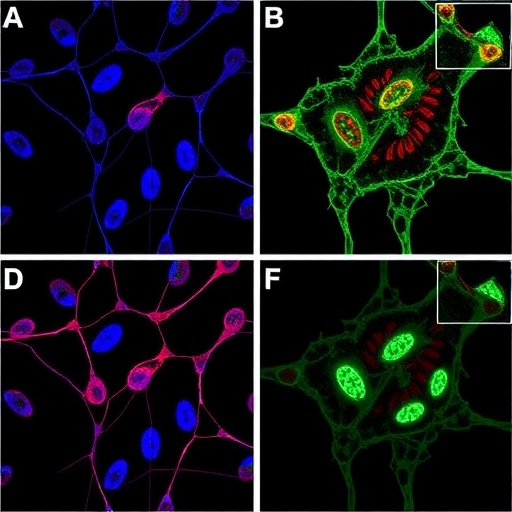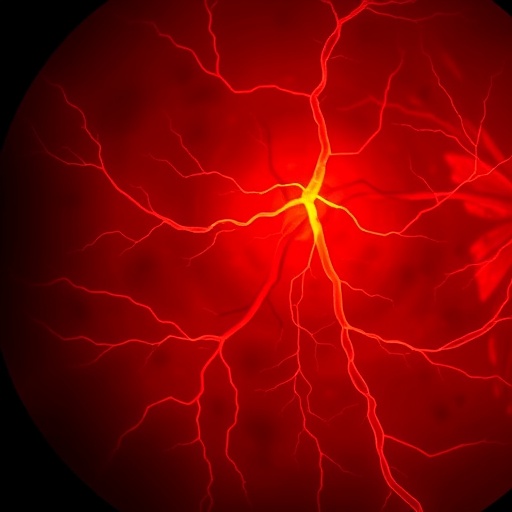
Recent groundbreaking research published in the renowned journal Angiogenesis sheds light on the intricate mechanisms regulating retinal angiogenesis and ganglion cell function, revealing how the endothelial clock plays a pivotal role in these processes. The study, conducted by an innovative team led by V.K. Jidigam, M.B. Kirby, and J. Gallop, underscores the significance of circadian rhythms in maintaining retinal health and function. As the world’s population increasingly grapples with vision-related disorders, understanding these mechanisms could offer novel therapeutic avenues and preventive strategies.
The endothelial clock, an intrinsic biological rhythm observed in endothelial cells, has long been acknowledged for its broader implications across various tissues. However, this study delves deeper into its implications specifically within the retinal context, providing invaluable insights into the temporal regulation of angiogenesis. The authors meticulously examined the differential expression of various clock genes within retinal endothelial cells, finding compelling evidence that circadian-controlled gene expression is integral to retinal vascular homeostasis.
Researchers utilized advanced experimental models, including in vivo imaging and targeted gene editing, to explore the consequential effects of disrupted circadian rhythms on retinal health. Their findings starkly demonstrate that aberrations in the endothelial clock lead to increased susceptibility to retinal diseases, including diabetic retinopathy and age-related macular degeneration. By elucidating the molecular underpinnings of these phenomena, the team highlights a crucial intersection between circadian biology and retinal pathophysiology.
Moreover, the intriguing connection between the endothelial clock and ganglion cell functionality was also a focal point of the study. Ganglion cells are critical for transmitting visual information from the retina to the brain, and any disruption in their function can have severe repercussions on vision. The researchers probed how circadian regulation influences ganglion cell survival and activity, unveiling a complex relationship that warrants further exploration. The implications of this relationship extend beyond basic science, touching on potential clinical interventions that may improve outcomes for patients suffering from retinal diseases.
As part of their methodology, Jidigam and colleagues implemented state-of-the-art techniques, including transcriptomic analyses and flow cytometry, to quantify the effects of time-of-day on retinal cellular responses. These methods provided a comprehensive overview of how various endothelial responses fluctuate throughout the day, ultimately influencing retinal vascularization and ganglion cell function. This approach, combining both classical and contemporary techniques, illustrates the research team’s commitment to rigor and accuracy in their scientific pursuits.
The study’s results could lead to practical applications in developing chronotherapy strategies for retinal diseases, where treatment regimens could be timed to align with the body’s natural rhythms. Such an approach could optimize therapeutic efficacy while minimizing side effects, offering a promising glimpse into the future of personalized medicine in ophthalmology. By harnessing circadian biology’s insights, clinicians could potentially devise intervention protocols that are more attuned to the patient’s inherent biological rhythms.
The authors also acknowledge the limitations of their study, urging caution in the interpretation of their findings. While the evidence supports a strong link between the endothelial clock and retinal function, further investigations are needed to decipher the complexities of this relationship fully. Future research should aim to explore additional factors that may interact with circadian mechanisms and their respective contributions to retinal health.
In conclusion, this vital research contributes significantly to our understanding of the multifaceted role that circadian rhythms play in retinal biology. By investigating the molecular intricacies of the endothelial clock and its relationship with retinal angiogenesis and ganglion cell function, Jidigam and his team have opened new avenues for understanding and treating retinal diseases. The potential ramifications of this work reverberate throughout the field, setting the stage for future inquiries that could revolutionize our approach to ocular health.
As we stand at the crossroads of biology and medicine, studies like this challenge us to consider how temporal frameworks shape our understanding of health and disease. The intricate dance between our biological clocks and various physiological processes serves as a compelling reminder of the unity of form and function in the living world. In tackling issues as complex as retinal diseases, our findings highlight the urgent need to embrace this dimensional view of health, blending scientific rigor with compassionate care.
While the mechanisms elucidated in this study pertain specifically to the eye, they likely have broader implications across other systems, inviting researchers to reflect on the universality of circadian biology. As we deepen our comprehension of these interactions, the biomedical community is urged to consider the rhythms that guide not just our day-to-day lives but also our health and well-being on a cellular level.
The findings underscore the importance of multidisciplinary approaches in scientific inquiry, combining expertise across fields such as chronobiology, ophthalmology, and molecular biology. Collaboration and innovation have the potential to unveil novel therapeutic targets, ultimately enhancing patient care and treatment strategies across a plethora of disciplines.
In summary, the intersection of the endothelial clock, retinal angiogenesis, and ganglion cell functionality poses intriguing questions for future research. This framework not only enriches our scientific discourse but also lays the foundation for practical applications that could shape the future of ophthalmology. As the field evolves, we await further revelations that promise to deepen our understanding of the delicate interplay between time and biology.
Subject of Research: Endothelial clock, retinal angiogenesis, ganglion cell function
Article Title: Endothelial clock regulates retinal angiogenesis and ganglion cell function.
Article References:
Jidigam, V.K., Kirby, M.B., Gallop, J. et al. Endothelial clock regulates retinal angiogenesis and ganglion cell function.
Angiogenesis 29, 6 (2026). https://doi.org/10.1007/s10456-025-10018-4
Image Credits: AI Generated
DOI: https://doi.org/10.1007/s10456-025-10018-4
Keywords: Endothelial clock, retinal angiogenesis, ganglion cells, circadian rhythms, retinal health.
Tags: advanced imaging in retinal studiesage-related macular degeneration factorscircadian rhythms in angiogenesisdiabetic retinopathy insightsendothelial clock and retinal healthgene expression in endothelial cellsimplications of circadian disruptionsinnovative research in angiogenesisretinal vascular homeostasis mechanismstargeted gene editing in ophthalmologytherapeutic strategies for retinal diseasesvision-related disorders research