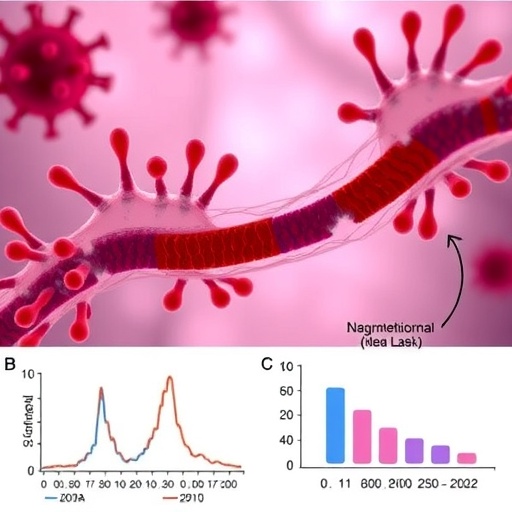
A growing number of children recovering from COVID-19 continue to experience persistent symptoms, and a new study suggests that the next chapter of Long COVID may be written less in the lungs—and more in the blood vessel wall. Researchers report evidence of “endothelial activation,” a condition in which the inner lining of vessels shifts toward a pro-inflammatory, pro-coagulant state that can amplify systemic illness.
Using a vascular-centrered framework, the team revisits Long COVID through what they describe as the vascular axis. In this view, inflammatory signaling and clotting tendency are not separate events but interconnected processes that can sustain symptoms long after the initial infection has cleared. The study emphasizes that pediatric cases should not be treated as smaller versions of adult disease, given distinct immune dynamics and recovery trajectories.
Mechanistically, endothelial activation can increase the expression of adhesion molecules and trigger abnormal leukocyte interactions with the vessel wall. This promotes localized inflammation and may facilitate microvascular dysfunction—an effect that can compromise tissue oxygen delivery even without large-vessel blockage. The authors link this pathway to thromboinflammation, where immune responses and coagulation pathways reinforce one another.
The work frames thromboinflammation as a plausible driver of prolonged biological stress. Instead of viewing clots only as isolated thrombotic events, the study treats them as part of an inflammatory circuitry that can keep the system “stuck” in a heightened state. Such circuitry may help explain why symptoms can fluctuate and why some patients do not fully recover after infection.
Importantly, the research highlights how endothelial dysfunction can affect multiple organ systems through shared vascular mechanisms. In children, where baseline risk for thrombosis is typically lower, subtle vascular changes could still produce meaningful symptom burden. The findings therefore call for heightened attention to vascular biomarkers rather than symptom-only assessments.
From a clinical perspective, the study supports the idea that Long COVID in pediatrics may benefit from strategies that target vascular inflammation and coagulation signaling—alongside standard supportive care. This could include refined monitoring for signs of endothelial stress, and future trials to test whether anti-inflammatory or antithrombotic approaches can reduce downstream sequelae.
Overall, the paper reframes Long COVID as a vascular disorder with immunologic and coagulation components. By focusing on endothelial activation and thromboinflammation, it provides a testable rationale for re-evaluating pediatric long-term care pathways and for designing interventions aimed at preventing persistent vascular dysfunction.
The study, published in Pediatric Research, points to a clearer biological route connecting early infection to longer-term morbidity. As viral science coverage increasingly shifts from symptom narratives to mechanistic targets, this vascular lens may help turn uncertainty into measurable clinical endpoints.
Subject of Research: Long COVID (pediatric) — endothelial activation and thromboinflammation
Article Title: Endothelial activation and thromboinflammation in Long COVID: revisiting the vascular axis in pediatric populations.
Article References: Panda, S.K., Singh, S., Bhalla, M. et al. Endothelial activation and thromboinflammation in Long COVID: revisiting the vascular axis in pediatric populations. Pediatr Res (2026). https://doi.org/10.1038/s41390-026-05345-1
Image Credits: AI Generated
DOI: 10.1038/s41390-026-05345-1
Keywords:
Tags: endothelial activationimmune mechanisms of Long COVIDinflammation and blood clotting in childrenLong COVID in childrenmicrovascular dysfunction in long COVIDpediatric COVID-19 immune responsepersistent symptoms after COVID-19 in childrensystemic inflammation in Long COVIDthromboinflammationvascular dysfunction in long COVIDvascular-centric approach to Long COVID