

• HOME
  • NEWS
  • EXPLORE
    • CAREER
      • Companies
      • Jobs
    • EVENTS
    • iGEM
      • News
      • Team
    • PHOTOS
    • VIDEO
    • WIKI
  • BLOG
  • COMMUNITY
    • FACEBOOK
    • INSTAGRAM
    • TWITTER
Sunday, November 1, 2026
BIOENGINEER.ORG
No Result
View All Result
  • Login
  • HOME
  • NEWS
  • EXPLORE
    • CAREER
      • Companies
      • Jobs
        • Lecturer
        • PhD Studentship
        • Postdoc
        • Research Assistant
    • EVENTS
    • iGEM
      • News
      • Team
    • PHOTOS
    • VIDEO
    • WIKI
  • BLOG
  • COMMUNITY
    • FACEBOOK
    • INSTAGRAM
    • TWITTER
No Result
View All Result
Bioengineer.org
No Result
View All Result
Home NEWS Science News Health

Endoscopists Spot Gut Mucosal Changes During Anesthesia-Related Anaphylaxis

by
October 29, 2026
in Health
Reading Time: 2 mins read
0
Endoscopists Spot Gut Mucosal Changes During Anesthesia-Related Anaphylaxis

Endoscopists Spot Gut Mucosal Changes During Anesthesia-Related Anaphylaxis

Share on FacebookShare on TwitterShare on LinkedinShare on RedditShare on Telegram

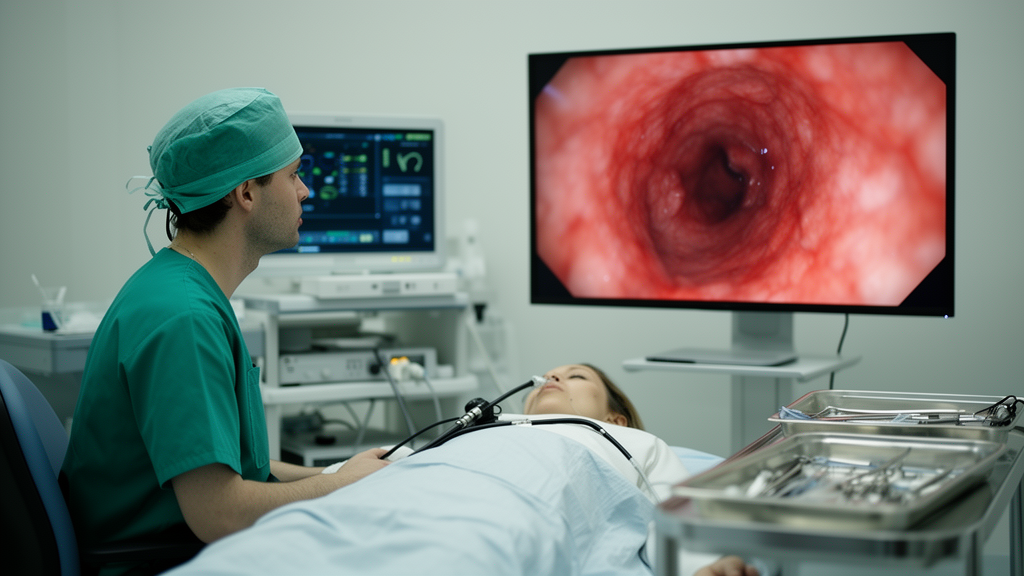
Two patients undergoing sedation for painless gastrointestinal endoscopy developed anesthesia-related anaphylaxis, and in both cases the endoscope itself revealed an unexpected warning sign: visible changes in the gastrointestinal mucosa, including pale swelling and a distinctive flower-like appearance, according to a case report published in BMC Anesthesiology.

Perioperative anaphylaxis is rare but potentially life-threatening, and the report’s authors note that timely recognition during anesthesia can be challenging.

In the first case, the reaction escalated to anaphylactic shock requiring cardiopulmonary resuscitation, after which the patient’s vital signs recovered. The second patient’s hemodynamics stabilized following treatment. In both instances, the endoscopists observed pale edema of the gastrointestinal lining along with the characteristic flower-like mucosal pattern as the reactions unfolded.

Both patients received epinephrine and supportive treatment. In the second patient, hemodynamics stabilized and the mucosal appearance returned to normal after intravenous epinephrine and supportive care. No adverse events occurred during follow-up in either case.

The observation suggests that mucosal changes visible through the endoscope may serve as an additional clue during an evolving anaphylactic reaction.

The authors emphasize that these findings are supplementary rather than diagnostic on their own. Cutaneous, cardiovascular, and respiratory manifestations remain the well-recognized hallmarks of anaphylaxis, and the mucosal changes should be interpreted alongside those signs and the overall clinical picture rather than in isolation.

As a two-case report, the evidence is limited by design. Case reports describe individual experiences and cannot establish how frequently such mucosal changes occur during anaphylaxis, how specific they are, or whether recognizing them improves outcomes. Those questions would require larger systematic studies.

Nevertheless, the report highlights a practical point for endoscopy teams: during sedation, the endoscopic view may capture early physical signs of a systemic allergic reaction. The authors suggest that awareness of these mucosal findings could provide supplementary information for the clinical assessment of suspected anaphylaxis during painless gastrointestinal endoscopy.

The article was published open access on 22 October 2026 and is currently available as a peer-reviewed accepted manuscript, a version that may still be edited before the final Version of Record replaces it.

Subject of Research: Gastrointestinal mucosal changes observed during anesthesia-related anaphylaxis in painless gastrointestinal endoscopy

Article Title: Gastrointestinal mucosal changes as an endoscopic clue to anesthesia-related anaphylaxis during painless gastrointestinal endoscopy: two case reports

Article References: Chen, J.-Q., Li, H.-X., Jing, M.-Z., & Xing, N. (2026). Gastrointestinal mucosal changes as an endoscopic clue to anesthesia-related anaphylaxis during painless gastrointestinal endoscopy: two case reports. BMC Anesthesiology. https://doi.org/10.1186/s12871-026-04357-y

Image Credits: AI Generated

DOI: 10.1186/s12871-026-04357-y

Keywords: anaphylaxis, anesthesia, endoscopy, gastrointestinal mucosa, case report, epinephrine, anaphylactic shock, painless endoscopy, BMC Anesthesiology, drug allergy, Gastrointestinal, mucosal

News Source: Ophelia Keating. (October 29, 2026). Endoscopists Spot Gut Mucosal Changes During Anesthesia-Related Anaphylaxis. Scienmag.


Tags: anaphylactic shockanaphylaxisanesthesiaBMC Anesthesiologycase reportdrug allergyendoscopyepinephrinegastrointestinalgastrointestinal mucosamucosalpainless endoscopy
Share12Tweet7Share2ShareShareShare1

Related Posts

ZNF207 shields glutamine transporter ASCT2 from degradation to fuel liver cancer growth

ZNF207 shields glutamine transporter ASCT2 from degradation to fuel liver cancer growth

October 30, 2026
Most Ethiopian HIV patients on dolutegravir therapy show good knowledge, survey finds

Most Ethiopian HIV patients on dolutegravir therapy show good knowledge, survey finds

October 30, 2026

Serum and urine protein biomarkers may sharpen prostate cancer detection beyond PSA

October 30, 2026

One gene locus flags atrial fibrillation risk after major surgery, UK Biobank study finds

October 30, 2026

POPULAR NEWS

  • Microbial Sources and Stress Shape the Hidden Endophytes of an Invasive Plant

    Microbial Sources and Stress Shape the Hidden Endophytes of an Invasive Plant

    29 shares
    Share 12 Tweet 7
  • Firebreaks Leave Lasting Scars in Grasslands While Wildfire Heals Fast

    29 shares
    Share 12 Tweet 7
  • ZNF207 shields glutamine transporter ASCT2 from degradation to fuel liver cancer growth

    29 shares
    Share 12 Tweet 7
  • Systematic review maps sustainability tensions in offshore wind development

    29 shares
    Share 12 Tweet 7

About

We bring you the latest biotechnology news from best research centers and universities around the world. Check our website.

Follow us

Recent News

Microbial Sources and Stress Shape the Hidden Endophytes of an Invasive Plant

Firebreaks Leave Lasting Scars in Grasslands While Wildfire Heals Fast

ZNF207 shields glutamine transporter ASCT2 from degradation to fuel liver cancer growth

Subscribe to Blog via Email

Enter your email address to subscribe to this blog and receive notifications of new posts by email.

Join 86 other subscribers
  • Contact Us

Bioengineer.org © Copyright 2023 All Rights Reserved.

Welcome Back!

Login to your account below

Forgotten Password?

Retrieve your password

Please enter your username or email address to reset your password.

Log In
No Result
View All Result
  • Homepages
    • Home Page 1
    • Home Page 2
  • News
  • National
  • Business
  • Health
  • Lifestyle
  • Science

Bioengineer.org © Copyright 2023 All Rights Reserved.
