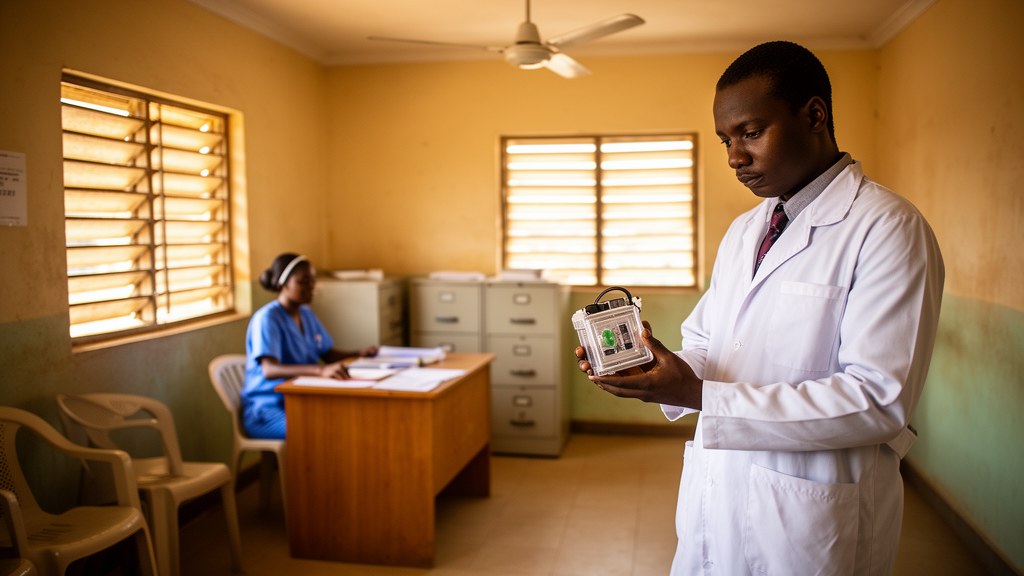
University health centers in southwestern Nigeria may be exposing patients and medical staff to endocrine-disrupting compounds (EDCs) circulating in their indoor air, according to a new study published in Air Quality, Atmosphere & Health. The research examined indoor aerosols collected from air-conditioning systems at medical centers of seven universities across the region, testing for six widely used EDCs: the parabens methylparaben, ethylparaben, propylparaben and butylparaben, along with bisphenol A (BPA) and triclosan.
The team set out to determine whether these medical facilities fulfill their intended purpose of promoting health and well-being, or whether they inadvertently contribute to long-term health problems for the patients and workers inside them. The particles also showed a measured surface area of 8.07 square meters per gram, a property the authors say indicates a tendency for rapid mobility and retention in the alveolar region of the lungs once inhaled.
Concentration patterns varied by compound and by location. Triclosan recorded the highest mean concentration overall at 23,571 nanograms per gram, followed by butylparaben at 8,017 nanograms per gram and methylparaben at 3,609 nanograms per gram. Butylparaben predominated in more than half of the institutions sampled, with values ranging from 5,289.29 to 8,017.03 nanograms per gram. The university located in the most densely populated state showed the greatest concentration levels for all monitored EDCs except propylparaben and triclosan.
Exposure assessment pointed to ingestion as the principal route through which people encounter these compounds in the indoor environment. Hazard quotient estimates indicated elevated risks for vulnerable populations, and bisphenol A, with hazard quotient values spanning 0.000004 to 20.8, contributed substantially to the overall hazard index. The wide range reflects variation across the sampled settings, but the upper values signal potentially significant risk where concentrations are highest.
The study also found significant correlations exceeding 0.75 among several of the EDCs, which the authors interpret as evidence of shared sources.
The authors conclude that university health centers can act as hotspots for EDC exposure and call for urgent policy interventions. Because the samples came from air-conditioning systems rather than personal monitoring devices, the findings characterize contamination of the indoor aerosol environment rather than measured doses absorbed by individuals. The hazard estimates are model-based calculations from measured concentrations, not observed health outcomes in patients or staff.
What the results do establish is that these compounds are present, concentrated and potentially mobile within the fine aerosol fraction of the indoor air in facilities whose core mission is health protection.
Subject of Research: Measurement of endocrine-disrupting compounds in indoor aerosols of university health centers in southwestern Nigeria
Article Title: Indoor aerosol surveillance of endocrine-disrupting compounds in university health centers
Article References: Bamigboye, O., Alfred, M. O., Olorunnisola, C. G., Omorogie, M. O., Oladoja, N. A., & Unuabonah, E. I. (2026). Indoor aerosol surveillance of endocrine-disrupting compounds in university health centers. Air Quality, Atmosphere & Health, 19(11), Article 246. https://doi.org/10.1007/s11869-026-02135-w
Image Credits: AI Generated
DOI: 10.1007/s11869-026-02135-w
Keywords: endocrine-disrupting compounds, indoor air quality, parabens, bisphenol A, triclosan, aerosols, university health centers, Nigeria, hazard quotient, exposure assessment, Indoor, aerosol
News Source: Russell Cooper. (October 27, 2026). Endocrine-Disrupting Chemicals Found in Indoor Air of Nigerian University Health Centers. Scienmag.