

• HOME
  • NEWS
  • EXPLORE
    • CAREER
      • Companies
      • Jobs
    • EVENTS
    • iGEM
      • News
      • Team
    • PHOTOS
    • VIDEO
    • WIKI
  • BLOG
  • COMMUNITY
    • FACEBOOK
    • INSTAGRAM
    • TWITTER
Monday, December 29, 2025
BIOENGINEER.ORG
No Result
View All Result
  • Login
  • HOME
  • NEWS
  • EXPLORE
    • CAREER
      • Companies
      • Jobs
        • Lecturer
        • PhD Studentship
        • Postdoc
        • Research Assistant
    • EVENTS
    • iGEM
      • News
      • Team
    • PHOTOS
    • VIDEO
    • WIKI
  • BLOG
  • COMMUNITY
    • FACEBOOK
    • INSTAGRAM
    • TWITTER
  • HOME
  • NEWS
  • EXPLORE
    • CAREER
      • Companies
      • Jobs
        • Lecturer
        • PhD Studentship
        • Postdoc
        • Research Assistant
    • EVENTS
    • iGEM
      • News
      • Team
    • PHOTOS
    • VIDEO
    • WIKI
  • BLOG
  • COMMUNITY
    • FACEBOOK
    • INSTAGRAM
    • TWITTER
No Result
View All Result
Bioengineer.org
No Result
View All Result
Home NEWS Science News

Empowering European structural biology

Bioengineer by Bioengineer
December 19, 2019
in Science News
Reading Time: 2 mins read
0
IMAGE
Share on FacebookShare on TwitterShare on LinkedinShare on RedditShare on Telegram

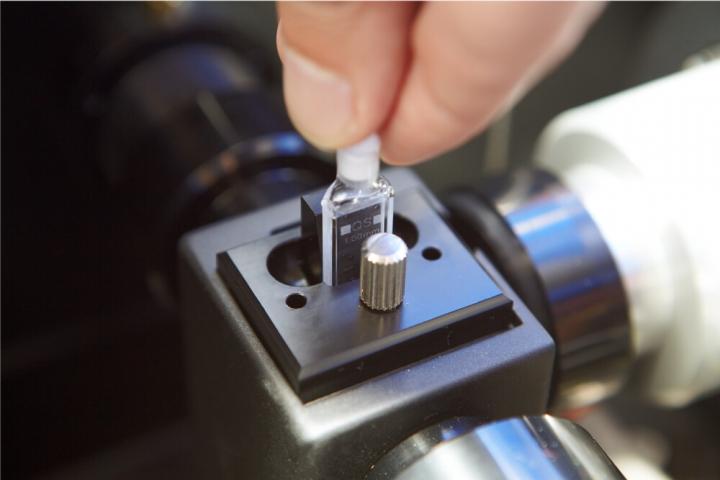
The EU grants 10 million euro to the iNEXT-Discovery consortium, in which EMBL is a major partner, unlocking key technologies for structural biology researchers
IMAGE

Credit: Marietta Schupp/EMBL


iNEXT-Discovery empowers researchers from European institutes to pursue innovative structural biology research. The consortium facilitates the generation of knowledge by enabling leading European facilities to offer advanced technological instrumentation and expertise to all European scientists, allowing them to perform high-end structural biology research with state-of-the-art equipment that is often unavailable in their home countries. Structural biology is critical for the development of new drugs and vaccines, biomaterials, efficient biofuels and for enzymes that degrade pollutants. iNEXT-discovery will support projects with high translational potential in all of these areas and more.

EMBL participates in the consortium through its sites in Grenoble, Hamburg, Heidelberg and Hinxton. All are leading providers of complementary cutting-edge structural biology technologies that will be provided over four years. EMBL Heidelberg will offer access to cryo-electron microscopy (cryo-EM) and EMBL Grenoble and EMBL Hamburg will provide access to various synchrotron X-ray related technologies including macromolecular crystallography (MX), small angle X-ray scattering (SAXS) and small molecule and fragment screening. EMBL-EBI in Hinxton will participate in data management activities.

For the past four years, EMBL was a partner in the predecessor project of iNEXT-Discovery, iNEXT. The access to advanced light microscopy, cryo-EM, MX, and SAXS that was provided to over four hundred scientists has already led to numerous publications, many in leading journals.

The iNEXT-Discovery project will also develop the next generation of structural biology technologies. EMBL Grenoble will establish advanced data analysis pipelines, a repository for fragment screening data in collaboration with EMBL-EBI and other iNEXT discovery partners, cloud-based crystallography data analysis, and a new instrument for automated grid preparation for cryo-EM, including measurement of ice thickness, in collaboration with EMBL Heidelberg. EMBL Hamburg will develop a robust automated sample evaluation workflow for X-ray crystallography, and EMBL Heidelberg will develop scripts for cryo-FIB automation.

###

Media Contact
EMBL Press Office
[email protected]
Tags: BioinformaticsBiologyBiomedical/Environmental/Chemical EngineeringBiotechnologyCell BiologyMolecular BiologyResearch/DevelopmentTechnology/Engineering/Computer Science
Share12Tweet8Share2ShareShareShare2

Related Posts

Neonatal ICU Exposures Affect Newborn Brain Development

Neonatal ICU Exposures Affect Newborn Brain Development

December 29, 2025

Girdin Silencing Boosts Mebendazole’s Ovarian Cancer Fight

December 29, 2025

Eco-Friendly Zinc Oxide from Palm Leaves for Amoxicillin Degradation

December 29, 2025

Maternal Low Sodium, Postnatal Diuretics Harm Metabolism, Breathing

December 29, 2025
Please login to join discussion

POPULAR NEWS

  • Robotic Waist Tether for Research Into Metabolic Cost of Walking

    NSF funds machine-learning research at UNO and UNL to study energy requirements of walking in older adults

    71 shares
    Share 28 Tweet 18
  • Exploring Audiology Accessibility in Johannesburg, South Africa

    51 shares
    Share 20 Tweet 13
  • Nurses’ Views on Online Learning: Effects on Performance

    70 shares
    Share 28 Tweet 18
  • SARS-CoV-2 Subvariants Affect Outcomes in Elderly Hip Fractures

    44 shares
    Share 18 Tweet 11

About

We bring you the latest biotechnology news from best research centers and universities around the world. Check our website.

Follow us

Recent News

Neonatal ICU Exposures Affect Newborn Brain Development

Girdin Silencing Boosts Mebendazole’s Ovarian Cancer Fight

Eco-Friendly Zinc Oxide from Palm Leaves for Amoxicillin Degradation

Subscribe to Blog via Email

Enter your email address to subscribe to this blog and receive notifications of new posts by email.

Join 71 other subscribers
  • Contact Us

Bioengineer.org © Copyright 2023 All Rights Reserved.

Welcome Back!

Login to your account below

Forgotten Password?

Retrieve your password

Please enter your username or email address to reset your password.

Log In
No Result
View All Result
  • Homepages
    • Home Page 1
    • Home Page 2
  • News
  • National
  • Business
  • Health
  • Lifestyle
  • Science

Bioengineer.org © Copyright 2023 All Rights Reserved.

