


RIVERSIDE, Calif. — A new study from the University of California, Riverside reveals how orthonairoviruses, a group of tick-borne pathogens, can disarm key immune defenses. The work points to molecular strategies that may help these viruses establish infection and highlights why they remain a concern for emerging infectious disease risk.
Orthonairoviruses include Crimean-Congo hemorrhagic fever virus, notorious for causing severe hemorrhagic illness in humans. The study centers on ovarian tumor domain proteases (OTUs), viral enzymes that undermine host immune signaling rather than simply evading detection at the surface.
Under normal conditions, immune pathways rely on small regulatory proteins such as ubiquitin and ISG15 to coordinate detection and antiviral responses inside infected cells. The research shows that OTUs can remove these signals, effectively silencing cellular communication routes that would otherwise flag infection and amplify defense.
The investigators report that the virus employs OTUs at multiple stages to “disarm” immunity, increasing the likelihood that infection takes hold. Beyond this known immune-suppressing activity, the team also describes a third, previously uncharacterized function of OTUs. While its role in immune evasion appears meaningful, the underlying mechanism remains to be fully defined.
The paper is published in ACS Infectious Diseases and selected as an ACS Editors’ Choice. It examines how OTUs disrupt critical intracellular processes, providing a structural and functional view of the virulence factors used by emerging human nairoviruses.
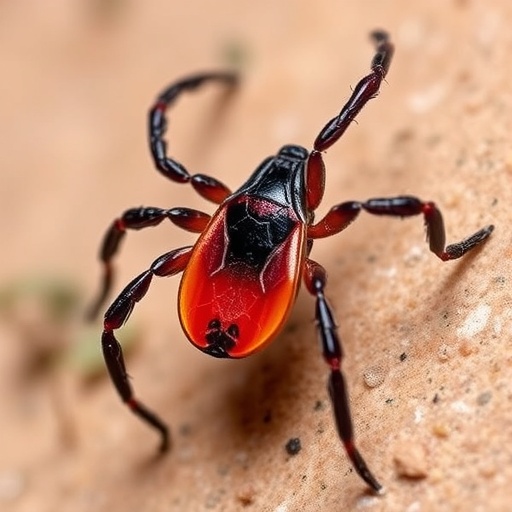
Importantly, the findings extend beyond theory. Orthonaïroviruses continue to be discovered worldwide, and in the United States the Pacific Coast tick already transmits several serious bacterial and viral diseases. Prior work has identified nairoviruses associated with these ticks, raising the possibility of unrecognized exposure pathways for humans.
The authors emphasize that the OTU mechanism studied is highly compatible with humans, suggesting that at least some tick-borne orthonairoviruses may interact efficiently with human immune machinery. Combined with existing tick-to-human transmission of other diseases, this compatibility increases the likelihood of contact that could go undetected without targeted surveillance.
Although the results strengthen concerns about pandemic potential within the broader Nairoviridae family, the researchers caution that more work is needed to determine whether the virus currently infects people and causes disease. Future studies are expected to evaluate human exposure across the tick’s geographic range.
Until then, the team advises continued prevention of tick bites and attention to the specific tick species involved, since different species may carry different, sometimes unmonitored pathogens. The study also reinforces the need for rapid identification tools and sustained monitoring to improve readiness for future outbreaks driven by evolving viruses.
Subject of Research: Not applicable
Article Title: Insights into the Structure and Function of the OTU Protease Virulence Factors from Emerging Human Nairoviruses
News Publication Date: 13-Jul-2026
Web References: https://pubs.acs.org/doi/full/10.1021/acsinfecdis.6c00320 ; http://dx.doi.org/10.1021/acsinfecdis.6c00320
References: ACS Infectious Diseases (DOI: 10.1021/acsinfecdis.6c00320)
Image Credits:
Keywords: orthonairoviruses; tick-borne viruses; OTU protease; immune evasion; ubiquitin; ISG15; ubiquitination; ISG15 signaling; nairovirus; Nairoviridae; pandemic potential
Tags: ACS Infectious Diseases publicationadvancements in infectious disease researchCrimean-Congo hemorrhagic fever virusemerging infectious disease riskImmune Evasion Mechanismsmolecular strategies of tick-borne virusesnovel functions of viral OTUsTick-borne orthonairovirusesubiquitin and ISG15 modulationviral immune suppression strategiesviral ovarian tumor domain proteasesvirus-host immune interactions


