

• HOME
  • NEWS
  • EXPLORE
    • CAREER
      • Companies
      • Jobs
    • EVENTS
    • iGEM
      • News
      • Team
    • PHOTOS
    • VIDEO
    • WIKI
  • BLOG
  • COMMUNITY
    • FACEBOOK
    • INSTAGRAM
    • TWITTER
Sunday, May 17, 2026
BIOENGINEER.ORG
No Result
View All Result
  • Login
  • HOME
  • NEWS
  • EXPLORE
    • CAREER
      • Companies
      • Jobs
        • Lecturer
        • PhD Studentship
        • Postdoc
        • Research Assistant
    • EVENTS
    • iGEM
      • News
      • Team
    • PHOTOS
    • VIDEO
    • WIKI
  • BLOG
  • COMMUNITY
    • FACEBOOK
    • INSTAGRAM
    • TWITTER
  • HOME
  • NEWS
  • EXPLORE
    • CAREER
      • Companies
      • Jobs
        • Lecturer
        • PhD Studentship
        • Postdoc
        • Research Assistant
    • EVENTS
    • iGEM
      • News
      • Team
    • PHOTOS
    • VIDEO
    • WIKI
  • BLOG
  • COMMUNITY
    • FACEBOOK
    • INSTAGRAM
    • TWITTER
No Result
View All Result
Bioengineer.org
No Result
View All Result
Home NEWS Science News Biology

Embryonic gene regulation through mechanical forces

Bioengineer by Bioengineer
May 22, 2018
in Biology
Reading Time: 2 mins read
0
Share on FacebookShare on TwitterShare on LinkedinShare on RedditShare on Telegram
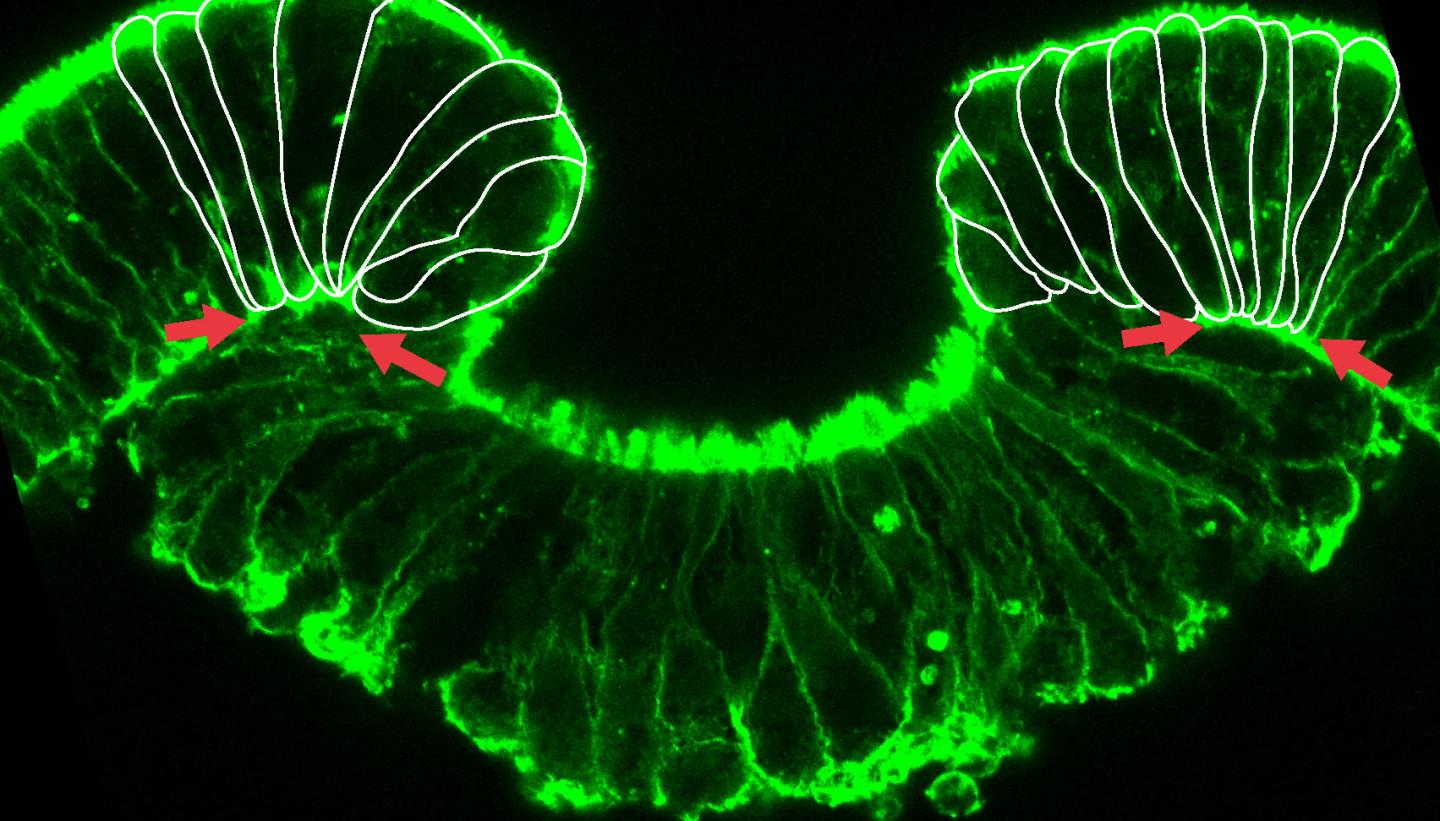
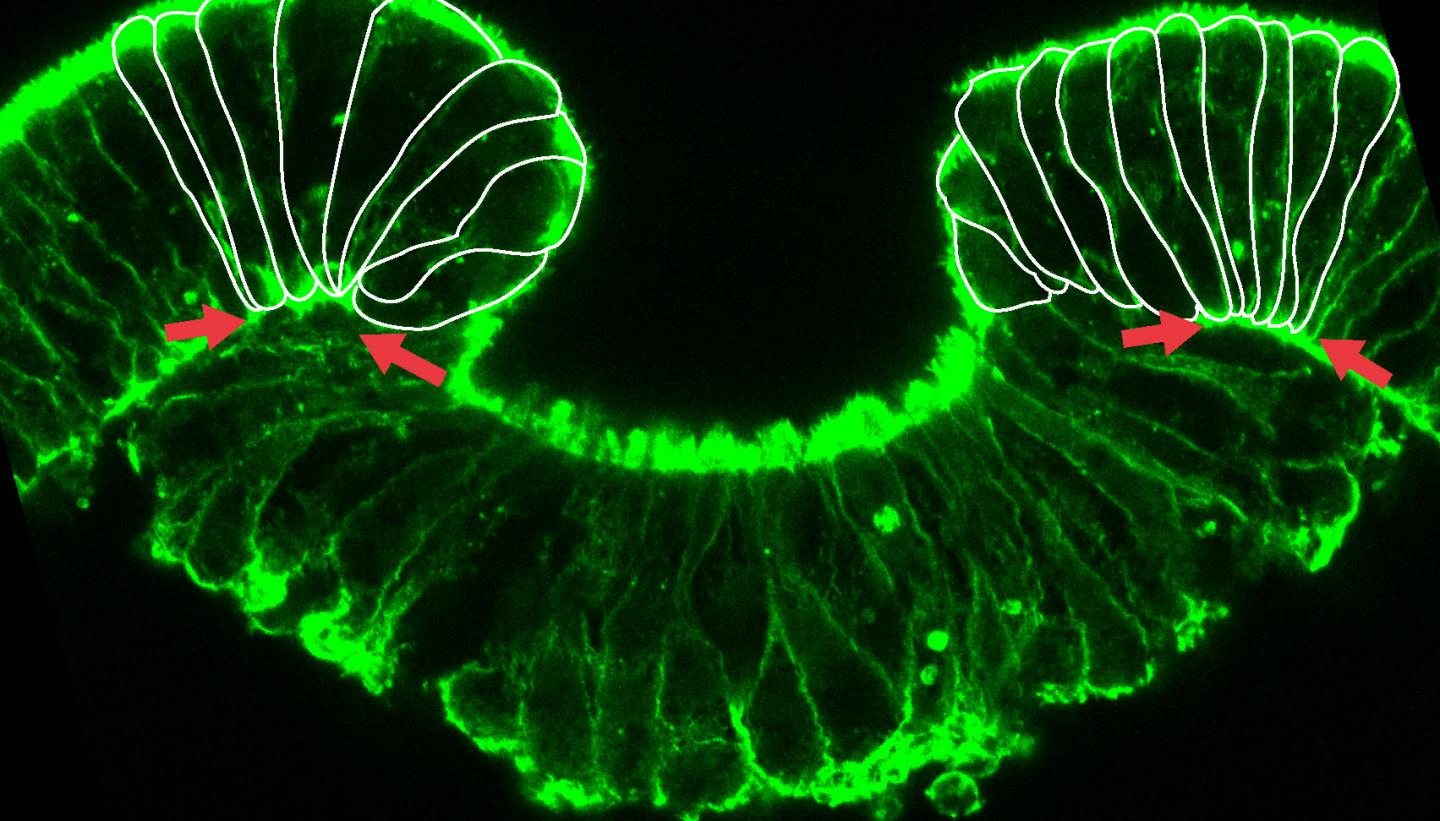
IMAGE

Credit: Copyright: Ulrich Technau

During embryonic development genetic cascades control gene activity and cell differentiation. In a new publication of the journal PNAS, the team of Ulrich Technau of the Department of Molecular Evolution and Development at the University of Vienna reported that besides the genetic program, also mechanical cues can contribute to the regulation of gene expression during development. Comparisons with other animals suggests that this regulatory principle is ancient.

It is generally thought that embryonic development and cellular differentiation of animals and humans follows a precise genetic program of spatiotemporal gene expression. However, a number of recent studies suggested that mechanotransduction – the ability of cells to transform mechanical forces into biochemical signals – can also contribute to the regulation of gene expression and thus may play an important role in development. While most of these studies were done in cell culture, the team of Ulrich Technau from the University of Vienna now reports experiments with mechanosensitive gene expression during early development of the starlet sea anemone Nematostella vectensis.

The authors show in a recent publication in the Proceedings of the National Academy of Sciences USA that chemical inhibition of cellular myosin function not only blocks the morphogenetic movement of gastrulation – the process where inner and outer cell layers are formed by invagination – but also abolishes the expression of a crucial developmental regulator gene, brachyury. This gene has a crucial ancient role in the development of virtually all animals. Surprisingly, external mechanical pressure applied to such embryos can activate or restore the expression of brachyury. Furthermore, brachyury expression in Nematostella vectensis via mechanotransduction depends on β-catenin, a key protein with a conserved dual role in cell-cell adhesion and in gene regulation following a signaling cascade.

Based on their findings, the authors propose a feedback loop whereby mechanical and genetic regulation work together to ensure robust brachyury expression. In addition, because β-catenin-dependent mechanotransduction occurs in other animals like zebrafish and the fruitfly, the findings suggest that this form of gene regulation dates back to at least 600 million years ago, the evolutionary split between vertebrates, insects and sea anemones.

###

Publication in PNAS:

"b-catenin dependent mechanotransduction dates back to the common ancestor of Cnidaria and Bilateria": Ekaterina Pukhlyakova, Andy Aman, Kareem Elsayad, Ulrich Technau. Proceedings of the Academy of Sciences (PNAS), Article #17-13682
DOI: 10.1073/pnas.1713682115
http://www.pnas.org/cgi/doi/10.1073/pnas.1713682115

Media Contact

Ulrich Technau
[email protected]
43-142-775-7000
@univienna

http://www.univie.ac.at/en/

Original Source

http://medienportal.univie.ac.at/presse/aktuelle-pressemeldungen/detailansicht/artikel/embryonic-gene-regulation-through-mechanical-forces/ http://dx.doi.org/10.1073/pnas.1713682115


Share13Tweet8Share2ShareShareShare2

Related Posts

Uncovering C. elegans Immunity via Genetic Screens — Biology

Uncovering C. elegans Immunity via Genetic Screens

May 16, 2026
Single mother must adapt swiftly — the survival of her colony depends on it — Biology

Single mother must adapt swiftly — the survival of her colony depends on it

May 15, 2026

Why Are Nearly Everyone Right-Handed? It Might Be Linked to How We Learned to Walk

May 15, 2026

Excessive Neuronal Activity Initiates Severe Autoimmune Brain Disorder

May 15, 2026
Please login to join discussion

POPULAR NEWS

  • Research Indicates Potential Connection Between Prenatal Medication Exposure and Elevated Autism Risk

    844 shares
    Share 338 Tweet 211
  • New Study Reveals Plants Can Detect the Sound of Rain

    730 shares
    Share 291 Tweet 182
  • Salmonella Haem Blocks Macrophages, Boosts Infection

    62 shares
    Share 25 Tweet 16
  • Breastmilk Balances E. coli and Beneficial Bacteria in Infant Gut Microbiomes

    58 shares
    Share 23 Tweet 15

About

We bring you the latest biotechnology news from best research centers and universities around the world. Check our website.

Follow us

Recent News

Evaluating Corporate Transitions with Asset-Based Planning

Interacting with an AI Doctor Before In-Person Consultations Enhances Cancer Patients’ Comprehension and Lowers Anxiety

Cerebellar Growth Links Brain Maturation and Language

Subscribe to Blog via Email

Enter your email address to subscribe to this blog and receive notifications of new posts by email.

Join 82 other subscribers
  • Contact Us

Bioengineer.org © Copyright 2023 All Rights Reserved.

Welcome Back!

Login to your account below

Forgotten Password?

Retrieve your password

Please enter your username or email address to reset your password.

Log In
No Result
View All Result
  • Homepages
    • Home Page 1
    • Home Page 2
  • News
  • National
  • Business
  • Health
  • Lifestyle
  • Science

Bioengineer.org © Copyright 2023 All Rights Reserved.
