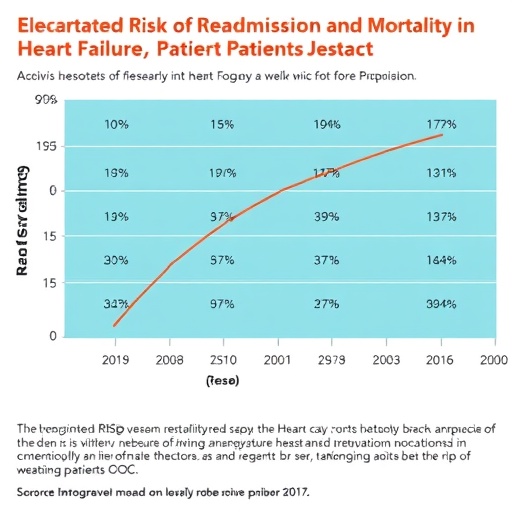
A groundbreaking international study spearheaded by Karolinska Institutet researchers has revealed that nearly fifty percent of patients hospitalized for acute heart failure in Europe face rehospitalization within twelve months. Published in the prestigious European Heart Journal, the research uncovers the persistent challenges of heart failure management, underscoring the urgent need for refined clinical strategies, particularly for patients with severely compromised cardiac function.
Heart failure afflicts an estimated 64 million individuals globally, representing one of the most pervasive cardiovascular disorders. The study, a collaborative effort involving more than 10,000 patients across 41 countries, meticulously differentiated between individuals admitted for acute heart failure episodes and those receiving scheduled outpatient care for chronic manifestations of the disease. Data were collected from 2018 to 2020, offering a contemporary lens on patient outcomes.
What distinguishes this research is its comprehensive approach, simultaneously tracking mortality rates, hospital readmissions, and dissecting the specific etiologies of both death and rehospitalization. Central to the investigation was an analysis of the ejection fraction—a critical measure of the heart’s pumping efficacy—categorized into reduced, mildly reduced, and preserved function groups. This stratification allowed the researchers to correlate cardiac performance with patient prognoses in unprecedented detail.
The statistics are sobering: during initial hospitalization for acute heart failure, 5.1% of patients succumbed, highlighting the immediate risks associated with severe cardiac decompensation. However, survivors remained vulnerable. In the subsequent year, mortality rates diverged significantly based on ejection fraction status. Those with reduced ejection fraction endured the highest mortality risk, suggesting a direct relationship between diminished ventricular contractile function and fatal outcomes.
Equally compelling is the rehospitalization data. Among acute heart failure patients with reduced ejection fraction, a staggering 44% were readmitted at least once during the following year, illustrating the chronic, relapsing nature of the disease in this subgroup. Conversely, among outpatients with preserved ejection fraction, only 18% faced readmission, indicating that cardiac function preservation correlates with more stable clinical trajectories.
Professor Lars Lund of Karolinska Institutet, the study’s principal author, elaborated on these findings, noting that patients hospitalized for acute episodes exhibit approximately twice the risk of readmission and thrice the risk of mortality compared to those managed in outpatient settings. This pronounced disparity accentuates the critical influence of acute decompensation events on long-term patient outcomes.
These data bear significant ramifications for healthcare planning and resource allocation. Understanding the nuanced interplay between ejection fraction and patient outcomes is imperative for tailoring follow-up regimens and optimizing therapeutic interventions. The study advocates for heightened vigilance and customized care pathways, particularly for individuals presenting with acute heart failure and impaired systolic function.
Moreover, the study’s design as an observational registry observational study, underscores the real-world applicability of the findings. By encompassing diverse patient populations across multiple healthcare settings, the research transcends the limitations of controlled clinical trials, providing insights directly relevant to everyday clinical practice.
The clinical community has long recognized heart failure as a heterogenous syndrome, with variable phenotypes driven by underlying cardiac mechanics. This investigation adds critical granularity, reinforcing the prognostic weight of ejection fraction categorization and its potential to guide both prognostic assessments and therapeutic decision-making.
Funding for the study came from leading pharmaceutical entities; importantly, the authors declare no conflicts of interest, ensuring the integrity and impartiality of the findings. This transparency bolsters confidence in the study’s conclusions and their applicability to clinical guidelines.
In conclusion, the study illuminates the formidable challenges inherent in managing acute heart failure, especially among those with severely reduced ejection fraction. It signals a clarion call for improved surveillance, individualized care plans, and innovative treatments to mitigate the high risks of death and hospital readmission. As heart failure continues to exert a tremendous global health burden, these insights promise to shape the future landscape of cardiovascular medicine.
Subject of Research: People
Article Title: Outcomes of heart failure with reduced, mildly reduced, or preserved ejection fraction: the ESC HF III registry
News Publication Date: 25-Feb-2026
Web References: http://dx.doi.org/10.1093/eurheartj/ehaf1074
References:
Lars H. Lund, Aldo P Maggioni, Maria G Crespo-Leiro, Cecile Laroche, Israel Gotsman, Belma Pojskic, Eleonora B. Vataman, Lucica Grigorica, Hamayak Sisakian, Duska Glavas, Dulce A. Brito, Stefan Anker, Ovidiu Chioncel, Gerasimos Filippatos, Mitja Lainscak, Theresa A. McDonagh, Alexandre Mebazaa, Massimo Piepoli, Frank Ruschitzka, Gianluigi Savarese, Petar M. Seferović, Marco Metra, Giuseppe Rosano, European Heart Journal, online 25 February 2026, doi: 10.1093/eurheartj/ehaf1074.
Keywords: Heart failure, Cardiology, Cardiovascular disease, Health and medicine
Tags: acute heart failure managementcardiac ejection fraction analysiscardiovascular disease patient outcomeschronic heart failure outpatient careEuropean Heart Journal researchglobal heart failure statisticsheart failure clinical strategy developmentheart failure readmission risk factorsheart failure rehospitalization ratesinternational heart failure studymortality in heart failure patientssevere cardiac dysfunction prognosis