A research team led by the University of Chicago Pritzker School of Molecular Engineering has identified electrostatic charging as the dominant beam damage mechanism when imaging solid-state sodium battery electrolytes with electron microscopes. The peer-reviewed study, published in Microscopy and Microanalysis under the title Sodium Expulsion From Sodium closo-Hydroborates Under Electron Beam-Induced Bias, demonstrates that electron irradiation causes localized charging rather than standard radiolysis in these materials. By identifying and controlling this phenomenon, the researchers converted an unintended beam effect into a diagnostic tool, using the beam’s bias to drive mobile sodium ions across the electrolyte framework and nucleate sodium metal crystals on the opposite side of the sample.
Electron microscopy provides an invaluable method for examining molecular and atomic structures at the interfaces of battery components, offering insights necessary to develop faster-charging, higher-capacity, and longer-lasting energy storage systems. However, high-energy electron beams routinely alter or destroy fragile materials during imaging. In battery research, intense electron dosages can distort delicate structures, leading to inaccurate diagnostic conclusions if the damage mechanisms are not carefully characterized. The research team focused on evaluating how modern electron microscope workflows interact with sodium-based battery components, seeking to establish reliable imaging parameters that avoid misinterpreting beam-induced artifacts as native material properties.
The study directly addresses the growing demand for alternatives to conventional lithium-ion batteries. While lithium-ion chemistries provide high energy density, lithium supplies face geological constraints, and commercial cells often depend on restricted transition metals such as cobalt and copper. Sodium and sulfur offer practical advantages due to the broad abundance and lower cost of raw materials. To advance these alternatives, researchers in the Laboratory for Energy Storage and Conversion, directed by Shirley Meng, have sought to understand the microscopic processes that dictate performance and lifetime in solid-state sodium battery designs, specifically focusing on interphase stability.
In standard commercial batteries, capacity degradation over time typically stems from parasitic side reactions between liquid electrolytes and electrode surfaces, resulting in the continuous growth of a resistive solid electrolyte interphase layer. In 2024, the laboratory debuted an anode-free sodium solid-state battery that mitigated these parasitic losses by substituting liquid electrolytes with a stable sodium solid-state electrolyte. To observe why this configuration maintained high stability across operational cycles, the investigators aimed to directly inspect the interface between the solid electrolyte and metallic sodium using advanced electron microscopy.
The experimental work arose from a three-way collaboration between the University of Chicago Pritzker School of Molecular Engineering, Argonne National Laboratory, and Thermo Fisher Scientific, supported through the Department of Energy Energy Storage Research Alliance. Together, the collaborating partners deployed a state-of-the-art electron microscope equipped with highly sensitive, fast direct electron detectors and chemical spectroscopy tools. For typical microscopy experiments, materials frequently require dose stabilities spanning tens of thousands to hundreds of thousands of electrons per square angstrom. The advanced detector suite at Argonne enabled the researchers to gather structural and chemical data using low electron doses between 10 and 50 electrons per square angstrom before sample alteration occurred.
To prevent preliminary atmospheric degradation, the researchers utilized an inert gas transfer method that allowed them to insert sodium solid-state electrolyte specimens into the microscope column at room temperature. In conventional battery microscopy over the past decade, researchers standardly employ cryogenic temperatures to suppress radiolysis damage. When the team applied cryogenic cooling to the sodium closo-hydroborate solid-state electrolyte, they observed no mitigation of beam damage. The absence of cryogenic protection provided the first empirical indication that an entirely distinct degradation pathway governed sample destruction in these materials.
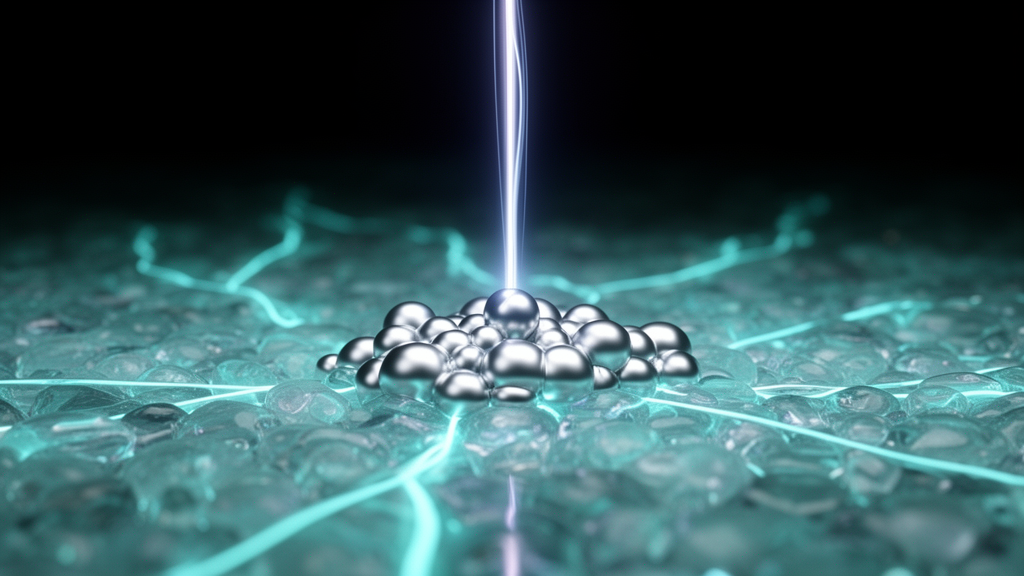
Systematic evaluation across multiple imaging conditions established that electrostatic charging damage was the primary mechanism driving beam-induced degradation. Because sodium ions possess high ionic mobility within the conductive closo-hydroborate framework, the localized electrical bias created by the focused electron beam displaced sodium ions away from the irradiated zone. When the researchers selectively scanned the electron beam across a discrete area of the sample, the induced bias chased mobile sodium ions through the crystal structure, causing sodium metal to nucleate cleanly on the opposite surface.
This controlled nucleation allowed the investigators to directly observe a pristine interface formed between the sodium solid-state electrolyte and freshly deposited sodium metal. The resulting interface directly mirrored the initial sodium deposition process occurring in anode-free solid-state batteries.
Subject of Research: Electron beam-induced charging and sodium nucleation in solid-state battery electrolytes
Article Title: Exploring sodium batteries down to the atom
Article References: Exploring sodium batteries down to the atom. Original publication (Bibliographic details unavailable.)
Image Credits: AI Generated
DOI: Not provided
Keywords: Sodium batteries, Solid-state electrolyte, Electron microscopy, Electrostatic charging, Sodium closo-hydroborates, Beam damage, Direct electron detectors, Anode-free battery, Solid electrolyte interphase, Microscopy and Microanalysis, University of Chicago PME, Argonne National Laboratory, Energy Storage Research Alliance, Ionic conductivity, Cryogenic electron microscopy, Materials science
News Source: Faith Mcneil. (November 14, 2026). Electron Beam Charging Induces Controlled Sodium Metal Nucleation in Solid Electrolytes. Scienmag.