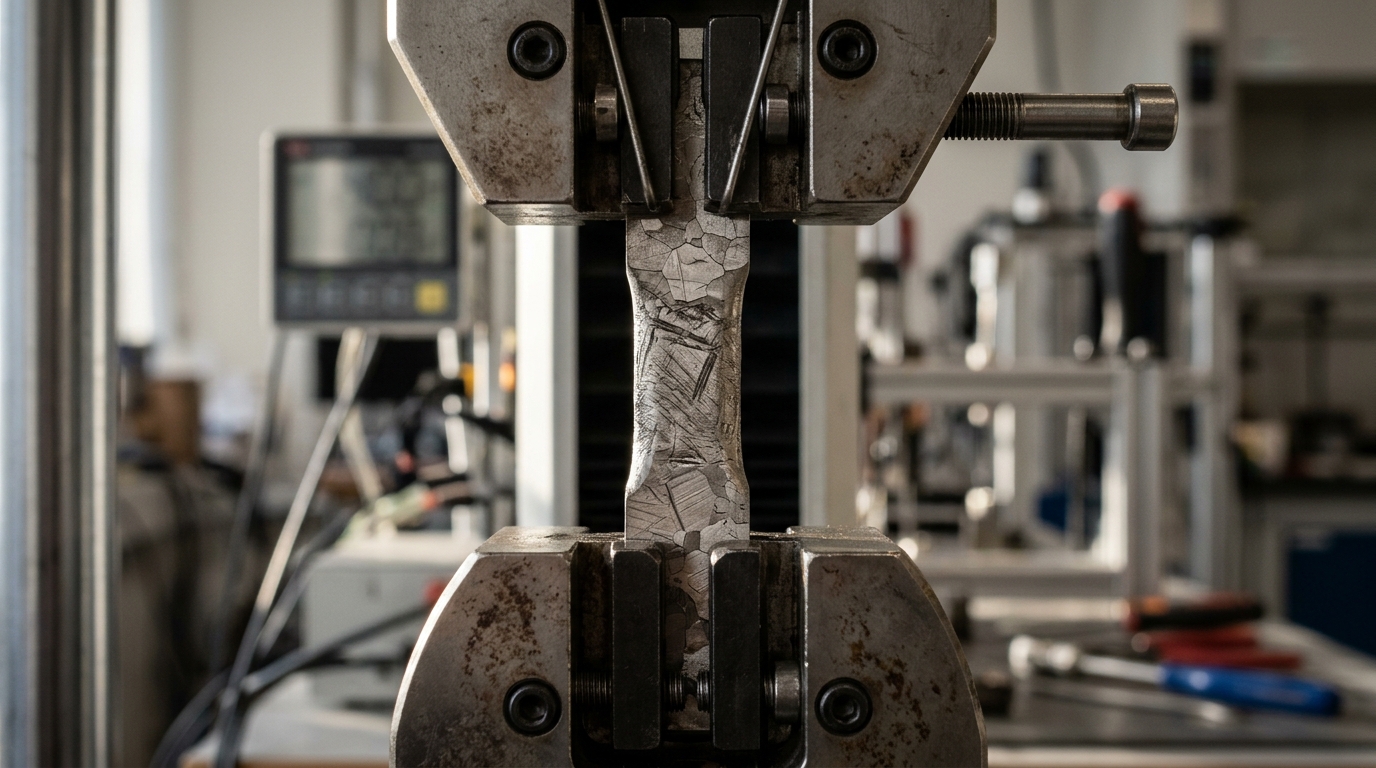
Magnesium alloys are prized as the lightest structural metals in engineering, yet they stubbornly resist the one property designers want most: ductility. A new review published in Applied Microscopy on 12 February 2026 consolidates decades of methodological progress around a single experimental workhorse, electron backscatter diffraction, or EBSD, and shows how far the technique has come in revealing exactly which slip systems carry plastic strain inside deformed magnesium. Written by Hafiz Muhammad Rehan Tariq and Tea-Sung Jun, the review argues that the answer to magnesium’s poor formability lies not in one dramatic discovery but in the systematic, quantitative reading of crystallographic orientation data that EBSD makes possible across entire polycrystalline microstructures.
The root of the problem is crystallographic. Magnesium crystallizes in a hexagonal close-packed structure, which offers far fewer easily activated deformation modes than the face-centered cubic or body-centered cubic lattices of more forgiving metals. At ambient temperature, basal slip on the {0001} plane dominates because it demands the lowest critical resolved shear stress, but it supplies only two independent slip systems. That falls short of the von Mises criterion, which requires at least five independent systems for homogeneous plastic flow in a polycrystal. The consequence is stark: strain localizes, damage nucleates early, and the alloy fractures prematurely. Non-basal slip on prismatic and pyramidal planes can in principle accommodate deformation along the crystallographic c-axis, but these systems demand substantially higher critical resolved shear stresses, and atomistic simulations have shown that dislocations in the pyramidal system tend to dissociate into partials on basal planes, forming sessile segments that impede further glide and aggravate strain hardening.
Compounding this slip-system scarcity is texture. Rolling and extrusion, the standard thermomechanical processing routes for magnesium sheet and bar, typically produce a strong basal texture in which the c-axes of most grains align nearly parallel to the sheet normal. Under loading along the rolling direction, basal slip in such a texture operates at a low Schmid factor, meaning the applied stress resolves poorly into shear on the basal planes, and ductility suffers accordingly. Weaker or tilted basal textures, in which many grains have c-axes inclined away from the normal direction, display Schmid factors approaching the theoretical maximum of about 0.5 and show improved ductility because basal and non-basal slip activate more readily. Before any of this can be quantified, however, the active slip systems must be identified, and that is precisely where the review locates the field’s methodological advance.
Traditionally, transmission electron microscopy paired with Burgers vector analysis served as the definitive tool for determining dislocation character and hence the operative slip systems. The technique delivers high spatial resolution and precise crystallographic information, but its practical reach is constrained by a small observable area and the extensive time each dataset demands. EBSD inverts that trade-off. By scanning an electron beam across a polished surface and recording the diffraction pattern at each point, it builds orientation maps covering many grains at once, from which orientation gradients, lattice rotations, and surface trace geometry can be extracted to infer slip activity. Grain orientations are described by Euler angles, and the review walks through the geometric foundations: in hexagonal crystals a four-axis notation describes planes and directions, a Cartesian frame is introduced for calculation, and the projection of a slip-plane normal onto the sample surface always lies perpendicular to the resulting slip trace, a relationship that fixes the trace direction for any given grain orientation.
The first quantitative pillar the review examines is Schmid factor analysis. The Schmid factor expresses how efficiently an applied normal stress converts into resolved shear stress on a specific slip system, depending on the angles between the load axis, the slip-plane normal, and the slip direction. Crystals with higher Schmid factors reach their critical resolved shear stress at lower applied loads and yield first; crystals with low factors resist plastic flow and may instead fail by cleavage or brittle fracture if the stress exceeds the fracture threshold first. The maximum theoretical value of 0.5 occurs when both geometric angles equal 45 degrees, the optimal orientation for slip activation. The framework extends to three-dimensional stress states through a generalized Schmid factor written as a tensor expression involving the Burgers vector, the stress tensor, and the slip-plane normal, enabling resolved shear stress calculations for non-uniaxial loading paths that are common in real magnesium components.
Applied across a microstructure, Schmid factor mapping becomes predictive. In one study highlighted in the review, each grain of an undeformed AZ31 magnesium alloy was color-coded by the slip system with the highest Schmid factor among basal , prismatic , pyramidal , and pyramidal options. The initial texture proved strongly biased toward non-basal slip, with grains favoring prismatic and pyramidal systems widely dominant and grains favoring basal slip least frequent. As compressive strain accumulated to 9 percent, the fraction of grains oriented favorably for basal slip rose from roughly 5.1 percent to 12.1 percent, while the proportion favoring pyramidal slip climbed from 22.1 percent to 46.3 percent, a progressive redistribution of deformation pathways as increasing strain activated additional systems. In a separate study of AZX311 magnesium deformed at room and cryogenic temperatures, average Schmid factors told a consistent story: basal systems averaged only about 0.26 to 0.27, prismatic systems about 0.37 to 0.39, and pyramidal systems roughly 0.47, indicating preferential engagement of prismatic and pyramidal slip regardless of deformation temperature.
The second pillar is in-grain misorientation axis analysis, or IGMA, which exploits a subtler fingerprint of slip. Every slip system produces a characteristic lattice rotation about a specific crystallographic axis, the Taylor axis, which lies within the slip plane and remains orthogonal to the slip direction. When dislocation glide curves the lattice inside a grain, neighboring EBSD measurement points acquire a misorientation about that axis. The IGMA method collects all orientation data within a grain, calculates the misorientation axis for every pair of neighboring grid points, and projects the resulting axis-density distribution onto the standard unit triangle in multiples of a uniform distribution. Grains with maximum IGMA intensity above 2 mud are classified as showing pronounced, non-random misorientation axes. Because the method distinguishes between slip modes across a misorientation range of 2.5 to 5 degrees, it can separate mechanisms that coexist within a single grain, something point measurements cannot do.
The review documents IGMA’s diagnostic power in concrete cases. In AZ61 magnesium extruded at 300 degrees Celsius and deformed to 5 percent strain at room temperature, representative grains showed misorientation-axis distributions clustering clearly around the [0001] pole, identifying prismatic slip as the predominant deformation mode. A companion study of AZ61-1CaO samples deformed to 10 percent strain found the same signature, with stronger IGMA intensities around the [0001] rotation axis confirming prismatic slip as the principal mechanism. The method demands care, however. EBSD carries a finite angular resolution, so analysts must establish a minimum reliable misorientation angle by examining the statistical behavior of neighboring-point misorientations within a representative grain, excluding angles below the resolution limit so that only physically meaningful lattice rotations contribute to the analysis. Multiple active slip variants can also blur the picture, since adjacent subgrains rotating along different Taylor axes generate net misorientations that deviate from any single ideal axis.
The third pillar, slip trace analysis, connects the crystallography directly to visible surface evidence. Dislocations gliding along specific planes produce discrete surface steps, and comparing these experimentally observed traces with theoretical traces calculated from EBSD-derived Euler angles identifies the active system. In a quasi-in-situ compression study of an aged Mg-10Y sheet, the same region was imaged before loading and after 1 percent and 4 percent compressive strain. For one representative grain, the experimental trace matched a prismatic slip system with a Schmid factor of 0.45 and an angular deviation of just 0.3 degrees. Systems combining high Schmid factors, typically above 0.3, with low deviation angles below 5 degrees are taken as dominant deformation modes. Across the deformed microstructure, more than 60 percent of activated slip systems showed Schmid factors above 0.3 at both strain levels, and fewer than 10 percent fell below 0.1, a pattern largely insensitive to the applied strain. The method has one blind spot: because the three basal slip variants share a single slip plane, slip trace analysis cannot distinguish among them, and the activated variant must be assumed to be the one with the highest Schmid factor. Pairing EBSD with high-resolution digital image correlation offers a route to resolving the slip direction and dislocation character more completely.
Beyond identifying slip within grains, the review emphasizes what happens when dislocations arrive at grain boundaries, the decisive juncture for strain localization and damage. Slip that transfers across a boundary promotes more uniform deformation, while slip that is blocked produces dislocation pile-ups, elevated local stress, and early cracking. Geometric compatibility criteria quantify the likelihood of transfer, most prominently the Luster-Morris parameter, which combines the alignment of Burgers vectors and slip-plane normals and can be computed entirely from surface slip traces and EBSD data. In grain-by-grain analysis of as-extruded, under-aged, and peak-aged Mg-10Y sheets, transferred slip pairs consistently showed Luster-Morris parameters exceeding 0.85 and often above 0.9, indicating strong geometric compatibility across all three aging conditions. The alternative LRB criterion, which additionally requires the twist angle describing the three-dimensional orientation of the boundary plane, remains debated because that angle is generally inaccessible from surface data alone, and its predictive performance has shown inconsistencies in complex boundary geometries. This two-dimensional limitation is the review’s central caveat: surface EBSD cannot reconstruct true grain-boundary geometry, curvature, or out-of-plane orientation, all of which govern slip transfer. Three-dimensional techniques such as diffraction contrast tomography and synchrotron-based X-ray microscopy, coupled with crystal plasticity finite element modeling, emerge as the field’s most promising direction, offering a path toward magnesium alloys engineered with genuinely improved ductility and strength.
Subject of Research: EBSD-based methods for quantifying slip activity and slip transfer in deformed magnesium alloys
Article Title: Advances in EBSD-based approaches for quantifying slip activity in deformed Mg alloys
Article References: Tariq, H. M. R., & Jun, T.-S. (2026). Advances in EBSD-based approaches for quantifying slip activity in deformed Mg alloys. Applied Microscopy, 56(1), Article 4. https://doi.org/10.1186/s42649-026-00124-y
Image Credits: AI Generated
DOI: 10.1186/s42649-026-00124-y
Keywords: magnesium alloys, electron backscatter diffraction, slip systems, Schmid factor, in-grain misorientation axis, slip trace analysis, grain boundaries, hexagonal close-packed, plastic deformation, ductility, diffraction contrast tomography, crystal plasticity
News Source: Denise Maddox. (November 5, 2026). Electron Backscatter Diffraction Maps the Hidden Slip Systems That Decide How Magnesium Alloys Bend and Break. Scienmag.