

• HOME
  • NEWS
  • EXPLORE
    • CAREER
      • Companies
      • Jobs
    • EVENTS
    • iGEM
      • News
      • Team
    • PHOTOS
    • VIDEO
    • WIKI
  • BLOG
  • COMMUNITY
    • FACEBOOK
    • INSTAGRAM
    • TWITTER
Sunday, May 31, 2026
BIOENGINEER.ORG
No Result
View All Result
  • Login
  • HOME
  • NEWS
  • EXPLORE
    • CAREER
      • Companies
      • Jobs
        • Lecturer
        • PhD Studentship
        • Postdoc
        • Research Assistant
    • EVENTS
    • iGEM
      • News
      • Team
    • PHOTOS
    • VIDEO
    • WIKI
  • BLOG
  • COMMUNITY
    • FACEBOOK
    • INSTAGRAM
    • TWITTER
  • HOME
  • NEWS
  • EXPLORE
    • CAREER
      • Companies
      • Jobs
        • Lecturer
        • PhD Studentship
        • Postdoc
        • Research Assistant
    • EVENTS
    • iGEM
      • News
      • Team
    • PHOTOS
    • VIDEO
    • WIKI
  • BLOG
  • COMMUNITY
    • FACEBOOK
    • INSTAGRAM
    • TWITTER
No Result
View All Result
Bioengineer.org
No Result
View All Result
Home NEWS Science News Health

Effects of deep brain stimulation in patients with Parkinson’s disease

Bioengineer by Bioengineer
August 28, 2018
in Health
Reading Time: 2 mins read
0
Share on FacebookShare on TwitterShare on LinkedinShare on RedditShare on Telegram
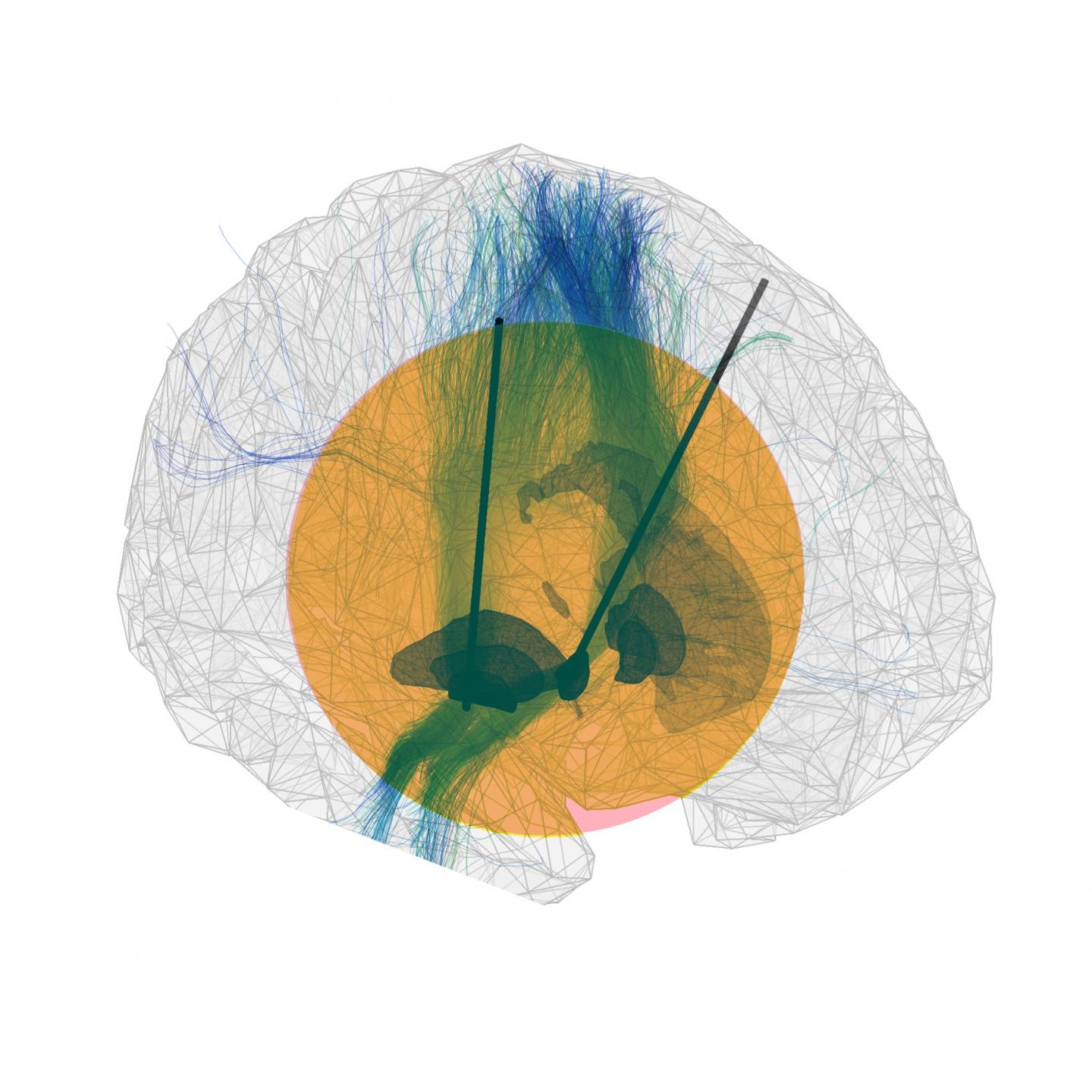
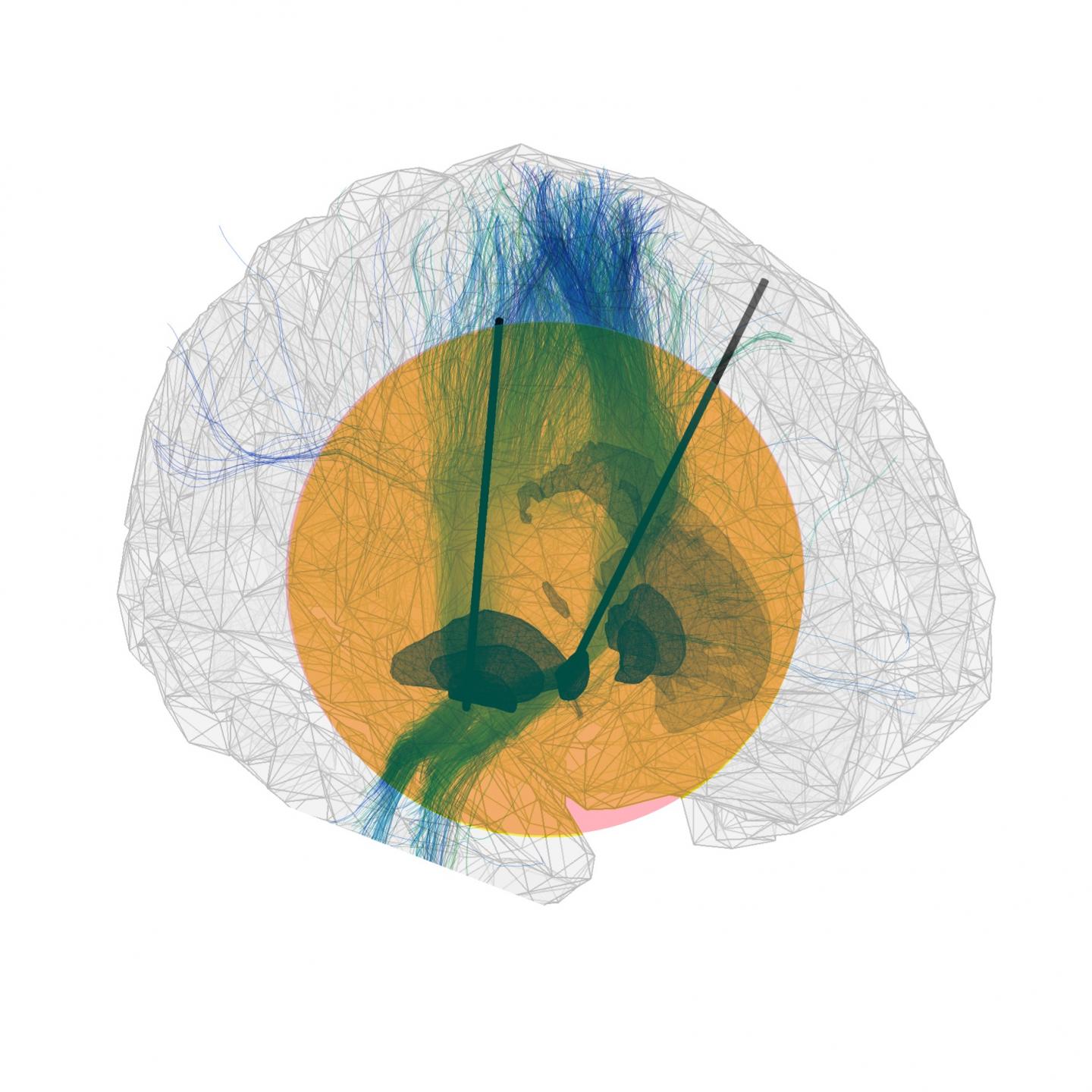
IMAGE

Credit: Neumann/Charité

Researchers from Charité – Universitätsmedizin Berlin have studied motor and cognitive effects of deep brain stimulation in patients with Parkinson's disease. Their results show that the adverse cognitive effects of deep brain stimulation are linked to a different neural pathway than that responsible for the treatment's desired motor effects. This finding will help optimize treatments for patients with Parkinson's disease. Results from this research have been published in Brain*.

Deep brain stimulation (DBS) is an effective treatment alternative for Parkinson's disease patients with an inadequate response to drug treatments. DBS targets the subthalamic nucleus, which forms part of the diencephalon, a division of the forebrain. The subthalamic nucleus integrates information from different neurons and is primarily responsible for motor processes, but also plays an important role in cognitive processes, such as decision-making and response modulation.

Researchers from Charité's Department of Neurology on Campus Charité Mitte have studied the effect of DBS on both cognitive and motor pathways. By combining behavioral experiments with brain mapping and computational modeling, the researchers were able to show that effects on motor function – such as improvements in motor control – are mediated by different neural pathways to those responsible for unwanted cognitive effects, such as premature actions in situations involving a decision-making process.

These findings enhance our understanding of the neuronal networks affected by Parkinson's disease, deliver insights into the pathophysiology of Parkinson's disease, and enable us to draw conclusions regarding the mechanism of action of DBS. "Only an improved understanding of the treatment's mechanism of action will allow us to make deep brain stimulation more effective, thus enabling us to improve the quality of life of patients with Parkinson's disease through a reduction in the side effects of treatment," explains the study's first author, Dr. Wolf-Julian Neumann, a researcher at the Department of Neurology.

As a next step, the researchers from the Movement Disorders Working Group are hoping to use measurements of neural activity to differentiate between disease-specific patterns of neural activity and patterns found in healthy individuals. "This will allow us to adapt brain stimulation treatments according to the needs of the individual patient and in real time. "It is an important step on the way to developing an intelligent, personalized and demand-adapted treatment," says Working Group Leader Prof. Dr. Andrea A. Kühn of the Department of Neurology.

###

Media Contact

Dr. Wolf-Julian Neumann
[email protected]
49-304-505-60123

http://www.charite.de

Original Source

https://www.charite.de/en/service/press_reports/artikel/detail/wirkung_der_tiefen_hirnstimulation_bei_parkinson/ http://dx.doi.org/10.1093/brain/awy206
Share12Tweet7Share2ShareShareShare1

Related Posts

Impact of Immigration Restrictions on the US Healthcare Workforce

May 31, 2026

Innovative AI Technique Predicts Radiation Dosage Prior to Treatment in Advanced Prostate Cancer

May 31, 2026

COXFA4L2 Boosts Cytochrome C Oxidase in Leigh Syndrome

May 31, 2026

Precise Gene Control Using FDA-Approved RNA Splicing Drug

May 30, 2026
Please login to join discussion

POPULAR NEWS

  • ESMO 2025: mRNA COVID Vaccines Enhance Efficacy of Cancer Immunotherapy

    319 shares
    Share 128 Tweet 80
  • Multi-Hospital Study Reveals Long Covid Burden Is Twice as High as Current Estimates

    81 shares
    Share 32 Tweet 20
  • Common Food Preservatives Associated with Elevated Blood Pressure and Increased Heart Disease Risk

    56 shares
    Share 22 Tweet 14
  • AI-Powered Atlas Uncovers Extensive Whole-Body Damage Linked to Obesity

    53 shares
    Share 21 Tweet 13

About

We bring you the latest biotechnology news from best research centers and universities around the world. Check our website.

Follow us

Recent News

Impact of Immigration Restrictions on the US Healthcare Workforce

Study Reveals Cancer Diagnostic Delays Linked to Population-Based Screening Using Cell-Free DNA Multicancer Early Detection Test

Innovative AI Technique Predicts Radiation Dosage Prior to Treatment in Advanced Prostate Cancer

Subscribe to Blog via Email

Success! An email was just sent to confirm your subscription. Please find the email now and click 'Confirm' to start subscribing.

Join 82 other subscribers
  • Contact Us

Bioengineer.org © Copyright 2023 All Rights Reserved.

Welcome Back!

Login to your account below

Forgotten Password?

Retrieve your password

Please enter your username or email address to reset your password.

Log In
No Result
View All Result
  • Homepages
    • Home Page 1
    • Home Page 2
  • News
  • National
  • Business
  • Health
  • Lifestyle
  • Science

Bioengineer.org © Copyright 2023 All Rights Reserved.
