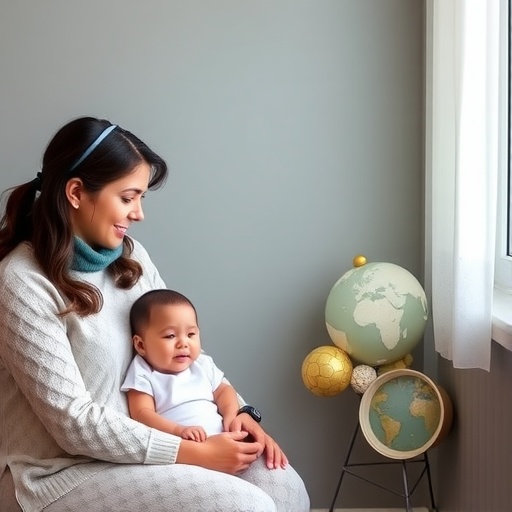
In recent years, the medical community has grappled with the profound implications of occupational burnout, a phenomenon that not only jeopardizes the well-being of healthcare providers but also directly compromises patient care quality. Among the most vulnerable groups are childbearing physicians in training, who face a unique confluence of professional stressors compounded by the physiological and psychological demands of the postpartum period. A groundbreaking study published in the Journal of the American Medical Association (JAMA) has now shed light on an innovative approach to mitigating this critical issue, unveiling the efficacy of a structured parental support package in significantly reducing postpartum burnout in this population.
Occupational burnout is characterized by emotional exhaustion, depersonalization, and a diminished sense of personal accomplishment, rendering it a formidable adversary in the clinical environment. For physicians in training, the intense workload inherent to residency programs, coupled with long hours, high stakes decision-making, and work-life imbalance, predisposes them to elevated burnout levels. When intersected with the challenges of recent childbirth, including hormonal fluctuations, sleep deprivation, and new caregiving responsibilities, the risk escalates dramatically, threatening both physician health and career sustainability.
The study under discussion deployed a parental support package, encompassing a suite of interventions designed to alleviate the unique stressors faced by postpartum physicians. This comprehensive approach included flexible scheduling, access to mental health resources, peer support networks, and dedicated lactation accommodations. By integrating these components into the demanding structure of medical training, the investigators aimed to create an environment that fosters resilience and facilitates a smoother transition back to professional duties after childbirth.
Data indicate that participants who engaged with the parental support package experienced a marked reduction in the core dimensions of burnout compared to their counterparts lacking such support. Emotional exhaustion levels were significantly diminished, while feelings of depersonalization were mitigated, and a heightened sense of personal efficacy was observed. These findings underscore the critical role of targeted institutional interventions in promoting physician wellness, particularly among those navigating the complexities of early motherhood within a high-pressure academic medical context.
Flexibility in scheduling emerged as a pivotal element in the intervention’s success. Allowing childbearing physicians to tailor work hours around their new caregiving needs not only reduced stress but also empowered them to maintain a sense of agency over their professional and personal lives. Such flexibility counters the traditionally rigid frameworks of residency programs, suggesting a paradigm shift towards more humane and adaptive training models.
Mental health support, including access to counseling and stress management resources, was another cornerstone of the parental support package. The study highlights that early psychological intervention and consistent emotional support played a substantial role in protecting against burnout’s deleterious effects. This aligns with broader literature emphasizing the value of mental health services as preventive tools within high-stress professional environments.
Peer support networks fostered a community of shared experiences and mutual encouragement, which proved to be a vital psychological buffer. For physicians navigating postpartum challenges, knowing they are not isolated in their struggles promotes resilience and reduces the stigma often associated with seeking help. The study’s findings advocate for the institutionalization of such communities as a best practice in medical training programs.
Practical accommodations, such as dedicated lactation spaces, addressed a frequently overlooked but critical aspect of postpartum care for female physicians. By providing private, hygienic, and accessible areas for breastfeeding or pumping, medical institutions demonstrate tangible support for new mothers, which contributes to decreased stress levels and enhanced job satisfaction.
The implications of these findings extend beyond individual wellness, touching upon broader issues within health systems. Burnout among physicians leads to increased turnover rates, diminished quality of care, and higher incidence of medical errors. Thus, interventions that effectively reduce burnout hold promise for improving overall healthcare delivery and patient outcomes.
Moreover, the study’s outcomes invite a reevaluation of the cultural and structural norms within medical training. The persistence of burnout signals systemic deficiencies that require attention, and parental support packages represent a strategic component in fostering sustainable careers, particularly for women physicians who constitute a growing segment of the healthcare workforce.
Future research directions might explore longitudinal effects of such support packages, their adaptability across diverse specialties, and their impact on other dimensions such as career progression and long-term mental health outcomes. Additionally, examining the cost-effectiveness of implementing such programs on a larger scale would provide valuable insights for policy development.
This pioneering study, led by corresponding author Dr. Erika L. Rangel at Massachusetts General Hospital, represents a significant stride in addressing an urgent occupational health crisis. The integration of empathetic institutional policies with evidence-based support mechanisms emerges as a beacon of hope for childbearing physicians striving to balance the dual demands of parenthood and professional excellence.
As healthcare systems worldwide seek to retain talented professionals and maintain high standards of patient care, recognizing and actively combating factors contributing to burnout must become a fundamental priority. The demonstrated success of parental support interventions not only validates their necessity but also serves as a call to action for medical educators and administrators to foster environments where physicians can thrive both personally and professionally.
Subject of Research: Occupational burnout in childbearing physicians in training and the efficacy of a parental support package in mitigating postpartum burnout.
Article Title: [Not provided in the source content]
News Publication Date: [Not provided in the source content]
Web References: doi:10.1001/jama.2026.5663
References: [Not provided in the source content]
Image Credits: [Not provided in the source content]
Keywords: Stress management, Parenting, Pregnancy, Childbirth, Human health, Physician scientists, Postnatal care
Tags: burnout prevention during medical residencyemotional exhaustion in resident doctorsimpact of caregiving on medical traineesinterventions for physician burnoutJAMA study on burnout reductionmental health of pregnant medical traineesoccupational burnout in healthcare providersparental support strategies for medical traineespostpartum support for childbearing physiciansreducing postpartum burnout in physicianssupporting physician parents during residencywork-life balance in medical training