

• HOME
  • NEWS
  • EXPLORE
    • CAREER
      • Companies
      • Jobs
    • EVENTS
    • iGEM
      • News
      • Team
    • PHOTOS
    • VIDEO
    • WIKI
  • BLOG
  • COMMUNITY
    • FACEBOOK
    • INSTAGRAM
    • TWITTER
Thursday, May 14, 2026
BIOENGINEER.ORG
No Result
View All Result
  • Login
  • HOME
  • NEWS
  • EXPLORE
    • CAREER
      • Companies
      • Jobs
        • Lecturer
        • PhD Studentship
        • Postdoc
        • Research Assistant
    • EVENTS
    • iGEM
      • News
      • Team
    • PHOTOS
    • VIDEO
    • WIKI
  • BLOG
  • COMMUNITY
    • FACEBOOK
    • INSTAGRAM
    • TWITTER
  • HOME
  • NEWS
  • EXPLORE
    • CAREER
      • Companies
      • Jobs
        • Lecturer
        • PhD Studentship
        • Postdoc
        • Research Assistant
    • EVENTS
    • iGEM
      • News
      • Team
    • PHOTOS
    • VIDEO
    • WIKI
  • BLOG
  • COMMUNITY
    • FACEBOOK
    • INSTAGRAM
    • TWITTER
No Result
View All Result
Bioengineer.org
No Result
View All Result
Home NEWS Science News Biology

Effective material developed to prevent post-surgical adhesion

Bioengineer by Bioengineer
August 15, 2018
in Biology
Reading Time: 2 mins read
0
Share on FacebookShare on TwitterShare on LinkedinShare on RedditShare on Telegram
IMAGE

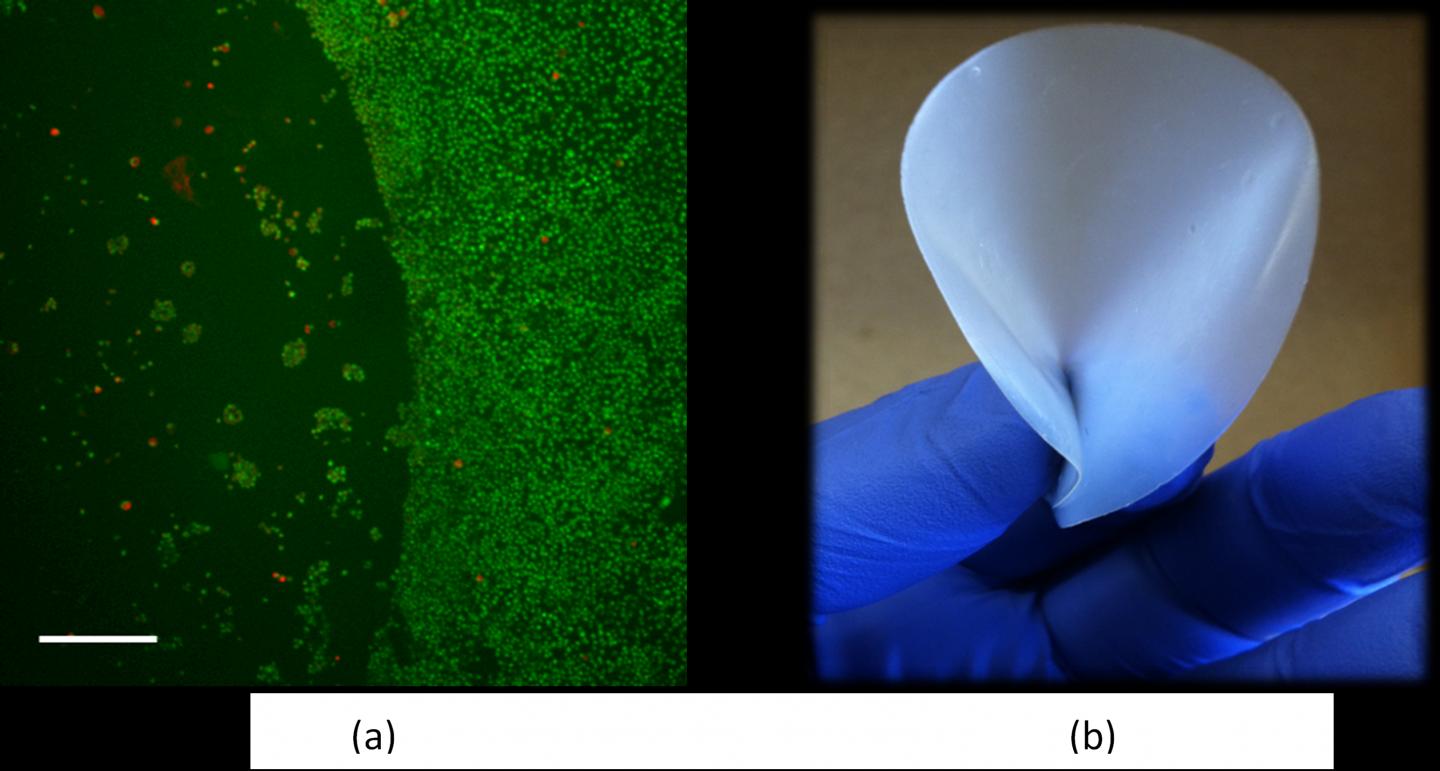
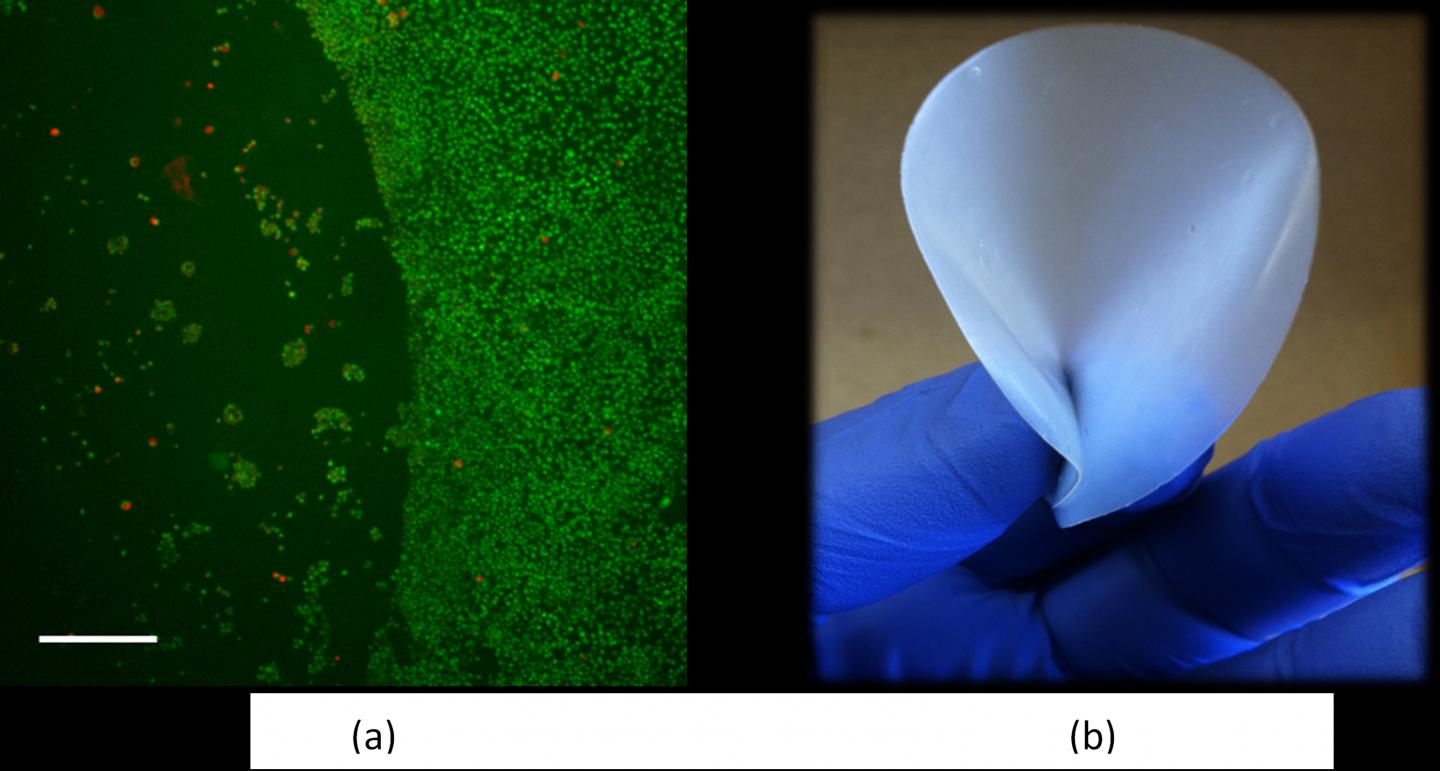
(a) The live cells outside the 1 μL dot of PEC indicate that the material does not create a toxic environment (Scale bar: 500 μm). This suggests that the material inhibits…

Credit: Noshir A. Langrana et al.

In a paper published in TECHNOLOGY, a group of researchers have investigated a novel Polyelectrolyte complex (PEC) that provides a barrier to prevent adhesions in post-operative complications. This has the potential to avoid the need for a second surgery to remove the adhesions.

Adhesions are fibrous bridges that form between tissues and organs. They can occur in spinal, intestinal, and peritoneal (abdominal cavity) regions of the body, as a result of surgery, injury, inflammation, or infection. Adhesions usually occur in abdominal, pericardial, and peridural spaces. It is estimated that 303,836 hospitalization cases, 800,000 days of in-patient care and $1.33 billion expenditures can be attributed to adhesion formation. Adhesion causes discomfort, extreme pain, reduced mobility, difficulty breathing, and infertility. The success rates of available anti-adhesive barriers are still low and there is a need for development of more effective bio-materials, which can significantly reduce adhesions.

A team of researchers from the Rutgers University, New Jersey have demonstrated a novel biomaterial film that is strong, flexible, and provides a physical barrier to prevent the joining of surfaces that should not stick together. The substrate-cells electrostatic interactions with the film also help prevent adhesions from forming.

"By taking advantage of the inherent properties of at least two oppositely charged polymers. Polyelectrolyte complexes (PEC) primarily consist of Polymers with negatively charged functional groups such as carboxylate and sulfate have demonstrated an inhibitory effect on adhesions of macrophages, lymphocytes, platelets and fibroblasts," says Professor Noshir Langrana, PhD of the Rutgers University and Principal Investigator on the paper.

Current technologies have issues such as brittleness and an inability to prevent adhesions in the presence of blood. The technology we have developed is from a natural, non-toxic material complex that has the desired barrier properties including: being biodegradable in 1-2 weeks, cellular anti-adhesive, flexible, and reasonably strong. The design of Polyelectrolyte complexes (PEC) primarily consist of at least two oppositely charged polymers. Polymers with negatively charged functional groups such as carboxylate and sulfate have demonstrated an inhibitory effect on adhesions of macrophages, lymphocytes, platelets, and fibroblasts. This film would prevent adhesions by providing a physical barrier to stop the surfaces that should not stick together from joining. The substrate-cells electrostatic interactions with the film also help prevent adhesions from forming.

###

Corresponding author for this study in TECHNOLOGY is Noshir A. Langrana (Email: [email protected]).

For more insight into the research described, readers are invited to access the paper on TECHNOLOGY.

Media Contact

Tay Yu Shan
[email protected]
@worldscientific

http://www.worldscientific.com

Original Source

https://www.worldscientific.com/page/pressroom/2018-08-13-01 http://dx.doi.org/10.1142/S2339547818500073

Share14Tweet8Share2ShareShareShare2

Related Posts

“‘Last Titan’: Discovery of Southeast Asia’s Largest Dinosaur Unveiled” — Biology

“‘Last Titan’: Discovery of Southeast Asia’s Largest Dinosaur Unveiled”

May 14, 2026
Study Offers In-Depth Analysis of Changes in Toxin-Producing Phytoplankton Populations — Biology

Study Offers In-Depth Analysis of Changes in Toxin-Producing Phytoplankton Populations

May 14, 2026

UMass Chan Scientists Pioneer Gene Editing Technology That Rewrites Entire Genome Chapters

May 13, 2026

Scientists Observe Rice Plants Capturing and Eliminating Fall Armyworm Caterpillars

May 13, 2026
Please login to join discussion

POPULAR NEWS

  • Research Indicates Potential Connection Between Prenatal Medication Exposure and Elevated Autism Risk

    842 shares
    Share 337 Tweet 211
  • New Study Reveals Plants Can Detect the Sound of Rain

    729 shares
    Share 291 Tweet 182
  • Salmonella Haem Blocks Macrophages, Boosts Infection

    62 shares
    Share 25 Tweet 16
  • Breastmilk Balances E. coli and Beneficial Bacteria in Infant Gut Microbiomes

    57 shares
    Share 23 Tweet 14

About

We bring you the latest biotechnology news from best research centers and universities around the world. Check our website.

Follow us

Recent News

Asymmetric Division in Lipid-Nucleotide Droplets

Sleep Patterns Reveal Insights on Aging Clocks

Real-Time Digital Techniques Quantify Sensor Uncertainty

Subscribe to Blog via Email

Success! An email was just sent to confirm your subscription. Please find the email now and click 'Confirm' to start subscribing.

Join 82 other subscribers
  • Contact Us

Bioengineer.org © Copyright 2023 All Rights Reserved.

Welcome Back!

Login to your account below

Forgotten Password?

Retrieve your password

Please enter your username or email address to reset your password.

Log In
No Result
View All Result
  • Homepages
    • Home Page 1
    • Home Page 2
  • News
  • National
  • Business
  • Health
  • Lifestyle
  • Science

Bioengineer.org © Copyright 2023 All Rights Reserved.