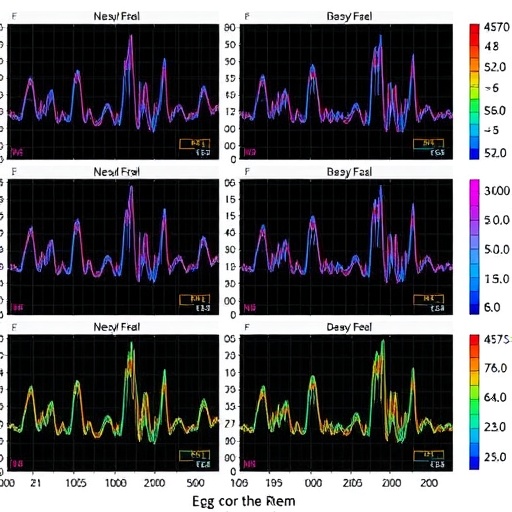
A new viral science update highlights how a longitudinal model built from resting-state EEG can forecast who will eventually develop Parkinson’s disease-related phenotypes among people with isolated REM sleep behavior disorder (iRBD). In a study by Yook, Shin, Noh, and colleagues, researchers combine electrophysiology with statistical learning to move beyond one-time risk estimates, aiming instead for time-sensitive prediction.
The work focuses on iRBD, a sleep disorder widely considered a prodromal marker for synucleinopathies. While not all iRBD patients convert to clinical disease, the conversion pathway is heterogeneous—meaning different individuals may evolve along distinct trajectories. Capturing that diversity has been a major challenge for predictive neuroscience.
Using resting-state EEG, the team extracted brain activity signatures without requiring task performance. Resting measurements reduce confounds from attention or learning and can be repeated across visits, which is crucial for longitudinal modeling. The researchers then applied longitudinal EEG-based modeling to track how neural patterns shift over time in relation to later phenoconversion.
Technically, the approach treats EEG dynamics as measurable features that evolve across follow-up, allowing the model to infer which individuals show trajectories consistent with future disease onset. Rather than using a single baseline snapshot, the pipeline leverages temporal structure—an advantage when biological change is gradual.
A key outcome reported in the study is that the model predicts phenoconversion more effectively than static approaches, suggesting that iRBD conversion is reflected in the evolving resting-state electrophysiological landscape. The authors also emphasize that prediction is not uniform: different patterns correspond to distinct subgroups.
By delineating heterogeneity, the framework helps identify iRBD subtypes that may reflect different underlying pathophysiology. This could guide stratification in future clinical trials, improving the chances that interventions are tested in the right patient populations.
Overall, the research positions resting-state EEG as a dynamic biomarker source and demonstrates how longitudinal machine-learning-style analysis can translate neural signals into clinically meaningful forecasting. If validated broadly, such models could accelerate early diagnosis strategies and enable more personalized monitoring for people at risk.
The study appears in npj Parkinson’s Disease (2026) and is accessible via https://doi.org/10.1038/s41531-026-01499-1.
Subject of Research: isolated REM sleep behavior disorder (iRBD) and Parkinson’s disease phenoconversion prediction using longitudinal resting-state EEG modeling.
Article Title: Longitudinal resting-state EEG–based modeling predicts phenoconversion and delineates heterogeneity in isolated REM sleep behavior disorder.
Article References: Yook, S., Shin, JW., Noh, TG. et al. npj Parkinsons Dis. (2026). https://doi.org/10.1038/s41531-026-01499-1
DOI: 10.1038/s41531-026-01499-1
Keywords: isolated REM sleep behavior disorder; resting-state EEG; phenoconversion; heterogeneity; longitudinal modeling; Parkinson’s disease.
Tags: diverse outcomes prediction in isolated REM sleep disorderearly detection of Parkinson’s disease using EEGEEG-based predictive modeling for Parkinson’s diseaseelectrophysiology and statistical learning in neurodegenerative disease predictionheterogeneity of iRBD conversion pathwayslongitudinal brain activity analysis in REM sleep behavior disorderlongitudinal neurophysiological modeling in sleep disordersneural signatures of disease conversionnon-invasive EEG biomarkers forresting-state EEG for tracking disease progressiontime-sensitive neural biomarkers for synucleinopathies