“In summary, our group demonstrates basic principles in the early aging of mammalian oocytes.”
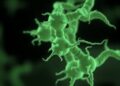
Credit: 2023 Wasserzug-Pash and Klutstein
“In summary, our group demonstrates basic principles in the early aging of mammalian oocytes.”
BUFFALO, NY- August 30, 2023 – A new editorial paper was published in Aging (listed by MEDLINE/PubMed as “Aging (Albany NY)” and “Aging-US” by Web of Science) Volume 15, Issue 15, entitled, “Epigenetic aging in oocytes.”
Aging-related phenotypes span many different tissues and cell types, and start to occur at different ages – a different typical age for every cell type. In their new editorial, researchers Peera Wasserzug-Pash and Michael Klutstein from The Hebrew University of Jerusalem discuss one of the earliest occurring aging events in the human body, which is the beginning of female reproductive aging and deterioration. The clinical cut-off for advanced maternal age (AMA), a condition associated with poor reproductive outcomes, is 35 years old.
“The early onset of reproductive aging poses a significant challenge to clinicians since a global consistent increase in maternal age at first birth has occurred in recent decades, effectively shortening the available time window for reproduction [1].”
As the rate of patients with advanced maternal age rises, and with it, the number of patients in fertility clinics, so does the necessity for a fundamental understanding of the reproductive aging process. In recent years, it has been established that there is a substantial dominating influence of oocyte quality loss on age-related fertility decline. This is best demonstrated by the rise in IVF success rates in reproductively aged women when they receive an egg donation from a younger woman. Oocyte quality loss is characterized by diminished cellular function and an increased occurrence of chromosomal nondisjunctions.
“Our recent publication [4] addresses the question of additional, epigenetic mechanisms that lead to the occurrence of age-related oocyte quality loss.”
Read the full editorial: DOI: https://doi.org/10.18632/aging.204976
Corresponding Author: Michael Klutstein
Corresponding Email: [email protected]
Keywords: oocytes, heterochromatin, epigenetics, aging, maturation
Sign up for free Altmetric alerts about this article: https://aging.altmetric.com/details/email_updates?id=10.18632%2Faging.https://doi.org/10.18632/aging.204976
About Aging:
Launched in 2009, Aging publishes papers of general interest and biological significance in all fields of aging research and age-related diseases, including cancer—and now, with a special focus on COVID-19 vulnerability as an age-dependent syndrome. Topics in Aging go beyond traditional gerontology, including, but not limited to, cellular and molecular biology, human age-related diseases, pathology in model organisms, signal transduction pathways (e.g., p53, sirtuins, and PI-3K/AKT/mTOR, among others), and approaches to modulating these signaling pathways.
Please visit our website at www.Aging-US.com and connect with us:
- SoundCloud
- YouTube
- LabTube
Click here to subscribe to Aging publication updates.
For media inquiries, please contact [email protected].
Aging (Aging-US) Journal Office
6666 E. Quaker Str., Suite 1B
Orchard Park, NY 14127
Phone: 1-800-922-0957, option 1
###
Journal
Aging-US
DOI
10.18632/aging.204976
Method of Research
Commentary/editorial
Subject of Research
Cells
Article Title
Epigenetic aging in oocytes
Article Publication Date
5-Aug-2023