In a groundbreaking discovery poised to reshape the antifungal therapeutic landscape, researchers have unveiled an alternative mechanism of action for echinocandins, a pivotal class of antifungal drugs. Traditionally known to disrupt fungal cell wall synthesis by inhibiting (1,3) beta-glucan synthase, echinocandins have long been considered highly specific in their mode of operation. However, a recent study published in Cell Death Discovery reveals that these drugs also engage in a previously unknown interaction with biomimetic membranes, acting through pathways distinct from their canonical enzymatic target.
The study, conducted by Malykhina, Efimova, Grammatikova, and colleagues, meticulously dissected the complex interplay between echinocandins and fungal membrane models. Their findings suggest that echinocandins exert a direct influence on the physical properties of lipid bilayers that mimic fungal membranes, thereby introducing an alternative antifungal modality that challenges existing dogma. This shift in understanding could have profound implications for drug design, resistance management, and therapeutic efficacy across a spectrum of invasive fungal infections.
Classically, echinocandins’ antifungal effect is attributed solely to their ability to inhibit the (1,3) beta-glucan synthase enzyme, which catalyzes the polymerization of glucan chains essential for maintaining cell wall integrity. Disruption of this enzyme compromises cell wall structure, leading to osmotic instability and fungal death. However, clinical challenges such as emerging resistance and partial drug efficacy have prompted a reevaluation of echinocandins’ mechanisms. The present study’s focus on biomimetic membranes allowed researchers to circumvent cellular complexities and probe direct drug-membrane interactions in controlled settings.
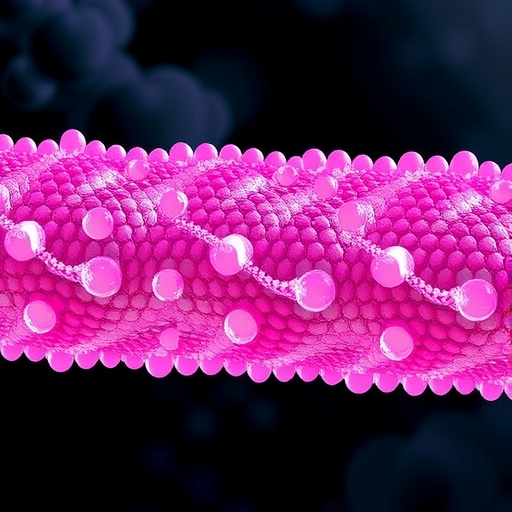
Remarkably, the researchers employed a combination of sophisticated biophysical techniques—including fluorescence spectroscopy, atomic force microscopy, and differential scanning calorimetry—to characterize membrane alterations in the presence of echinocandins. These techniques revealed changes in membrane fluidity, lipid packing, and nanomechanical properties, indicating that echinocandins embed themselves within the lipid bilayer, modulating its structural dynamics. Such membrane perturbations likely impair vital fungal membrane-associated processes beyond cell wall biosynthesis, offering a novel explanation for echinocandins’ antifungal potency.
The implications of echinocandins’ interaction with biomimetic membranes extend beyond academic intrigue. This alternative mode of action introduces a dual-target paradigm that could reduce the likelihood of resistance development. Fungi would need to simultaneously evolve mechanisms to counter both enzymatic inhibition and membrane disruption, raising the evolutionary barrier and potentially prolonging the clinical utility of echinocandins. Furthermore, membrane modulation may synergistically amplify the effects of enzyme inhibition, enhancing overall antifungal efficacy.
Investigative attention also turned towards the specificity of echinocandins for fungal versus mammalian membranes. By replicating mammalian membrane compositions, the researchers demonstrated minimal perturbation by echinocandins, underscoring their selective biophysical action. This selectivity not only explains echinocandins’ favorable safety profile but also suggests that membrane composition is a critical determinant of drug sensitivity, highlighting an underappreciated aspect of antifungal pharmacodynamics.
Moreover, insights gleaned from this study pave the way for engineering next-generation echinocandins with tailored membrane affinities. Rational drug design could optimize the amphipathic properties of these compounds to enhance membrane interactions, thereby boosting antifungal activity while minimizing off-target effects. Such advances might prove invaluable in tackling notoriously resilient fungal strains or developing broad-spectrum antifungal agents.
This paradigm shift also prompts a reevaluation of other antifungal classes that may possess analogous membrane-targeting actions masked by predominant enzymatic mechanisms. It beckons a systematic reassessment of antifungal pharmacology with an integrated focus on membrane biophysics. Furthermore, understanding the molecular underpinnings of echinocandins’ membrane engagement could illuminate novel biomarkers of drug susceptibility and resistance, facilitating personalized antifungal therapy.
The research team also explored the dynamic interplay between echinocandins and fungal plasma membrane lipid rafts—microdomains rich in ergosterol and sphingolipids known to orchestrate crucial cellular functions. Their data suggest that echinocandins disrupt these domains, potentially impairing signal transduction and membrane trafficking pathways essential for fungal survival. Such findings hint at a multi-layered antifungal strategy, simultaneously undermining cell wall synthesis and membrane-mediated cellular processes.
These discoveries catalyze a profound shift in our comprehension of antifungal drug mechanisms, with ramifications extending into clinical strategy, drug development, and the battle against antifungal resistance. The multifaceted assault mounted by echinocandins underscores the sophistication of fungal pharmacology and the necessity for multidimensional approaches in antifungal therapy. As invasive fungal infections continue to pose significant morbidity and mortality challenges globally, such innovations herald hope for more effective interventions.
Future investigations are anticipated to delve deeper into the structural specifics of echinocandins’ membrane interactions, potentially employing high-resolution cryo-electron microscopy and molecular dynamics simulations. These studies will be pivotal in visualizing drug positioning within membranes and discerning precise molecular contacts, translating biophysical observations into atomic-level mechanistic insight.
Moreover, clinical research may soon explore whether these membrane-targeting properties of echinocandins correlate with improved patient outcomes or differential efficacy against resistant fungal strains. Such translational efforts could guide optimized dosing regimens or combinatory therapies exploiting membrane perturbation to complement existing treatment modalities.
Additionally, the revelation of alternative drug action mechanisms raises critical questions about the evolution of resistance. Could resistance mutations in fungal membrane components attenuate echinocandin efficacy? Are membrane adaptations a hidden facet of clinical resistance yet to be characterized? Addressing these questions will demand an integrated molecular, biochemical, and clinical approach—uniting basic science with infectious disease expertise.
In sum, this seminal study challenges entrenched views on echinocandins, exposing a previously unrecognized dimension of their antifungal arsenal. By bridging enzymatic inhibition with membrane biophysics, echinocandins demonstrate a versatile and robust pharmacodynamic profile conducive to combating fungal pathogens. This advancement exemplifies how revisiting established therapeutics through innovative experimental frameworks can yield transformative insights, offering renewed optimism in the fight against fungal diseases.
As fungal pathogens continue to evolve and pose urgent public health threats, the identification of echinocandins’ alternative mode of action invites an exciting reimagining of antifungal drug design and clinical application. This dual-target mechanism may ultimately underpin the next generation of antifungal agents—precisely engineered to disrupt fungal viability on multiple fronts, heralding a new chapter in antifungal pharmacology and patient care.
Subject of Research: Alternative mechanisms of echinocandins in antifungal therapy focusing on biomimetic membrane interactions apart from (1,3) beta-glucan synthase inhibition.
Article Title: Echinocandins have an alternative mode of action on biomimetic membranes that is not directly related to the functioning of (1,3) beta-glucan synthase.
Article References:
Malykhina, A.I., Efimova, S.S., Grammatikova, N.E. et al. Echinocandins have an alternative mode of action on biomimetic membranes that is not directly related to the functioning of (1,3) beta-glucan synthase. Cell Death Discov. (2026). https://doi.org/10.1038/s41420-026-03133-8
Image Credits: AI Generated
DOI: https://doi.org/10.1038/s41420-026-03133-8
Tags: 13) beta-glucan synthase inhibitionalternative antifungal drug actionantifungal drug resistance managementantifungal therapeutic innovationbiomimetic fungal membranesdrug-membrane interaction studiesechinocandins antifungal mechanismechinocandins membrane biophysicsfungal cell wall synthesis disruptionfungal membrane biomimicryinvasive fungal infection treatmentlipid bilayer interactions