Researchers have identified a potent antibacterial compound produced by actinomycetes isolated from the gut of the earthworm Pheretima aspergillum. The study, published in BMC Genomics, represents the first systematic characterization of the gut actinomycete diversity in this species and highlights the potential of animal symbiotic bacteria as sources for new antimicrobial agents. The central finding is that benastatin B, a secondary metabolite isolated from the strain Streptomyces chartreusis, exhibits bactericidal activity against vancomycin-resistant Enterococcus faecalis (VREfa) with a minimum inhibitory concentration of 2 µg/mL and a minimum bactericidal concentration of 4 µg/mL. These values are reported to be superior to those of vancomycin, addressing a critical gap in the treatment of resistant infections.
The research was motivated by the growing global public health challenge of antimicrobial resistance. The World Health Organization has listed vancomycin-resistant Enterococcus as a high-priority pathogen, underscoring the urgent need for new therapeutic options. While animal gut environments are known to harbor actinomycetes with unique biosynthetic potential due to long-term coevolution with their hosts, the specific diversity and anti-VRE potential of gut actinomycetes from P. aspergillum had remained largely unexplored. This medicinal earthworm, used in traditional Chinese medicine, continuously ingests complex organic substrates, creating selective pressures that may drive the evolution of novel secondary metabolic pathways in its gut symbionts.
To investigate this potential, the study team employed high-throughput 16 S ribosomal RNA amplicon sequencing to profile the gut bacterial community of P. aspergillum. The analysis revealed a highly diverse microbial ecosystem comprising 21 phyla, 75 classes, 141 orders, 263 families, 501 genera, and 608 putative species. Within this diverse community, Actinomycetota ranked as the third most dominant phylum, accounting for 10.2% of the relative abundance.
The isolation process involved the use of eight different culture media to recover culturable gut-associated bacterial isolates. A total of 414 isolates were successfully recovered, of which 332, representing 80.2% of the total, were identified as actinomycetes. Among these isolates, 26 were identified as putative novel species, indicating that the gut of P. aspergillum harbors significant genetic novelty.
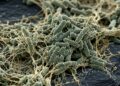
Among the isolated strains, one designated CB1-10-1, identified as Streptomyces chartreusis, exhibited broad-spectrum antimicrobial activity against VREfa and other pathogens. To understand the genetic basis of this activity, the researchers performed whole-genome sequencing and genome mining. This analysis identified 38 biosynthetic gene clusters (BGCs) within the genome of S. chartreusis. One specific type II polyketide synthase cluster showed a high-confidence match to the characterized benastatin BGC, designated as BGC0000204.5.
Integrated metabolomic analysis further confirmed the production of benastatin analogues by the strain. Guided by this multi-omics strategy, the research team successfully isolated and structurally identified benastatin B and benastatin C. This represents the first report of benastatin production by S. chartreusis, expanding the known range of bacterial species capable of synthesizing these compounds.
The study demonstrated that benastatin B exhibits potent anti-VREfa activity. The minimum inhibitory concentration was measured at 2 µg/mL, while the minimum bactericidal concentration was 4 µg/mL. These results indicate that benastatin B is not only inhibitory but also bactericidal, meaning it kills the bacteria rather than merely stopping their growth. The study notes that these concentrations are superior to those of vancomycin, suggesting that benastatin B could be a promising lead compound for the development of new treatments against VREfa infections.
The findings establish P. aspergillum as a productive source of actinomycete diversity that harbors potential novel species. The multi-omics-guided discovery approach used in this study provides a proof-of-concept for the value of animal symbiotic actinomycetes in antimicrobial drug discovery. By linking genomic data with metabolomic profiling and biological testing, the researchers have created a foundation for future mechanistic and preclinical studies.
Subject of Research: Characterization of actinomycete diversity and bioactive metabolites from Pheretima aspergillum gut
Article Title: Diversity analysis of actinomycetes from the gut of Pheretima aspergillum and bioactive secondary metabolites from an anti-Enterococcus faecalis strain
Article References: Liu, W., Zhang, X., Zhang, R., Zheng, W., Wang, L., Huang, D., Wang, J., Li, X., Chen, Z., & Jin, X. (2026). Diversity analysis of actinomycetes from the gut of Pheretima aspergillum and bioactive secondary metabolites from an anti-Enterococcus faecalis strain. BMC Genomics. https://doi.org/10.1186/s12864-026-13527-8
Image Credits: AI Generated
DOI: 10.1186/s12864-026-13527-8
Keywords: actinomycetes, Pheretima aspergillum, antimicrobial resistance, benastatin B, Streptomyces chartreusis, vancomycin-resistant Enterococcus, gut microbiome, secondary metabolites, biosynthetic gene clusters, drug discovery, Diversity, analysis
News Source: Morgan Morrow. (November 9, 2026). Earthworm Gut Bacteria Yield Potent Antibacterial Compound. Scienmag.