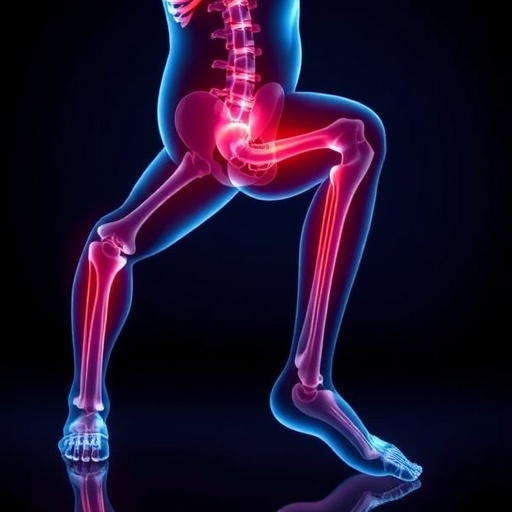
The recovery journey following intertrochanteric femoral fractures in older adults is notoriously complex and fraught with challenges, often resulting in prolonged immobility and diminished quality of life. However, a groundbreaking randomized controlled trial led by Ma, Y., Fang, Y., Zhao, Y., and colleagues is poised to transform postoperative rehabilitation paradigms with its pioneering focus on standardized early weight-bearing training. This innovative approach promises to significantly enhance functional recovery while mitigating complications, ushering in a new era of geriatric orthopedic care.
Intertrochanteric femoral fractures, predominantly affecting the elderly, come with a high risk of morbidity and mortality due to their association with impaired mobility, subsequent muscle deconditioning, and often multiple comorbidities. Traditional postoperative protocols have emphasized cautious immobilization to protect surgical repairs, inadvertently contributing to prolonged disuse syndrome and delayed functional restoration. Recognizing these pitfalls, the research team sought to rigorously evaluate whether an early introduction of weight-bearing could harness biomechanical stimuli to expedite healing and functional gains without compromising safety.
Centering their investigation in a robust randomized controlled framework, the researchers enrolled a representative cohort of older adults who had undergone surgical fixation for intertrochanteric fractures. The intervention involved a meticulously designed regimen of standardized early weight-bearing exercises, commencing soon after surgery. This was methodically compared against conventional rehabilitation protocols, measuring a range of outcome variables including gait mechanics, muscle strength, pain levels, and overall functional independence. The innovative training protocol was calibrated to balance mechanical load application with tissue healing kinetics, under continuous clinical supervision.
Biomechanically, weight-bearing is known to stimulate osteogenic activity and muscle hypertrophy through mechanotransduction pathways, fostering an environment conducive to accelerated recovery. The researchers hypothesized that a systematically applied early loading might trigger these physiological mechanisms at a critical postoperative window, thereby enhancing bone remodeling and neuromuscular function. This premise marks a significant departure from conservative immobilization strategies, embodying a paradigm shift toward active and adaptive rehabilitation tailored to the aging skeletal system.
The trial’s outcomes were remarkable. Participants subjected to the early weight-bearing intervention demonstrated superior improvements in ambulatory capacity and lower extremity strength within the first few weeks of rehabilitation, compared to controls. Notably, these functional gains translated into earlier achievement of independence in activities of daily living, reduced reliance on assistive devices, and measurable improvements in overall quality of life metrics. Importantly, the protocol did not precipitate any increased incidence of fixation failure or adverse events, underscoring its clinical viability.
These findings resonate deeply amidst the growing demographic challenges posed by an aging global population, where hip fractures constitute a pressing public health concern. The economic and social burdens engendered by prolonged hospitalizations and loss of autonomy are substantial. Consequently, the potential of standardized early weight-bearing to shorten rehabilitation timelines and enhance functional resilience represents a transformative advance in geriatric orthopedics. Widespread adoption of such protocols could pivot healthcare trajectories towards improved patient outcomes and substantial cost savings.
The research methodology also exemplified rigorous clinical trial design, incorporating comprehensive baseline assessments, stratified randomization, and blinded outcome evaluations. This methodological robustness ensures the reproducibility and credibility of the findings, laying a strong foundation for subsequent implementation studies and clinical guidelines. Moreover, the investigators’ interdisciplinary approach, integrating biomechanics, geriatric medicine, and physical therapy expertise, highlights the necessity of cross-disciplinary collaboration in tackling complex clinical problems.
Beyond the clinical implications, the study throws open fascinating avenues for exploring the molecular and cellular underpinnings of mechanotherapy in bone healing. Future work building on these results might investigate biomarkers indicative of osteogenic activation or neuromuscular remodeling in response to early mechanical loading. Such insights could refine personalized rehabilitation protocols and optimize timing and intensity of interventions for maximal therapeutic effect, aligning with the emerging paradigm of precision medicine.
The study also invites a reexamination of postoperative care pathways, traditionally focused on passive recovery, steering them towards more proactive and patient-engaged rehabilitation models. By initiating early weight-bearing, patients may experience enhanced psychological well-being through the restoration of autonomy and functional control, factors known to impact long-term recovery trajectories positively. Engaging patients actively in their rehabilitation processes aligns well with contemporary healthcare trends emphasizing patient-centered care.
Importantly, this intervention’s safety profile stands out, addressing long-standing concerns regarding the risks of premature loading on recently stabilized fractures. The trial’s data reinforce that with appropriate standardization and monitoring, the fear of hardware failure or displacement should not deter clinicians from adopting earlier weight-bearing approaches. This safety assurance may catalyze changes in clinical inertia and drive guideline updates worldwide, aligning empirical evidence with real-world practice.
Educational initiatives targeting orthopedic surgeons, physical therapists, and rehabilitation specialists will be pivotal in disseminating the study’s insights and integrating the standardized early weight-bearing paradigm into routine clinical workflows. Tailored training and protocol development can ensure that the nuances of patient selection, weight-bearing thresholds, and progression timelines are codified effectively, guaranteeing the fidelity and consistency of rehabilitation outcomes across diverse care settings.
The societal implications cannot be overstated. Hip fractures are a leading cause of disability among older adults, frequently precipitating a cascade of dependency, institutionalization, and increased mortality risk. Interventions that can restore mobility rapidly and safely have direct impacts on patients’ social engagement, mental health, and independence. In the wider public health context, promoting such therapies aligns with global aging strategies and efforts to enhance healthy life expectancy.
In conclusion, the randomized controlled trial conducted by Ma and colleagues marks a significant milestone in orthopedic rehabilitation science. The compelling evidence supporting standardized early weight-bearing training after intertrochanteric femoral fracture surgery heralds a new treatment paradigm emphasizing active recovery, safety, and improved patient-centered outcomes. This research not only challenges entrenched dogmas but also provides a practical roadmap for transforming postoperative care in a vulnerable and rapidly growing patient population.
As the world braces for an expanding elderly demographic, innovations such as these will define the future of geriatric medicine—where restorative interventions are harmonized with patients’ physiological capacities and lifestyle needs. The promise of enabling older adults to reclaim their mobility and independence sooner resonates beyond clinical walls, embodying a broader aspiration for dignity and quality of life in aging. This study encapsulates the power of evidence-based innovation to reshape real-world healthcare in profound and lasting ways.
Subject of Research: Postoperative Rehabilitation of Older Adults with Intertrochanteric Femoral Fractures Using Standardized Early Weight-Bearing Training
Article Title: Effect of standardized early weight-bearing training on postoperative rehabilitation in older adults with intertrochanteric femoral fractures: a randomized controlled trial.
Article References:
Ma, Y., Fang, Y., Zhao, Y. et al. Effect of standardized early weight-bearing training on postoperative rehabilitation in older adults with intertrochanteric femoral fractures: a randomized controlled trial. BMC Geriatr (2026). https://doi.org/10.1186/s12877-026-07533-4
Image Credits: AI Generated
Tags: early mobilization benefits in hip surgeryearly weight-bearing rehabilitation after hip fractureenhanced recovery after hip fracture surgeryfunctional recovery in elderly hip fracturesgeriatric orthopedic rehabilitationimproving mobility after femoral fracture surgeryintertrochanteric femoral fracture recoverymuscle deconditioning prevention post-hip fracturepostoperative weight-bearing trainingrandomized controlled trial on hip fracture rehabreducing complications after hip fracture surgerystandardized weight-bearing protocols