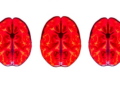
Credit: Ryan Sanford
While the human immunodeficiency virus (HIV) has largely dropped from news headlines since the 1990s, at the end of 2016 there were 36.7 million people living with the infection, and of those only 53 per cent had access to treatment. A new study underscores the neurological consequences of exposure to HIV without antiretroviral therapy.
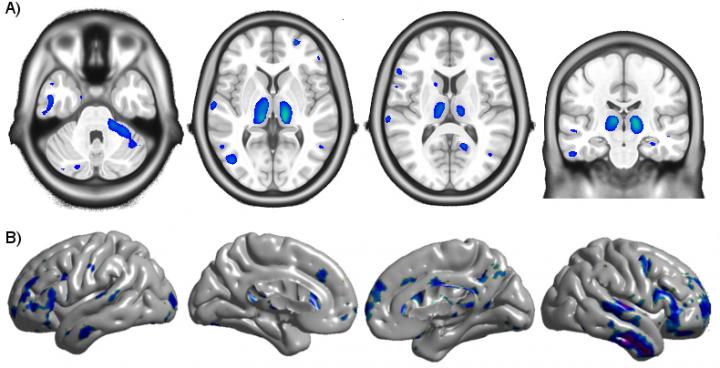
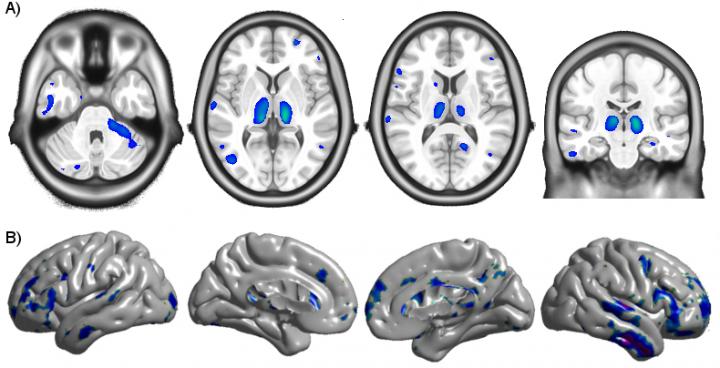
Scientists have known for some time that HIV-infection causes reduced volume and cortical thickness in some regions of the brain, but it was unclear when these changes begin and what role combination antiretroviral therapy (cART) plays in stopping or slowing its progression. To answer these questions, researchers from the Montreal Neurological Institute and Hospital (The Neuro) of McGill University, in collaboration with researchers from University of Washington St. Louis and Yale University, analysed magnetic resonance imaging (MRI) data from 65 patients at the University of California San Francisco who had been infected less than one year before.
They compared the MRI data to that of 19 HIV-negative participants and 16 HIV-positive patients who had been infected for at least three years. The researchers found that the longer the duration of untreated infection, the greater the volume loss and cortical thinning in several brain regions. Once cART treatment began, the volume changes in these regions stopped, and cortical thickness increased slightly in the frontal and temporal lobe.
These results reinforce the need for early detection of HIV and delivery of cART as soon as possible to avoid neurological damage. HIV-infection can lead to memory loss, dementia later in life, and balance and vision problems, among other symptoms. Early screening and antiretroviral therapy can stop these symptoms before they occur, or stop their progression in patients who haven't received fast enough treatment.
"There have been few longitudinal structural neuroimaging studies in early HIV infection, and none that have used such sensitive analysis methods in a relatively large sample," says Ryan Sanford, a PhD candidate at The Neuro in the lab of Louis Collins and the study's first author. "The findings make the neurological case for early treatment initiation, and sends a hopeful message to people living with HIV that starting and adhering to cART may protect the brain from further injury."
"It also helps focus the search for possible mechanisms of brain injury in this condition, pointing towards injury that occurs principally during untreated infection. This opens the door to novel treatments focused on potentially reversing these observed structural changes."
###
The study, published in the journal Clinical Infectious Diseases on April 24, 2018, was made possible with funds from the Natural Sciences and Engineering Research Council and US National Institute of Mental Health.
About Human Immunodeficiency Virus (HIV)
UN AIDS reports that 36.7 million people globally were living with HIV in 2016, and around 53 per cent of all people living with HIV had access to treatment. Just 43 per cent of children aged 0-14 years had access. In 2016, around 76 per cent of pregnant women living with HIV had access to antiretroviral medicines to prevent transmission of HIV to their babies. Worldwide, 1.8 million people became newly infected with HIV in 2016.
About The Montreal Neurological Institute and Hospital
The Montreal Neurological Institute and Hospital – The Neuro – is a world-leading destination for brain research and advanced patient care. Since its founding in 1934 by renowned neurosurgeon Dr. Wilder Penfield, The Neuro has grown to be the largest specialized neuroscience research and clinical centre in Canada, and one of the largest in the world. The seamless integration of research, patient care, and training of the world's top minds makes The Neuro uniquely positioned to have a significant impact on the understanding and treatment of nervous system disorders. In 2016, The Neuro became the first institute in the world to fully embrace the Open Science philosophy, creating the Tanenbaum Open Science Institute. The Montreal Neurological Institute is a McGill University research and teaching institute. The Montreal Neurological Hospital is part of the Neuroscience Mission of the McGill University Health Centre. For more information, please visit http://www.theneuro.ca
Media Contact
Shawn Hayward
[email protected]
514-398-3376
@McGillU
http://www.mcgill.ca
Original Source
https://www.mcgill.ca/neuro/channels/news/early-hiv-treatment-key-avoiding-brain-atrophy-287004 http://dx.doi.org/10.1093/cid/ciy362