• HOME
  • NEWS
  • EXPLORE
    • CAREER
      • Companies
      • Jobs
    • EVENTS
    • iGEM
      • News
      • Team
    • PHOTOS
    • VIDEO
    • WIKI
  • BLOG
  • COMMUNITY
    • FACEBOOK
    • INSTAGRAM
    • TWITTER
Friday, May 22, 2026
BIOENGINEER.ORG
No Result
View All Result
  • Login
  • HOME
  • NEWS
  • EXPLORE
    • CAREER
      • Companies
      • Jobs
        • Lecturer
        • PhD Studentship
        • Postdoc
        • Research Assistant
    • EVENTS
    • iGEM
      • News
      • Team
    • PHOTOS
    • VIDEO
    • WIKI
  • BLOG
  • COMMUNITY
    • FACEBOOK
    • INSTAGRAM
    • TWITTER
  • HOME
  • NEWS
  • EXPLORE
    • CAREER
      • Companies
      • Jobs
        • Lecturer
        • PhD Studentship
        • Postdoc
        • Research Assistant
    • EVENTS
    • iGEM
      • News
      • Team
    • PHOTOS
    • VIDEO
    • WIKI
  • BLOG
  • COMMUNITY
    • FACEBOOK
    • INSTAGRAM
    • TWITTER
No Result
View All Result
Bioengineer.org
No Result
View All Result
Home NEWS Science News Biology

E- textiles control home appliances with the swipe of a finger (video)

Bioengineer by Bioengineer
June 13, 2018
in Biology
Reading Time: 2 mins read
0
Share on FacebookShare on TwitterShare on LinkedinShare on RedditShare on Telegram
IMAGE

Credit: American Chemical Society

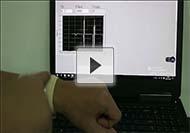
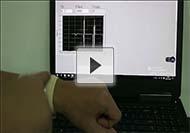
Electronic textiles could allow a person to control household appliances or computers from a distance simply by touching a wristband or other item of clothing — something that could be particularly helpful for those with limited mobility. Now researchers, reporting in ACS Nano, have developed a new type of e-textile that is self-powered, highly sensitive and washable. A video of an e-wristband in action is available here.

E-textiles are not new, but most existing versions have poor air permeability, can't be laundered or are too costly or complex to mass-produce. Jiaona Wang, Hengyu Guo, Congju Li and coworkers wanted to develop an E-textile that overcomes all of these limitations and is highly sensitive to human touch.

The researchers made a self-powered triboelectric nanogenerator by depositing an electrode array of conductive carbon nanotubes on nylon fabric. To make the E-textile washable, they incorporated polyurethane into the carbon nanotube ink, which made the nanotubes firmly adhere to the fabric. They covered the array with a piece of silk and fashioned the textile into a wristband. When swiped with a finger in different patterns, the E-textile generated electrical signals that were coupled to computers to control programs, or to household objects to turn on lights, a fan or a microwave from across the room. The E-textile is breathable for human skin, washable and inexpensive to produce on a large scale, the researchers say.

###

The authors acknowledge funding from the Beijing Natural Science Foundation, the National Natural Science Foundation, National Key R&D Project from Minister of Science and Technology, the Programs for Beijing Science and Technology Leading Talent, the Beijing Hundred, Thousand and Ten Thousand Talent Project, the General Program of Science and Technology Development Project of Beijing Municipal Education Commission of China, Beijing Institute of Fashion Technology and the "Thousands Talents" Program for Pioneer Researcher and His Innovation Team.

The abstract that accompanies this study is available here.

The American Chemical Society, the world's largest scientific society, is a not-for-profit organization chartered by the U.S. Congress. ACS is a global leader in providing access to chemistry-related information and research through its multiple databases, peer-reviewed journals and scientific conferences. ACS does not conduct research, but published and publicizes peer-reviewed scientific studies. Its main offices are in Washington, D.C., and Columbus, Ohio.

To automatically receive news releases from the American Chemical Society, contact [email protected].

Follow us on Twitter | Facebook

Media Contact

Katie Cottingham
[email protected]
301-775-8455
@ACSpressroom

http://www.acs.org

Share12Tweet8Share2ShareShareShare2

Related Posts

How the Gut Reprograms the Brain to Crave Essential Nutrients — Biology

How the Gut Reprograms the Brain to Crave Essential Nutrients

May 22, 2026
Decoding the Mechanisms Behind Collective Cell Movement — Biology

Decoding the Mechanisms Behind Collective Cell Movement

May 22, 2026

Harvard Scientists Develop Innovative Methods to Detect the Body’s “Orphan” Signaling Receptors

May 22, 2026

Seasonal Lake Denitrification Shifts Amid Climate Warming

May 22, 2026
Please login to join discussion

POPULAR NEWS

  • blank

    New Study Reveals Plants Can Detect the Sound of Rain

    734 shares
    Share 293 Tweet 183
  • ESMO 2025: mRNA COVID Vaccines Enhance Efficacy of Cancer Immunotherapy

    310 shares
    Share 124 Tweet 78
  • Research Indicates Potential Connection Between Prenatal Medication Exposure and Elevated Autism Risk

    847 shares
    Share 339 Tweet 212
  • Breastmilk Balances E. coli and Beneficial Bacteria in Infant Gut Microbiomes

    58 shares
    Share 23 Tweet 15

About

We bring you the latest biotechnology news from best research centers and universities around the world. Check our website.

Follow us

Recent News

Stable Circulating Proteins in Older Adults Over Time

Engineered Superconducting Diamonds Pave Way for Multi-Modality Quantum Chips, Researchers Reveal

Global Rice Paddy Emissions Double in Six Decades

Subscribe to Blog via Email

Enter your email address to subscribe to this blog and receive notifications of new posts by email.

Join 82 other subscribers
  • Contact Us

Bioengineer.org © Copyright 2023 All Rights Reserved.

Welcome Back!

Login to your account below

Forgotten Password?

Retrieve your password

Please enter your username or email address to reset your password.

Log In
No Result
View All Result
  • Homepages
    • Home Page 1
    • Home Page 2
  • News
  • National
  • Business
  • Health
  • Lifestyle
  • Science

Bioengineer.org © Copyright 2023 All Rights Reserved.