• HOME
  • NEWS
  • EXPLORE
    • CAREER
      • Companies
      • Jobs
    • EVENTS
    • iGEM
      • News
      • Team
    • PHOTOS
    • VIDEO
    • WIKI
  • BLOG
  • COMMUNITY
    • FACEBOOK
    • INSTAGRAM
    • TWITTER
Tuesday, November 17, 2026
BIOENGINEER.ORG
No Result
View All Result
  • Login
  • HOME
  • NEWS
  • EXPLORE
    • CAREER
      • Companies
      • Jobs
        • Lecturer
        • PhD Studentship
        • Postdoc
        • Research Assistant
    • EVENTS
    • iGEM
      • News
      • Team
    • PHOTOS
    • VIDEO
    • WIKI
  • BLOG
  • COMMUNITY
    • FACEBOOK
    • INSTAGRAM
    • TWITTER
No Result
View All Result
Bioengineer.org
No Result
View All Result
Home NEWS Science News Technology

Dynamic Model Captures Transient Gas Behavior in Infrared Absorption Spectroscopy

by
November 17, 2026
in Technology
Reading Time: 2 mins read
0
Dynamic Model Captures Transient Gas Behavior in Infrared Absorption Spectroscopy

Dynamic Model Captures Transient Gas Behavior in Infrared Absorption Spectroscopy

Share on FacebookShare on TwitterShare on LinkedinShare on RedditShare on Telegram

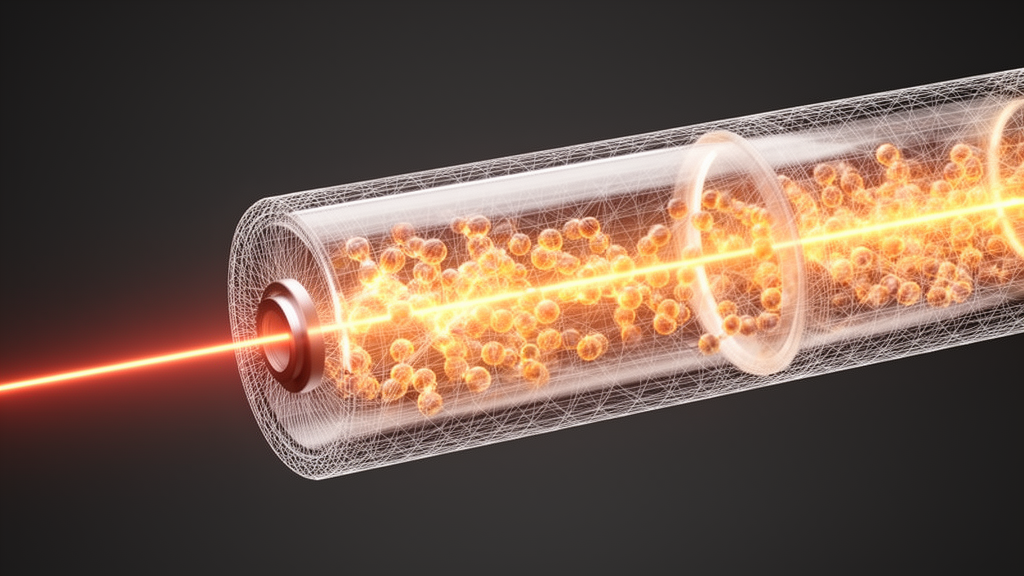
Researchers have developed a unified dynamic mathematical model to characterize transient gas behavior in non-dispersive infrared absorption spectroscopy systems under practical operating conditions. While non-dispersive infrared spectroscopy serves as a standard analytical technique widely utilized for quantitative gas analysis, conventional interpretations rely exclusively on a steady-state application of the Beer–Lambert law. That traditional steady-state assumption fails to account for gas-transport-induced transient responses or cell temperature-dependent behavior encountered during realistic flow processes. To address these fundamental analytical challenges, researchers Sangwoon Park and Masahiko Inoue experimentally investigated how volumetric flow rate and detection cell temperature directly alter transient optical responses during dynamic gas measurements.

To describe the physical gas-exchange process, the investigators modeled the optical detection cell as a linear time-invariant system governed by a specific characteristic time constant. This time constant is mathematically defined by the ratio of the effective gas volume to the volumetric flow rate passing through the measurement cell. Under isothermal operating conditions, the dynamic concentration within the detection chamber is formulated as the mathematical convolution of the inlet gas concentration profile with the cell gas-exchange impulse response function. Once determined, this time-dependent cell concentration is directly coupled to optical infrared absorbance using the Beer–Lambert law to track transient concentration changes accurately.

This dynamic theoretical representation accounts for physical response delays and noticeable waveform asymmetry that routinely occur when gas composition and flow rates fluctuate continuously over time. By incorporating these transient transport mechanisms, the unified formulation establishes implementation-ready mathematical procedures for dynamic calibration and experimental response correction. In addition, the framework provides clear quantitative guidance regarding the combined influences of flow rate and operating temperature, moving well beyond the empirical constraints of instrument-specific fixed settings and allowing practitioners to calibrate instruments across diverse flow conditions.

The authors anticipate that this dynamic modeling strategy will significantly improve quantitative measurement reliability when evaluating difficult sample matrices, including solid powders, concrete mixtures, and liquid specimens. By correcting transient delays, mitigating flow-induced waveform distortion, and formalizing dynamic calibration procedures, the newly established formulation extends the practical applicability of non-dispersive infrared spectroscopy to a substantially broader range of industrial and scientific gas analysis tasks.

Subject of Research: Dynamic modeling of transient non-dispersive infrared gas analysis

Article Title: Dynamic mathematical model of a non-dispersive infrared (NDIR) absorption spectroscopy measurement system for transient gas analysis

Article References: Park, S., & Inoue, M. (2026). Dynamic mathematical model of a non-dispersive infrared (NDIR) absorption spectroscopy measurement system for transient gas analysis. Discover Applied Sciences. https://doi.org/10.1007/s42452-026-09668-w

Image Credits: AI Generated

DOI: 10.1007/s42452-026-09668-w

Keywords: Non-dispersive infrared spectroscopy, NDIR absorption spectroscopy, Transient gas analysis, Dynamic mathematical model, Beer–Lambert law, Gas transport, Flow rate effects, Cell temperature, Linear time-invariant system, Time constant, Volumetric flow rate, Gas-exchange impulse response, Isothermal operation, Response delay, Waveform asymmetry, Dynamic measurement calibration, Response correction, Powder gas analysis, Concrete gas analysis, Liquid matrix analysis

News Source: Denise Maddox. (November 17, 2026). Dynamic Model Captures Transient Gas Behavior in Infrared Absorption Spectroscopy. Scienmag.


Tags: Beer-Lambert lawCell temperatureConcrete gas analysisDynamic mathematical modelDynamic measurement calibrationFlow rate effectsGas transportGas-exchange impulse responseIsothermal operationLinear time-invariant systemLiquid matrix analysisNDIR absorption spectroscopynon-dispersive infrared spectroscopyPowder gas analysisResponse correctionResponse delayTime constantTransient gas analysisvolumetric flow rateWaveform asymmetry
Share12Tweet7Share2ShareShareShare1

Related Posts

Simulated Germanium Perovskite Solar Cells Reach 32 Percent Efficiency Under Optimized Design

Simulated Germanium Perovskite Solar Cells Reach 32 Percent Efficiency Under Optimized Design

November 17, 2026
Skew-Normal Framework Accurately Models Asymmetric Multivariate Triangular Data in Climate Science

Skew-Normal Framework Accurately Models Asymmetric Multivariate Triangular Data in Climate Science

November 17, 2026

Researchers Synthesize Giant Carbo[17]helicene Featuring One of the Longest Helical Backbones

November 17, 2026

Blockchain and Ricardian Contracts Boost Agricultural Trust Scores by Up to 100 Percent

November 17, 2026

POPULAR NEWS

  • City of Hope, Adagene Launch Trial Testing Combination Immunotherapy for Colorectal Cancer

    City of Hope, Adagene Launch Trial Testing Combination Immunotherapy for Colorectal Cancer

    29 shares
    Share 12 Tweet 7
  • Repetitive Mild Brain Injury Triggers Chronic Cerebrovascular Inflammation and Glymphatic Suppression

    29 shares
    Share 12 Tweet 7
  • Durable Remission in Advanced Squamous-Cell Lung Cancer Following Sodium Selenite Treatment

    29 shares
    Share 12 Tweet 7
  • Circulating tRNA Fragments Distinguish Endometriosis Patients in Preliminary Pilot Study

    29 shares
    Share 12 Tweet 7

About

We bring you the latest biotechnology news from best research centers and universities around the world. Check our website.

Follow us

Recent News

Spider Mites Use Fungal Gene to Defeat Tea Plant Catechin Defenses

Maternal Metabolic Factors and High BMI Linked to Pediatric Kidney Anomalies

Bifunctional Ruthenium Catalysts Convert Biomass Lignin Into Long Chain Alkanes

Subscribe to Blog via Email

Enter your email address to subscribe to this blog and receive notifications of new posts by email.

Join 88 other subscribers
  • Contact Us

Bioengineer.org © Copyright 2023 All Rights Reserved.

Welcome Back!

Login to your account below

Forgotten Password?

Retrieve your password

Please enter your username or email address to reset your password.

Log In
No Result
View All Result
  • Homepages
    • Home Page 1
    • Home Page 2
  • News
  • National
  • Business
  • Health
  • Lifestyle
  • Science

Bioengineer.org © Copyright 2023 All Rights Reserved.