Researchers at the Universities of Maynooth and Bonn discover a new connection in muscular dystrophy
Credit: © Maynooth University
Duchenne muscular dystrophy (DMD) is the most common muscle disease in children and is passed on by X-linked recessive inheritance. Characteristic is a progressive muscular atrophy. The disease often results in death before the third decade of life. Researchers of the Universities of Maynooth (Ireland) and Bonn have found a connection between dystrophic muscles and the lymphatic system in mice with Duchenne disease. The results have now been published in the journal iScience.
The muscular atrophy in Duchenne disease is caused by a lack of dystrophin, a protein of the cytoskeleton. In vertebrates, dystrophin is found in the muscle fiber membrane and is important for muscle contraction. Although the disease is principally caused by a defective single gene (DMD gene), as a primarily neuromuscular disease it also has far-reaching and complex health-relevant effects on non-muscular tissues and organ systems.
In recent years, the research groups associated with Prof. Dr. Dieter Swandulla, Physiological Institute of the University of Bonn, and Prof. Dr. Kay Ohlendieck, National University of Ireland, Maynooth, have used mass spectrometric protein analysis (proteomics) to show that Duchenne muscular dystrophy causes changes in the respective set of proteins (proteome) in a number of organs including heart, brain, kidney and liver as well as in saliva, serum and urine.
Search for disease-specific marker proteins
“Proteomics is a reliable and effective analytical method for identifying disease-specific marker proteins that provide information about the course of the disease, possible therapeutic targets and the effectiveness of therapeutic interventions,” says senior author Prof. Swandulla.
In the current study, the researchers used proteomics in mice suffering from Duchenne muscular dystrophy to model how the skeletal muscles and the spleen influence each other in view of the dystrophin deficiency. The spleen plays a key role in the immune response and is located in the abdominal cavity near the stomach. It ensures the proliferation of lymphocytes, which are white blood cells, and also stores monocyte-type immune cells and disposes of worn-out red blood cells.
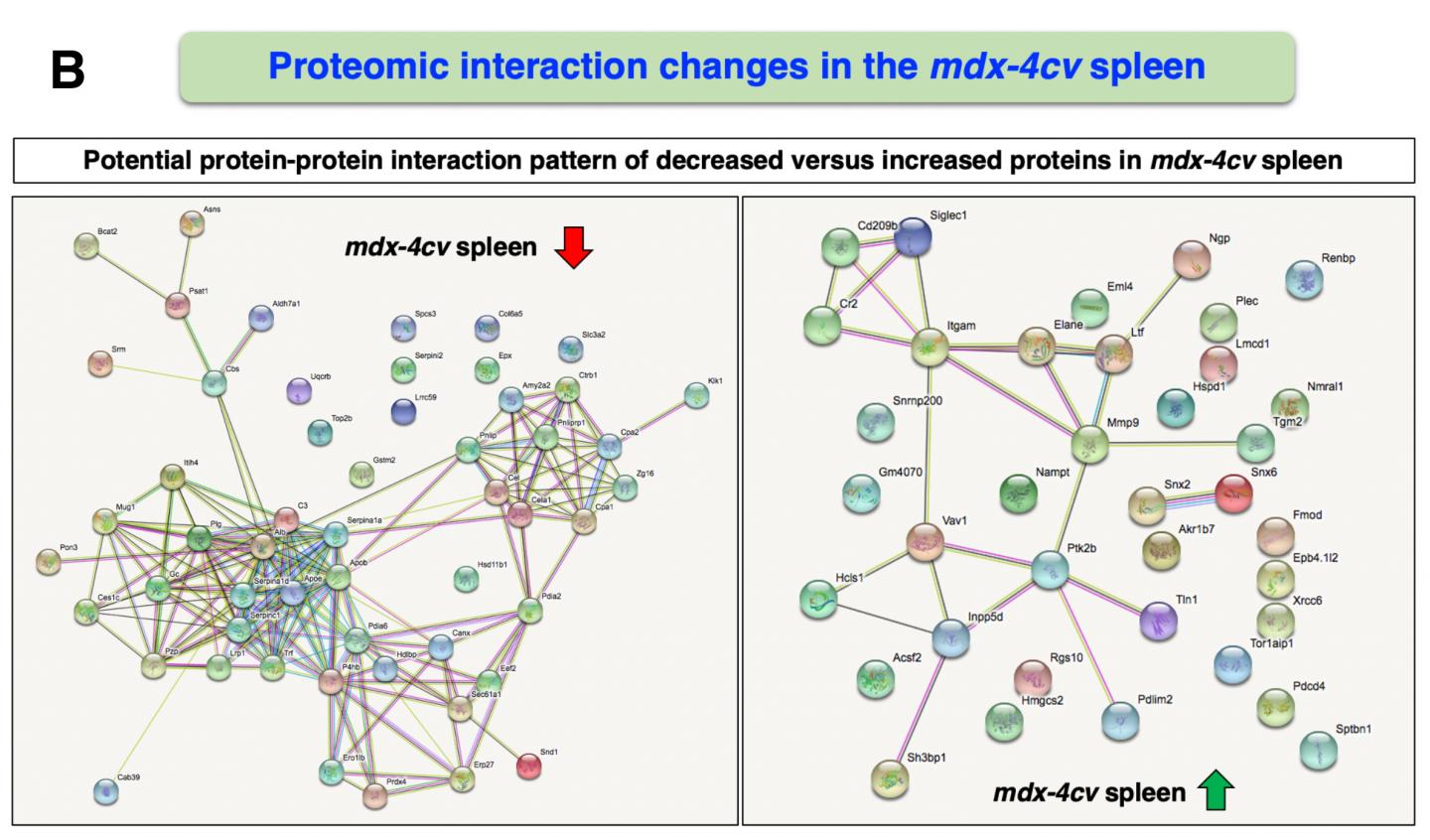
The researchers used the Duchenne mice to decode for the first time the set of proteins (proteome) of the spleen in comparison to healthy control animals and created a comprehensive protein archive for this organ. “The mice with Duchenne disease showed numerous changes in the proteomic signature of the spleen compared to the controls,” says Prof. Kay Ohlendieck of the National University of Ireland, Maynooth.
Furthermore, the researchers found for the first time a shorter form of dystrophin (DP71), which is synthesized as a protein in the spleen. “This dystrophin variant is apparently not affected by the disease because it occurs unchanged in Duchenne mice,” says Swandulla. The “crosstalk” is expressed especially by the fact that a large number of proteins in the spleen are drastically reduced due to the loss of the long form of dystrophin. “This includes proteins that are involved in lipid transport and metabolism and in the immune response and inflammatory processes.”
Secondary effects in the lymphatic system
Furthermore, the study provides evidence that the loss of the long form of dystrophin, as observed in Duchenne muscular dystrophy in skeletal muscle, apparently causes secondary effects in the lymphatic system. “It’s a real ‘crosstalk’ between skeletal muscles and the lymphatic system,” says lead author Dr. Paul Dowling of Maynooth University.
The term “crosstalk” is used, for example, when there is a disruptive overlay of another conversation on the phone that can be heard in the background. In the specific case of Duchenne muscular dystrophy, the “crosstalk” was particularly expressed by the fact that the short form of the dystrophin was still produced as normal in the spleen, but there were disruptive changes of the proteomic signature in the other protein species.
The researchers point out that the results of the study suggest that the mechanisms of the inflammatory processes which occur in the course of Duchenne muscular dystrophy merit special attention. This is because these inflammatory mechanisms are an important feature of muscle fiber degeneration and contribute significantly to the progression of the disease. “The specific interactions of the dystrophin deficiency with the immune system might therefore open up new therapeutic approaches,” says Prof. Swandulla.
###
Publication: Paul Dowling, Stephen Gargan, Margit Zweyer, Michael Henry, Paula Meleady, Dieter Swandulla and Kay Ohlendieck: Proteome-wide changes in the mdx-4cv spleen due to pathophysiological crosstalk with dystrophin-deficient skeletal muscle, iScience, DOI: https:/
Media contact:
Prof. Dr. Dieter Swandulla
Institut für Physiologie
Universität Bonn
E-mail: [email protected]
Prof. Dr. Kay Ohlendieck
Department of Biology
Maynooth University
E-mail: [email protected]
Media Contact
Dieter Swandulla
[email protected]
Related Journal Article
http://dx.