• HOME
  • NEWS
  • EXPLORE
    • CAREER
      • Companies
      • Jobs
    • EVENTS
    • iGEM
      • News
      • Team
    • PHOTOS
    • VIDEO
    • WIKI
  • BLOG
  • COMMUNITY
    • FACEBOOK
    • INSTAGRAM
    • TWITTER
Tuesday, September 22, 2026
BIOENGINEER.ORG
No Result
View All Result
  • Login
  • HOME
  • NEWS
  • EXPLORE
    • CAREER
      • Companies
      • Jobs
        • Lecturer
        • PhD Studentship
        • Postdoc
        • Research Assistant
    • EVENTS
    • iGEM
      • News
      • Team
    • PHOTOS
    • VIDEO
    • WIKI
  • BLOG
  • COMMUNITY
    • FACEBOOK
    • INSTAGRAM
    • TWITTER
  • HOME
  • NEWS
  • EXPLORE
    • CAREER
      • Companies
      • Jobs
        • Lecturer
        • PhD Studentship
        • Postdoc
        • Research Assistant
    • EVENTS
    • iGEM
      • News
      • Team
    • PHOTOS
    • VIDEO
    • WIKI
  • BLOG
  • COMMUNITY
    • FACEBOOK
    • INSTAGRAM
    • TWITTER
No Result
View All Result
Bioengineer.org
No Result
View All Result
Home NEWS Science News Biology

Dual role of fruit fly protein in connecting chromosome copies

Bioengineer by Bioengineer
June 1, 2017
in Biology
Reading Time: 2 mins read
0
Share on FacebookShare on TwitterShare on LinkedinShare on RedditShare on Telegram
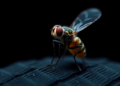
IMAGE

Credit: Tomoko Nishiyama

Nagoya, Japan – A sister chromatid is one half of an identical pair of chromatids formed by the replication of a single chromosome. At certain stages of the cell cycle, these chromatids pair and are held together in a process known as cohesion, which involves the cohesin protein. This typically occurs during DNA replication, and in vertebrates requires the cohesin-associating protein sororin. Cohesion is then maintained until the point when chromosomes line up in the middle of the cell. Although cohesin is then removed, cohesion around the region of the chromosome where the two sister chromatids link is protected until slightly later in the cell cycle.

In vertebrates, this protection is provided by the shugoshin protein, but mechanisms of Drosophila cohesion protection were unclear. Now, Japanese researchers at Nagoya University have identified Dalmatian (Dmt) as a fruit fly protein related to sororin that is both required for cohesion and has shugoshin-like cohesion protection roles. The study was reported in The EMBO Journal.

Sister chromatid cohesion is necessary for the equal segregation of chromosomes and subsequent genomic inheritance. Nagoya University researchers labeled the Dmt protein with a green fluorescent tag, then used live cell imaging to show that it localizes to the joining point of tightly packed chromatin in Drosophila cells. This stable binding was shown to require interactions with cohesin.

Additionally, the research team found that blocking Dmt gene expression prevented cohesion from occurring, showing that Dmt is crucial for the launch of cohesion. Moreover, the behavior of Dmt and its means of establishing cohesion were very similar to that of vertebrate sororin.

A dual role for Dmt was identified in that it also protects cohesion, thus allowing it to persist during cell division.

"Simple organisms such as the budding yeast carry only one shugoshin gene, while more complex vertebrates have two that function separately in different types of cell division," corresponding author Tomoko Nishiyama says. "Our identification of a protein that acts both to establish and protect cohesion in Drosophila chromosomes may represent an intermediate stage of the evolutionary inheritance of factors involved in maintaining genomic integrity."

###

The article "Drosophila Dalmatian combines sororin and shugoshin roles in establishment and protection of cohesion" was published in The EMBO Journal at DOI: 10.15252/embj.201695607.

Media Contact

Koomi Sung
[email protected]
@NU__Research

http://www.nagoya-u.ac.jp/en/

############

Story Source: Materials provided by Scienmag

Share12Tweet8Share2ShareShareShare2

Related Posts

Leopard Genomics Paper on South Africa’s Cape Floristic Region Retracted

Leopard Genomics Paper on South Africa’s Cape Floristic Region Retracted

September 22, 2026
Fruit Fly Genomes Reveal How Circadian Clocks Evolve and Adapt

Fruit Fly Genomes Reveal How Circadian Clocks Evolve and Adapt

September 22, 2026

Lung Bacteria Found to Worsen Influenza Through a Metabolic Trap in Immune Cells

September 21, 2026

Plant Compound Calein C Blocks Key Bacterial Antioxidant Enzyme, Study Finds

September 21, 2026
Please login to join discussion

POPULAR NEWS

  • Leopard Genomics Paper on South Africa’s Cape Floristic Region Retracted

    29 shares
    Share 12 Tweet 7
  • AI Learns to Forget: New Hypernetwork Framework Enables Data-Free Unlearning

    29 shares
    Share 12 Tweet 7
  • Elite Powerlifting Study Reveals the Myth of the Bodyweight Multiplier

    29 shares
    Share 12 Tweet 7
  • Evidence Under Fire: New Debate Over How Medication Optimisation Tools Should Be Judged

    29 shares
    Share 12 Tweet 7

About

We bring you the latest biotechnology news from best research centers and universities around the world. Check our website.

Follow us

Recent News

Leopard Genomics Paper on South Africa’s Cape Floristic Region Retracted

AI Learns to Forget: New Hypernetwork Framework Enables Data-Free Unlearning

Elite Powerlifting Study Reveals the Myth of the Bodyweight Multiplier

Subscribe to Blog via Email

Enter your email address to subscribe to this blog and receive notifications of new posts by email.

Join 85 other subscribers
  • Contact Us

Bioengineer.org © Copyright 2023 All Rights Reserved.

Welcome Back!

Login to your account below

Forgotten Password?

Retrieve your password

Please enter your username or email address to reset your password.

Log In
No Result
View All Result
  • Homepages
    • Home Page 1
    • Home Page 2
  • News
  • National
  • Business
  • Health
  • Lifestyle
  • Science

Bioengineer.org © Copyright 2023 All Rights Reserved.