• HOME
  • NEWS
  • EXPLORE
    • CAREER
      • Companies
      • Jobs
    • EVENTS
    • iGEM
      • News
      • Team
    • PHOTOS
    • VIDEO
    • WIKI
  • BLOG
  • COMMUNITY
    • FACEBOOK
    • INSTAGRAM
    • TWITTER
Thursday, June 25, 2026
BIOENGINEER.ORG
No Result
View All Result
  • Login
  • HOME
  • NEWS
  • EXPLORE
    • CAREER
      • Companies
      • Jobs
        • Lecturer
        • PhD Studentship
        • Postdoc
        • Research Assistant
    • EVENTS
    • iGEM
      • News
      • Team
    • PHOTOS
    • VIDEO
    • WIKI
  • BLOG
  • COMMUNITY
    • FACEBOOK
    • INSTAGRAM
    • TWITTER
  • HOME
  • NEWS
  • EXPLORE
    • CAREER
      • Companies
      • Jobs
        • Lecturer
        • PhD Studentship
        • Postdoc
        • Research Assistant
    • EVENTS
    • iGEM
      • News
      • Team
    • PHOTOS
    • VIDEO
    • WIKI
  • BLOG
  • COMMUNITY
    • FACEBOOK
    • INSTAGRAM
    • TWITTER
No Result
View All Result
Bioengineer.org
No Result
View All Result
Home NEWS Science News Science

Dual-polarization radars for forecasting heavy rainfall in China: Research and development

Bioengineer by Bioengineer
July 8, 2019
in Science
Reading Time: 2 mins read
0
IMAGE
Share on FacebookShare on TwitterShare on LinkedinShare on RedditShare on Telegram

IMAGE

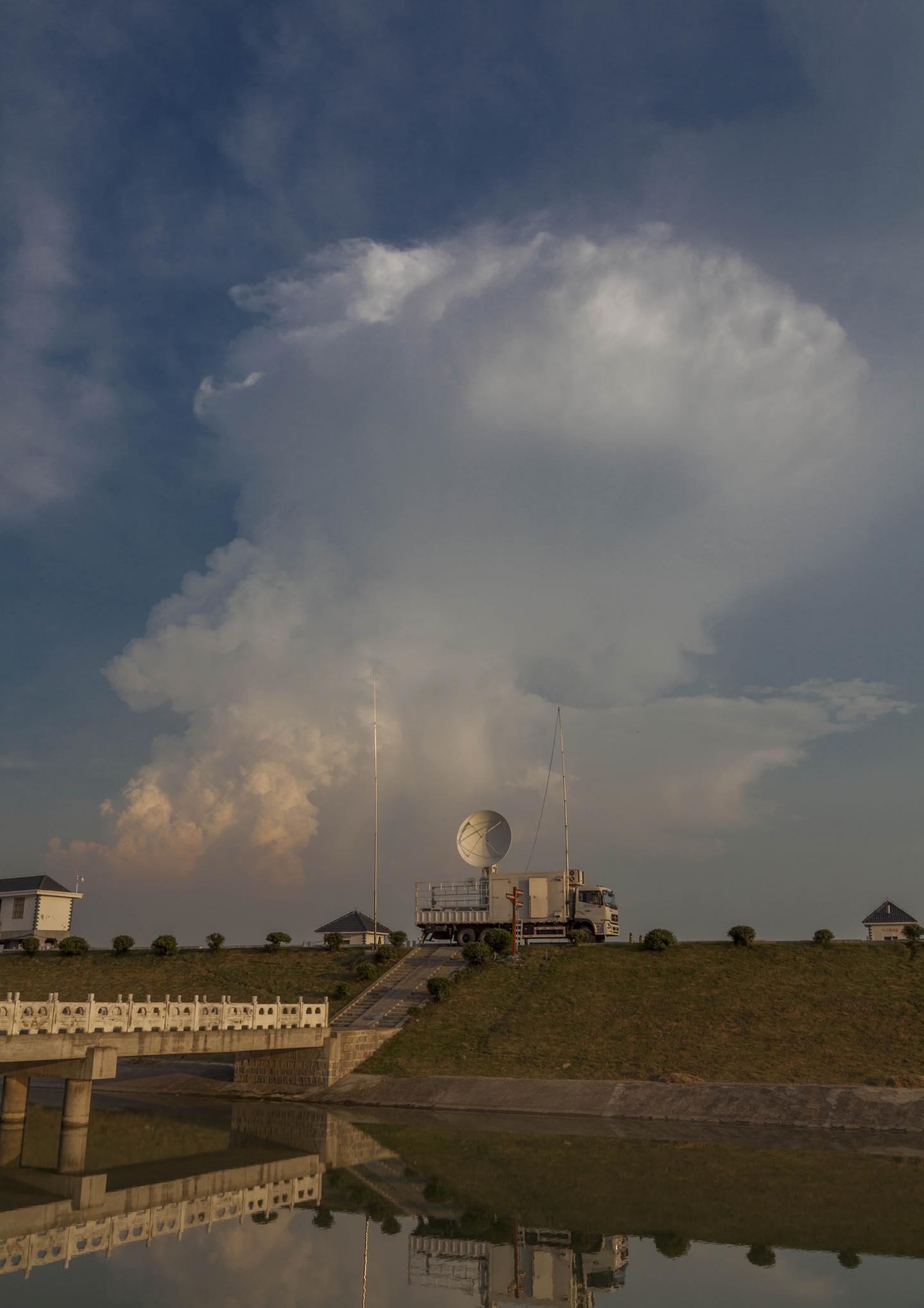
Credit: Gang Chen

China is an example of a country that suffers severe damage caused by high-impact weather and accompanying floods and mudslides. Dual-polarization (dual-pol) radars, first developed in the United States in the late 1970s, have been extensively used for monitoring and nowcasting these high-impact weather events. Dual-pol parameters contain a rich amount of microphysical information on these heavy precipitation systems, according to Prof. Kun Zhao, Director of the Joint Center for Atmospheric Radar Research of the CMA/NJU, and Vice Dean of the School of Atmospheric Sciences, Nanjing University.

In recent years, with the advent of dual-pol radar technologies in China, dozens of dual-pol radars have been developed by universities, research institutes, and weather observatories. China’s nationwide radar network is currently being upgraded to dual-pol capability.

Professor Zhao is the lead author of a study recently published in Advances in Atmospheric Sciences. that reviews dual-polarization radar research and applications in China. The paper is included in a special issue on the National Report (2011-2018) to the International Union on Geophysics and Geodesy (IUGG) Centennial by the China National Committee for IAMAS.

“To date, the data collected from these dual-pol radars in China have been used and analyzed to improve understanding of precipitation microphysics as well as quantitative precipitation estimation and forecasting in China”, says Prof. Zhao.

To improve the data quality and mitigate the interference of non-meteorological objects, scientists and engineers in China have developed extensive approaches for data quality control of dual-pol radars, including calibration, attenuation correction, calculation of specific differential phase shift, and identification and removal of non-meteorological echoes to improve raindrop size distribution retrieval, hydrometeor classification, and quantitative precipitation estimation in China. Scientists have also sought to use dual-pol radar data to validate the microphysical parameterization and initialization of numerical models and assimilate dual-pol data into numerical models.

Emerging technology includes phased array radar and multiple frequency radar. Phased array dual-pol radars have also been utilized in weather surveillances in China. The temporal resolution of radar scans has dramatically increased. We can sample the 3D information of weather systems in less than two minutes. “However, the H- and V-polarized beam matching off the broadside affecting dual-pol measurements remains a challenge for radar engineers”, says Prof. Zhao. “Multi-frequency dual-pol radars provide information on the sizes of hydrometeors based on the wavelength dependence of the Mie scattering effect.”

Professor Zhao is confident that these two types of technologies will mature in the next decade and make significant contributions to the future of radar meteorology.

###

This work was supported by the National Key Research and Development Program of China, the National Natural Science Foundation of China,the National Fundamental Research 973 Program of China,and the Key Research Development Program of Jiangsu Science and Technology Department.

Media Contact
Ms. Zheng Lin
[email protected]

Original Source

https://doi.org/10.1007/s00376-019-9057-2

Related Journal Article

http://dx.doi.org/10.1007/s00376-019-9057-2

Tags: Atmospheric ScienceEarth ScienceTechnology/Engineering/Computer ScienceWeather/Storms
Share12Tweet8Share2ShareShareShare2

Related Posts

Five or more hours of smartphone usage per day may increase obesity

July 25, 2019
IMAGE

NASA’s terra satellite finds tropical storm 07W’s strength on the side

July 25, 2019

NASA finds one burst of energy in weakening Depression Dalila

July 25, 2019

Researcher’s innovative flood mapping helps water and emergency management officials

July 25, 2019
Please login to join discussion

POPULAR NEWS

  • Saying Goodbye to PGY-6: Pediatric Fellowship Realities

    103 shares
    Share 41 Tweet 26
  • Multi-Hospital Study Reveals Long Covid Burden Is Twice as High as Current Estimates

    92 shares
    Share 36 Tweet 23
  • Detection of EDCs in Breast Milk and Infant Urine Up to Six Months Highlights Early Exposure Risks

    77 shares
    Share 31 Tweet 19
  • New Drug Candidate Developed at McMaster Shows Potential for Treating Brain Cancer

    58 shares
    Share 23 Tweet 15

About

We bring you the latest biotechnology news from best research centers and universities around the world. Check our website.

Follow us

Recent News

Tracking Lanthanide-Labeled Microplastics in Plants

POSTECH Researchers Slash Cost of Reconstituted Cell-Free Systems by 95%

AI and Physics Collaborate to Design Advanced Hydrogen Storage Materials

Subscribe to Blog via Email

Enter your email address to subscribe to this blog and receive notifications of new posts by email.

Join 82 other subscribers
  • Contact Us

Bioengineer.org © Copyright 2023 All Rights Reserved.

Welcome Back!

Login to your account below

Forgotten Password?

Retrieve your password

Please enter your username or email address to reset your password.

Log In
No Result
View All Result
  • Homepages
    • Home Page 1
    • Home Page 2
  • News
  • National
  • Business
  • Health
  • Lifestyle
  • Science

Bioengineer.org © Copyright 2023 All Rights Reserved.