

• HOME
  • NEWS
  • EXPLORE
    • CAREER
      • Companies
      • Jobs
    • EVENTS
    • iGEM
      • News
      • Team
    • PHOTOS
    • VIDEO
    • WIKI
  • BLOG
  • COMMUNITY
    • FACEBOOK
    • INSTAGRAM
    • TWITTER
Sunday, October 4, 2026
BIOENGINEER.ORG
No Result
View All Result
  • Login
  • HOME
  • NEWS
  • EXPLORE
    • CAREER
      • Companies
      • Jobs
        • Lecturer
        • PhD Studentship
        • Postdoc
        • Research Assistant
    • EVENTS
    • iGEM
      • News
      • Team
    • PHOTOS
    • VIDEO
    • WIKI
  • BLOG
  • COMMUNITY
    • FACEBOOK
    • INSTAGRAM
    • TWITTER
  • HOME
  • NEWS
  • EXPLORE
    • CAREER
      • Companies
      • Jobs
        • Lecturer
        • PhD Studentship
        • Postdoc
        • Research Assistant
    • EVENTS
    • iGEM
      • News
      • Team
    • PHOTOS
    • VIDEO
    • WIKI
  • BLOG
  • COMMUNITY
    • FACEBOOK
    • INSTAGRAM
    • TWITTER
No Result
View All Result
Bioengineer.org
No Result
View All Result
Home NEWS Science News Health

Drug for pancreatic cancer developed by college of pharmacy researchers

Bioengineer by Bioengineer
September 11, 2018
in Health
Reading Time: 2 mins read
0
Share on FacebookShare on TwitterShare on LinkedinShare on RedditShare on Telegram
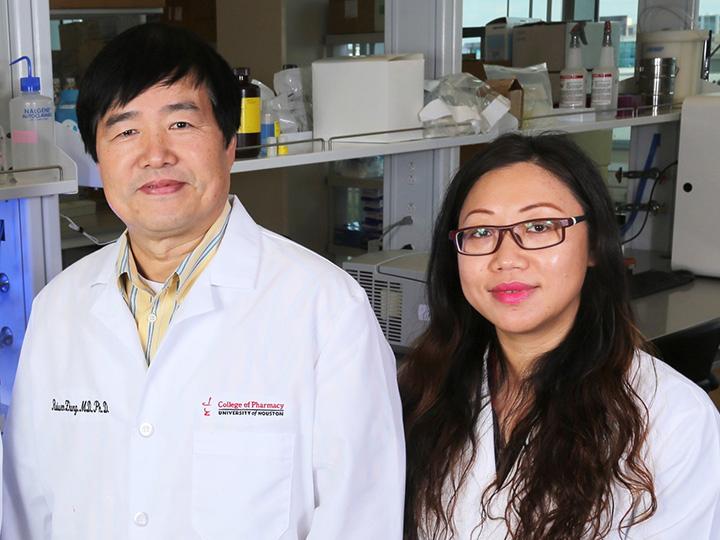
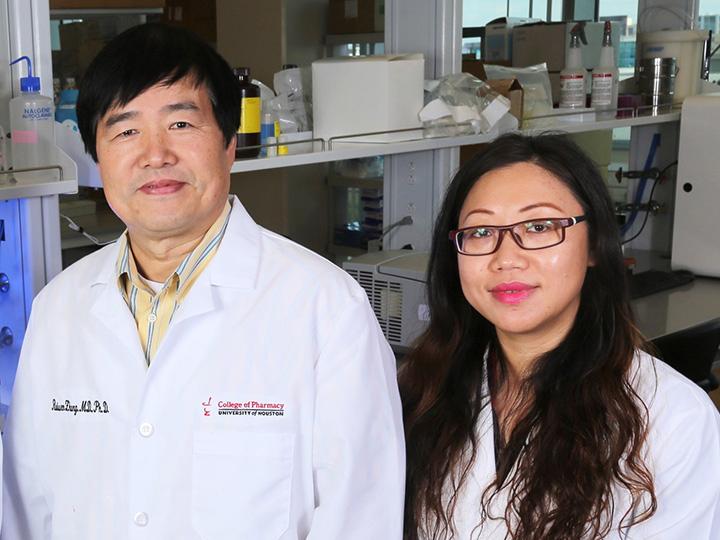
IMAGE

Credit: University of Houston

A treatment for highly aggressive and commonly fatal pancreatic cancer is being developed, reports a University of Houston researcher who has designed a new medicine that can inhibit two of the major pathways of the deadly disease. Ruiwen Zhang, M.D., Ph.D. and Robert L. Boblitt Endowed Professor in Drug Discovery, has published his findings, along with research associate professor of pharmacology Wei Wang, M.D., Ph.D., in Cancer Research Journal.

"There is an unmet clinical need for new, effective and safe drugs for pancreatic cancer therapy. Our discovery represents a significant advance in cancer research," said Zhang. "Most drugs only target one factor. We identified a single compound that targets two linked genes that cause cancer."

The drug would be a first-in-class, new therapy for pancreatic cancer and a new conceptual framework for developing other drugs.

Pancreatic cancer is characterized by early metastasis and a poor response to chemotherapy. Gemcitabine, a chemotherapy drug with only modest clinical benefit, remains one of the mainstays of treatment for advanced pancreatic cancer. Although various multidrug regimens that combine gemcitabine with other chemotherapeutic or molecular-targeted agents have been evaluated, only three combination regimens have been approved by the Food and Drug Administration, and most of them failed to significantly prolong the survival of patients with pancreatic cancer in clinical trials. Stromal depletion and immunotherapy also have been proposed to offer substantial promise for treating advanced pancreatic cancer, but their therapeutic impact remains unclear.

The two cancer-causing genes linked in pancreatic cancer are nuclear factor of activated T cells1 (NFAT1) and murine double minute 2 (MDM2), a gene that regulates (and depletes) the tumor suppressor gene called p53. If there is no tumor suppressor p53 present, MDM2 will cause cancer on its own. NFAT1 up-regulates MDM2 expression and encourages tumor growth.

"We developed a synthetic compound that we call MA242, and it can deplete both proteins at the same time increasing specificity and efficiency of tumor killing," said Zhang. "In our molecular modeling study, MA242 is a potent dual inhibitor." Though it is man-made, the new compound is based on a type of sea sponge.

Patients with pancreatic cancer have too much MDM2 and NFAT1, which has left these genes as open targets for cancer therapy. Numerous studies have shown reduced MDM2 can lead to decreased tumor growth and progression.

Heathy individuals have low levels of MDM2 and NFAT1, but diet, nutrition and environment can cause higher levels in cells, said Zhang. In previously published work, Zhang revealed that certain natural foods and products, like broccoli, soybeans, green tea and turmeric, have shown potential for cancer prevention and therapy.

###

Media Contact

Laurie Fickman
[email protected]
713-743-8454
@UH_News

http://www.uh.edu/news-events

Original Source

http://www.uh.edu/news-events/stories/2018/september-2018/091118-pancreatic-cancer-drug.php http://dx.doi.org/10.1158/1538-7445.AM2018-4863


Share24Tweet8Share2ShareShareShare2

Related Posts

Forskolin Extract Boosts Gut Hormone GLP-1 and Strengthens Intestinal Barrier in Cell Study

Forskolin Extract Boosts Gut Hormone GLP-1 and Strengthens Intestinal Barrier in Cell Study

October 4, 2026
Empathy, Not Mood, Drives Helping in Autistic Children, Study Finds

Empathy, Not Mood, Drives Helping in Autistic Children, Study Finds

October 4, 2026

Nose-to-Brain Protein Delivery Shows Promise for Protecting Dopamine Neurons in Parkinson’s Models

October 4, 2026

Doctors Reveal Why Opioid Care Fails Indigenous Patients in Canada

October 4, 2026
Please login to join discussion

POPULAR NEWS

  • Alloys That Shrink Their Own Grains: New PIX Mechanism Refines Metals With Heat Alone

    Alloys That Shrink Their Own Grains: New PIX Mechanism Refines Metals With Heat Alone

    29 shares
    Share 12 Tweet 7
  • Endurance Exercise Reshapes the Liver in Males and Females Through Distinct Molecular Routes

    29 shares
    Share 12 Tweet 7
  • Single Transcription Factor PU.1 Rapidly Converts Fibroblasts into Macrophage-Lineage Cells

    29 shares
    Share 12 Tweet 7
  • New Scale Measures How Ready Nurse Educators Really Are for the AI Era

    29 shares
    Share 12 Tweet 7

About

We bring you the latest biotechnology news from best research centers and universities around the world. Check our website.

Follow us

Recent News

Alloys That Shrink Their Own Grains: New PIX Mechanism Refines Metals With Heat Alone

Endurance Exercise Reshapes the Liver in Males and Females Through Distinct Molecular Routes

Single Transcription Factor PU.1 Rapidly Converts Fibroblasts into Macrophage-Lineage Cells

Subscribe to Blog via Email

Enter your email address to subscribe to this blog and receive notifications of new posts by email.

Join 85 other subscribers
  • Contact Us

Bioengineer.org © Copyright 2023 All Rights Reserved.

Welcome Back!

Login to your account below

Forgotten Password?

Retrieve your password

Please enter your username or email address to reset your password.

Log In
No Result
View All Result
  • Homepages
    • Home Page 1
    • Home Page 2
  • News
  • National
  • Business
  • Health
  • Lifestyle
  • Science

Bioengineer.org © Copyright 2023 All Rights Reserved.
