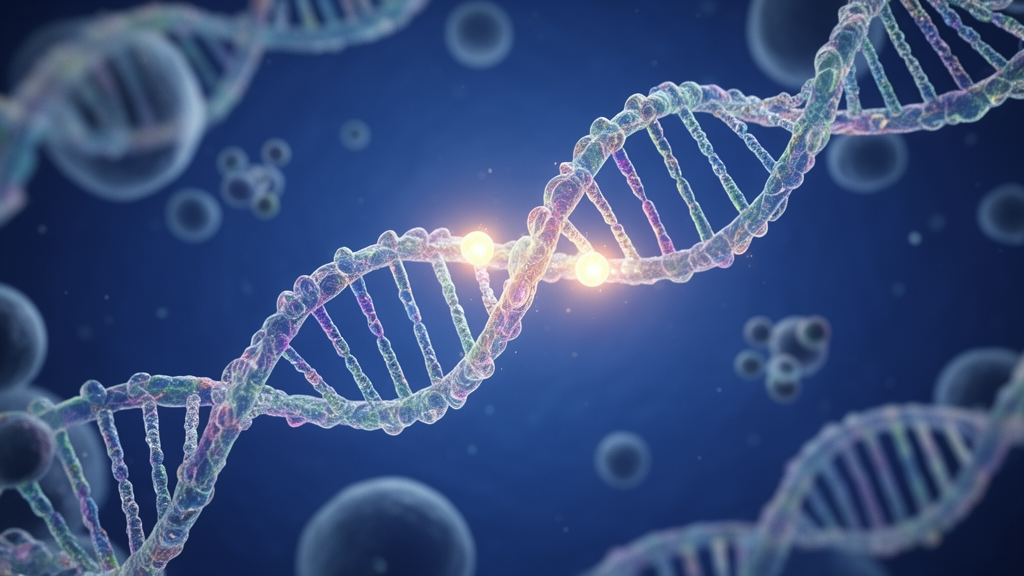
Genetic testing in patients evaluated for neurofibromatosis type 1 occasionally identifies two distinct heterozygous variants within the NF1 gene, presenting clinicians with complex diagnostic puzzles regarding disease severity, transmission risks, and underlying molecular mechanisms. In a comprehensive review and clinical investigation published in Molecular and Cellular Pediatrics, a team of medical geneticists and pediatric oncologists led by Daniela Angelova-Toshkina, Martin Zenker, and Michaela Kuhlen demonstrated that true double germline variants in NF1 almost invariably occur on the same chromosome in a cis configuration. When phased to a single parental allele, these paired mutations generally cause classic neurofibromatosis type 1 rather than producing an escalated clinical course. The authors established that previously published reports claiming germline trans configurations—where mutations disrupt both maternal and paternal copies—break down under modern variant classification frameworks, resolving diagnostic confusion for clinical genetics teams.
To illustrate the diagnostic hurdles encountered in routine practice, the investigators presented an instructive index case involving a ten-year-old boy referred for evaluation of neurofibromatosis type 1. The patient met standard clinical criteria, presenting with multiple café-au-lait macules, bilateral Lisch nodules, plexiform neurofibromas, macrocephaly, characteristic focal areas of signal intensity on brain magnetic resonance imaging, and a low-grade glioma, alongside developmental delays and attention-deficit disorder. Initial germline testing performed at an external laboratory utilized Sanger sequencing and multiplex ligation-dependent probe amplification on peripheral blood DNA, identifying two separate heterozygous nonsense variants within exon 28: c.3763 C > T (p.Gln1255*) and c.3826 C > T (p.Arg1276*). Because conventional Sanger sequencing cannot determine whether two mutations reside on the same chromosome, and targeted testing showed neither variant in the clinically unaffected parents, determining the true allelic phase became an urgent priority.
To resolve the architecture of the child’s mutations, the research team conducted high-coverage next-generation sequencing on a follow-up blood specimen, enabling read-backed haplotype phasing through the Integrative Genomics Viewer. Direct inspection of sequencing reads confirmed that both pathogenic nonsense variants resided together on identical sequence reads, conclusively establishing a monoallelic cis doublet. Variant allele fractions hovered near fifty percent—specifically 0.4954 for the c.3763 C > T transition across 109 reads and 0.4698 for the c.3826 C > T change across 149 reads—supporting constitutional heterozygosity while ruling out blood-restricted mosaicism. Because both nonsense alterations introduce premature stop codons within the exact same reading frame, the affected transcript undergoes nonsense-mediated mRNA decay or generates an inert truncated protein product, meaning the second mutation cannot diminish neurofibromin dosage beyond the complete functional loss of that single allele.
Reviewing the broader medical literature, the research team identified several confirmed instances of phase-proven cis doublets that mirrored the findings in their pediatric index patient. Previous investigations by groups such as Stella and colleagues documented closely spaced, de novo NF1 variants occurring in cis across independent families, none of which showed reproducible increases in phenotypic severity compared to standard presentations. Similarly, studies by Hernández-Imaz and Watanabe described familial and de novo pairs occurring on identical alleles, including adjacent missense alterations that arose from single mutational events during gametogenesis. The authors noted that closely spaced substitutions often represent multi-nucleotide variants driven by transient hypermutability or double-strand break repair processes during oocyte aging, highlighting that diagnostic pipelines must utilize haplotype-aware consequence calling to prevent misannotating joint codon-level consequences as two independent structural catastrophes.
In contrast to validated cis doublets, the investigators found that purported germline trans configurations—in which an individual inherits two independent pathogenic mutations on opposing NF1 alleles—fail to withstand rigorous reappraisal. Discussions surrounding constitutional compound heterozygosity have historically centered on spinal neurofibromatosis, an unusual clinical subset characterized by extensive bilateral neurofibromas along spinal nerve roots. Re-evaluating historical cohorts, the authors noted that secondary variants reported in trans alongside established family mutations, such as c.528T > A (p.Asp176Glu) or c.7595 C > T (p.Ala2532Val), now hold benign or likely benign classifications across clinical molecular databases such as gnomAD and ClinVar. Most documented secondary variants in spinal neurofibromatosis cohorts represent benign population variation or variants of uncertain significance rather than genuine loss-of-function defects, indicating that reported clinical escalation in historical cases stemmed from qualitative impressions and ascertainment bias.
The lack of confirmed germline trans pathogenic variants aligns directly with mammalian developmental biology, which underscores the extreme biological implausibility of surviving constitutional biallelic loss of the NF1 gene. Foundational animal experiments demonstrate that Nf1 knockout mouse embryos suffer lethal developmental arrest during mid-gestation, succumbing to severe cardiac malformations and profound neural crest defects before birth. Because complete systemic absence of functional neurofibromin is fundamentally incompatible with prenatal human survival, an individual carrying two genuine loss-of-function variants in trans would not survive gestation. Consequently, when genetic screening in living individuals identifies two apparent alterations across different chromosomes, clinicians can reliably expect that at least one variant represents a benign genomic background polymorphism, an uncharacterized sequence variation of uncertain consequence, or a somatic mutation acquired after fertilization rather than constitutional biallelic loss.
While constitutional biallelic loss remains nonviable, biallelic inactivation confined to specific somatic tissues represents the canonical driver of focal lesions across neurofibromatosis type 1, following Knudson’s classical two-hit tumor suppressor model. The research synthesis emphasized that neoplastic cells within cutaneous and plexiform neurofibromas, malignant peripheral nerve sheath tumors, pilocytic astrocytomas, and even melanocytes residing within benign café-au-lait macules routinely acquire a somatic second hit affecting the wild-type allele while the germline remains heterozygous. Molecular investigations reveal multiple somatic mutational routes, most notably mitotic recombination leading to copy-neutral loss of heterozygosity through segmental uniparental isodisomy on chromosome arm 17q. Less commonly, benign and malignant lesions achieve local neurofibromin loss through interstitial 17q11.2 microdeletions that remove the remaining functional locus, compound heterozygous somatic sequence mutations in trans, or rare chromosomal translocations that directly disrupt both gene copies.
The study paid particular attention to juvenile myelomonocytic leukemia, a dangerous clonal hematologic malignancy occurring with substantially elevated frequency among children diagnosed with neurofibromatosis type 1. In hematopoietic stem cells, neurofibromin serves as a critical negative regulator of RAS-mitogen-activated protein kinase signaling; constitutional haploinsufficiency creates granulocyte-macrophage colony-stimulating factor hypersensitivity and expands myelomonocytic progenitors. Reviewing contemporary genomic cohorts involving twenty-five pediatric leukemia patients, the authors highlighted that leukemic clones almost invariably achieve complete biallelic inactivation through 17q copy-neutral loss of heterozygosity, targeted microdeletions, or secondary somatic mutations. Crucially, identical somatic 17q events also appear in leukemic clones from children lacking outward clinical signs of neurofibromatosis, reinforcing international hematologic consensus guidelines that mandate comprehensive NF1 molecular testing during juvenile myelomonocytic leukemia workups to detect occult disease and distinguish leukemia-restricted somatic second hits from constitutional compound heterozygosity.
Addressing oncological implications, the authors clarified that somatic biallelic inactivation of NF1 is an essential prerequisite for benign cellular outgrowth but remains insufficient on its own to drive malignant transformation. The evolutionary continuum from benign plexiform neurofibromas to premalignant atypical neurofibromatous neoplasms of uncertain biologic potential and ultimately to lethal malignant peripheral nerve sheath tumors requires sequential cooperating genetic disruptions. High-grade malignant transformation relies on secondary lesions such as 9p21 deletions targeting CDKN2A and CDKN2B, point mutations disrupting TP53, and loss-of-function mutations within Polycomb Repressive Complex 2 components including SUZ12 and EED. The clinical significance of this multi-hit progression is vividly illustrated in patients harboring constitutional type-1 17q11.2 microdeletions, who face a lifetime malignant peripheral nerve sheath tumor risk of sixteen to twenty-six percent because germline deletion co-removes SUZ12, drastically lowering the genomic threshold required for malignant transformation.
The authors carefully distinguished single-gene allelic dilemmas from true dual RASopathy diagnoses, which occur when an individual inherits two independent pathogenic germline mutations across entirely separate genes within the RAS-mitogen-activated protein kinase pathway. Molecularly validated dual diagnoses remain exceptionally rare, most frequently pairing an NF1 variant with a pathogenic PTPN11 alteration to produce an additive, blended clinical phenotype combining classical neurofibromatosis lesions with Noonan syndrome traits. Additional confirmed cases involve pairings with KRAS, whereas reported co-occurrences of NF1 and SPRED1 variants frequently represent Legius syndrome misattributions or variants of uncertain significance. The review emphasized that dual RASopathy mutations do not mimic biallelic NF1 loss; the intact wild-type NF1 allele continues functioning in unaffected tissues, and a secondary germline gain-of-function PTPN11 variant merely shifts baseline signaling tone without demonstrably intensifying the oncogenic behavior of tumors that already harbor somatic biallelic neurofibromin loss.
To guide medical centers confronting complex molecular results, the authors outlined a standardized interpretation framework anchored by rigorous independent variant curation and definitive phase determination. When blood sequencing identifies two variants, clinicians should independently classify each alteration using formal American College of Medical Genetics and Genomics criteria, deploy trio segregation or long-read sequencing to establish allelic phase, and avoid misinterpreting low-level mosaicism or somatic second hits as constitutional compound heterozygosity. Ultimately, by demonstrating that germline trans inactivation is biologically unsubstantiated while cis doublets typically follow standard clinical courses, this synthesis provides reassurance to families and equips clinicians with clear guidelines to avoid over-calling dual pathogenicity.
Subject of Research: Clinical and molecular interpretation of double heterozygous NF1 variants, somatic second hits, and dual RASopathy diagnoses.
Article Title: Diagnoses of double heterozygous NF1 variants and dual RASopathy
Article References: Angelova-Toshkina, D., Schanze, D., Vaassen, P., Frühwald, M. C., Rosenbaum, T., Zenker, M., & Kuhlen, M. (2026). Diagnoses of double heterozygous NF1 variants and dual RASopathy. Molecular and Cellular Pediatrics, 13(1), Article 21. https://doi.org/10.1186/s40348-026-00225-4
Image Credits: AI Generated
DOI: 10.1186/s40348-026-00225-4
Keywords: Neurofibromatosis type 1, Dual RASopathy, Allelic phasing, Cis doublets, Biallelic somatic inactivation, Spinal neurofibromatosis, PTPN11, Loss of heterozygosity, Juvenile myelomonocytic leukemia, Malignant peripheral nerve sheath tumor, ACMG AMP classification, 17q11.2 microdeletions, Knudson two-hit model, Noonan syndrome, Neurofibromatosis-Noonan syndrome, Copy-neutral loss of heterozygosity, Multi-nucleotide variants, Exome sequencing
News Source: Juliet Wilcox. (November 20, 2026). Double NF1 Gene Variants Typically Occur in Cis Without Increasing Disease Severity. Scienmag.