

• HOME
  • NEWS
  • EXPLORE
    • CAREER
      • Companies
      • Jobs
    • EVENTS
    • iGEM
      • News
      • Team
    • PHOTOS
    • VIDEO
    • WIKI
  • BLOG
  • COMMUNITY
    • FACEBOOK
    • INSTAGRAM
    • TWITTER
Wednesday, December 31, 2025
BIOENGINEER.ORG
No Result
View All Result
  • Login
  • HOME
  • NEWS
  • EXPLORE
    • CAREER
      • Companies
      • Jobs
        • Lecturer
        • PhD Studentship
        • Postdoc
        • Research Assistant
    • EVENTS
    • iGEM
      • News
      • Team
    • PHOTOS
    • VIDEO
    • WIKI
  • BLOG
  • COMMUNITY
    • FACEBOOK
    • INSTAGRAM
    • TWITTER
  • HOME
  • NEWS
  • EXPLORE
    • CAREER
      • Companies
      • Jobs
        • Lecturer
        • PhD Studentship
        • Postdoc
        • Research Assistant
    • EVENTS
    • iGEM
      • News
      • Team
    • PHOTOS
    • VIDEO
    • WIKI
  • BLOG
  • COMMUNITY
    • FACEBOOK
    • INSTAGRAM
    • TWITTER
No Result
View All Result
Bioengineer.org
No Result
View All Result
Home NEWS Science News Biology

Dopaminergic neurons derived from iPSCs in non-human primate model

Bioengineer by Bioengineer
August 8, 2017
in Biology
Reading Time: 2 mins read
0
Share on FacebookShare on TwitterShare on LinkedinShare on RedditShare on Telegram
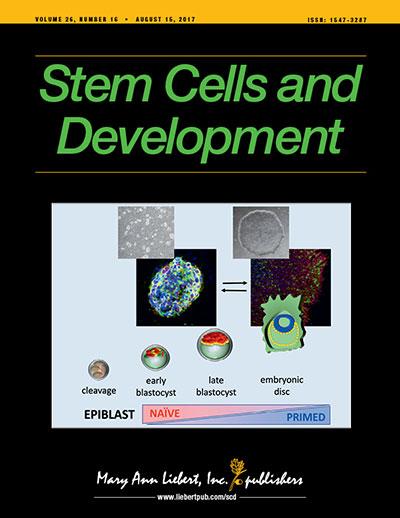
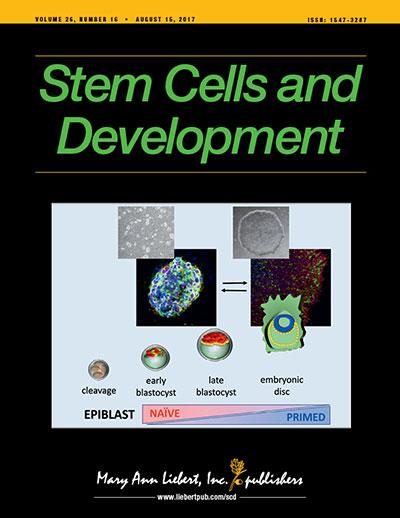
IMAGE

Credit: Mary Ann Liebert, Inc., publishers

New Rochelle, NY, August 8, 2017-Researchers have demonstrated the ability to generate dopaminergic neurons in the laboratory from induced pluripotent stem cells (iPSCs) derived from fibroblast cells of adult marmoset monkeys. This new study, documenting the iPSCs' pluripotent properties and the potential for using this animal model to develop regenerative medicine approaches for dopamine-related disorders such as Parkinson's disease, is published in Stem Cells and Development, a peer-reviewed journal from Mary Ann Liebert, Inc., publishers. The article is available free on the Stem Cells and Development website until September 8, 2017.

Marina Emborg, MD, PhD and colleagues from University of Wisconsin-Madison coauthored the article entitled "Induced Pluripotent Stem Cell-Derived Dopaminergic Neurons from Adult Common Marmoset Fibroblasts." The researchers reported that the marmoset fibroblast-derived iPSCs could differentiate into all three embryonic cell lineages: mesoderm, ectoderm, and endoderm. When stimulated to pattern themselves as neurons, the iPSCs expressed genes and other biomarkers consistent with a dopaminergic phenotype.

"This important study advances the marmoset as a model for Parkinson's disease, for the first time deriving a line from the adult marmoset," says Editor-in-Chief Graham C. Parker, PhD, The Carman and Ann Adams Department of Pediatrics, Wayne State University School of Medicine, Detroit, MI.

###

Research reported in this publication was supported by the National Institutes of Health under Award Numbers R24OD019803, P51OD011106, UL1TR000427, and T32GM750738. The content is solely the responsibility of the authors and does not necessarily represent the official views of the National Institutes of Health.

About the Journal

Stem Cells and Development is an authoritative peer-reviewed journal published 24 times per year in print and online. The Journal is dedicated to communication and objective analysis of developments in the biology, characteristics, and therapeutic utility of stem cells, especially those of the hematopoietic system. A complete table of contents and free sample issue may be viewed on the Stem Cells and Development website.

About the Publisher

Mary Ann Liebert, Inc., publishers is a privately held, fully integrated media company known for establishing authoritative peer-reviewed journals in many promising areas of science and biomedical research, including Cellular Reprogramming, Tissue Engineering, and Human Gene Therapy. Its biotechnology trade magazine, GEN (Genetic Engineering & Biotechnology News), was the first in its field and is today the industry's most widely read publication worldwide. A complete list of the firm's 80 journals, books, and newsmagazines is available on the Mary Ann Liebert, Inc., publishers website.

Media Contact

Kathryn Ryan
[email protected]
914-740-2250
@LiebertPub

http://www.liebertpub.com

Original Source

http://www.liebertpub.com/global/pressrelease/dopaminergic-neurons-derived-from-induced-pluripotent-stem-cells-in-non-human-primate-model/2228/ http://dx.doi.org/10.1089/scd.2017.0069


Share12Tweet8Share2ShareShareShare2

Related Posts

Gene Expansion Linked to Antithrombotic Traits in Leeches

Gene Expansion Linked to Antithrombotic Traits in Leeches

December 31, 2025
Unraveling Safflower Spininess: EMS and QTL-Seq Insights

Unraveling Safflower Spininess: EMS and QTL-Seq Insights

December 30, 2025

Gender Identity: Breaking Down Stereotypes and Cognition

December 30, 2025

Unlocking Embryonic Secrets: Nematode Chromatin Accessibility Revealed

December 30, 2025
Please login to join discussion

POPULAR NEWS

  • blank

    PTSD, Depression, Anxiety in Childhood Cancer Survivors, Parents

    90 shares
    Share 36 Tweet 23
  • NSF funds machine-learning research at UNO and UNL to study energy requirements of walking in older adults

    71 shares
    Share 28 Tweet 18
  • Exploring Audiology Accessibility in Johannesburg, South Africa

    52 shares
    Share 21 Tweet 13
  • Nurses’ Views on Online Learning: Effects on Performance

    71 shares
    Share 28 Tweet 18

About

BIOENGINEER.ORG

We bring you the latest biotechnology news from best research centers and universities around the world. Check our website.

Follow us

Recent News

Enhancing IoT Edge Computing with Quantum-Inspired Vulture Algorithm

Ultrasound Reveals Pain Responses to Needle Depth

Gene Expansion Linked to Antithrombotic Traits in Leeches

Subscribe to Blog via Email

Enter your email address to subscribe to this blog and receive notifications of new posts by email.

Join 71 other subscribers
  • Contact Us

Bioengineer.org © Copyright 2023 All Rights Reserved.

Welcome Back!

Login to your account below

Forgotten Password?

Retrieve your password

Please enter your username or email address to reset your password.

Log In
No Result
View All Result
  • Homepages
    • Home Page 1
    • Home Page 2
  • News
  • National
  • Business
  • Health
  • Lifestyle
  • Science

Bioengineer.org © Copyright 2023 All Rights Reserved.
