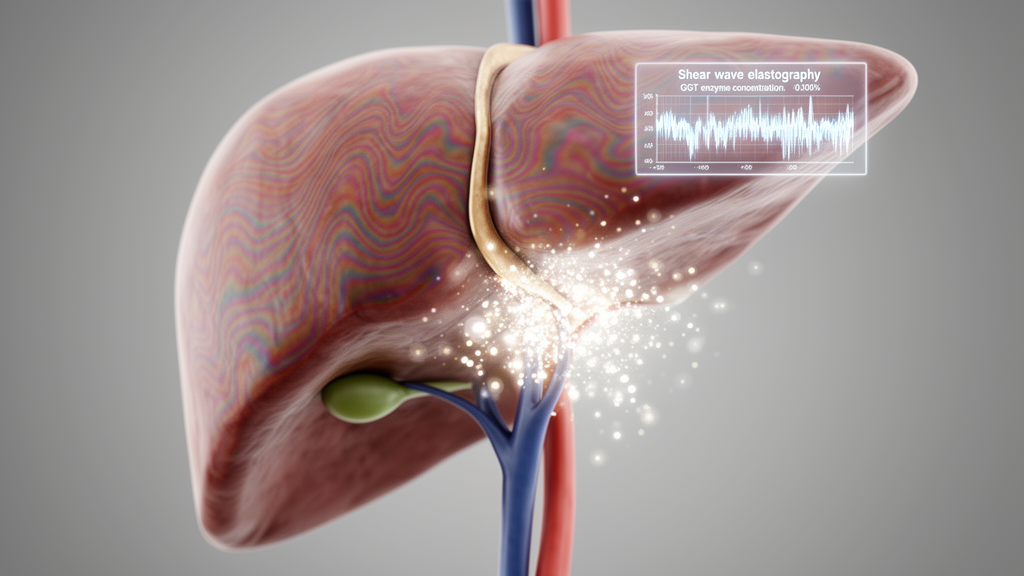
A statistical prediction model combining donor two-dimensional shear wave elastography and gamma-glutamyl transferase achieved the highest overall performance in identifying early allograft dysfunction following orthotopic liver transplantation, according to a retrospective cohort study. In evaluating outcomes among recipients, the Bayesian logistic regression model incorporating both donor measurements yielded an area under the receiver operating characteristic curve of 0.88, with a 95% confidence interval spanning from 0.79 to 0.96.
Early allograft dysfunction represents a major determinant of postoperative morbidity, mortality, and graft loss after liver transplantation. While evaluating donor liver quality is critical for preventing early allograft dysfunction, the predictive utility of donor two-dimensional shear wave elastography has remained uncertain due to inconsistent findings across earlier investigations. Additionally, no widely accepted risk prediction model incorporating both donor shear wave elastography and biochemical markers had been established prior to this study.
To address this uncertainty, researchers evaluated preoperative donor two-dimensional shear wave elastography and developed predictive models for early allograft dysfunction following orthotopic liver transplantation. The retrospective cohort study enrolled 65 brain-dead organ donors alongside their corresponding liver transplant recipients.
Prior to transplantation surgery, all enrolled donors underwent preoperative two-dimensional shear wave elastography examinations and laboratory blood tests. Following orthotopic liver transplantation, the recipients were evaluated and categorized into two distinct clinical cohorts: an early allograft dysfunction group and a non-early allograft dysfunction group.
Using the donor shear wave elastography measurements and donor gamma-glutamyl transferase blood levels, the investigators constructed two distinct statistical prediction models: a Bayesian logistic regression model and a decision tree model. Multivariable assessment demonstrated that both donor factors were independently associated with early allograft dysfunction in recipients, with shear wave elastography showing an odds ratio of 1.81 (95% confidence interval: 1.27 to 2.58, P = 0.001) and gamma-glutamyl transferase showing an odds ratio of 1.03 (95% confidence interval: 1.01 to 1.05, P = 0.009).
When tested as individual predictors for early allograft dysfunction after transplantation, donor two-dimensional shear wave elastography yielded an area under the receiver operating characteristic curve of 0.80 (95% confidence interval: 0.69 to 0.91, P < 0.001), while donor gamma-glutamyl transferase alone produced an area under the curve of 0.77 (95% confidence interval: 0.66 to 0.90, P < 0.001).
The combined predictive models demonstrated varying degrees of diagnostic performance. The decision tree model integrating donor shear wave elastography and gamma-glutamyl transferase yielded an area under the curve of 0.73 (95% confidence interval: 0.59 to 0.86, P = 0.001). By comparison, the Bayesian logistic regression model combining both donor metrics achieved superior predictive accuracy with an area under the curve of 0.88 (P < 0.001), outperforming both the decision tree approach and the individual donor parameters. The study concluded that combining donor shear wave elastography and gamma-glutamyl transferase through Bayesian logistic regression improves predictive accuracy for early allograft dysfunction after orthotopic liver transplantation.
Subject of Research: Predictive modeling of early allograft dysfunction after liver transplantation
Article Title: Development and internal validation of a prediction model combining donor two-dimensional shear wave elastography and gamma-glutamyl transferase for early allograft dysfunction after liver transplantation: a retrospective cohort study
Article References: Wang, J., Cao, J., Wang, C., Bai, J., Wang, Y., & Deng, H. (2026). Development and internal validation of a prediction model combining donor two-dimensional shear wave elastography and gamma-glutamyl transferase for early allograft dysfunction after liver transplantation: a retrospective cohort study. BMC Gastroenterology. https://doi.org/10.1186/s12876-026-05592-w
Image Credits: AI Generated
DOI: 10.1186/s12876-026-05592-w
Keywords: early allograft dysfunction, orthotopic liver transplantation, two-dimensional shear wave elastography, shear wave elastography, gamma-glutamyl transferase, Bayesian logistic regression, decision tree models, brain-dead donors, donor liver quality, graft loss, postoperative morbidity, preoperative blood tests, internal validation, retrospective cohort study, area under the curve, odds ratio, prediction models
News Source: Ophelia Keating. (November 23, 2026). Donor Shear Wave Elastography and GGT Model Predicts Early Allograft Dysfunction. Scienmag.