Dollar Stores May Be Quietly Reshaping America’s Health—One Grocery Aisle at a Time
For millions of Americans, dollar stores are more than places to buy household goods at low prices. They are often the closest and most affordable source of food, particularly in communities where traditional supermarkets are scarce, transportation is limited, or household budgets are under severe pressure. New research from the University of California, Riverside, suggests that this convenience may come with a significant public-health cost. The study, published in BMC Public Health, found that greater access to dollar stores was associated with higher rates of obesity, high blood pressure, elevated cholesterol, and type 2 diabetes across metropolitan areas in the United States. By contrast, access to conventional grocery stores was linked with more favorable health measures. The associations remained after researchers accounted for social and economic conditions such as income and unemployment, highlighting the possibility that the food environment itself may be an important contributor to chronic disease.
The findings focus attention on a category of retailer that has frequently been overlooked in food-access research. Although Dollar General, Dollar Tree, Family Dollar, and the former 99 Cents Only chain collectively account for tens of thousands of locations, the U.S. Census classifies dollar stores as general merchandise outlets rather than grocery stores. That administrative distinction can make them invisible in studies designed to measure the relationship between supermarkets and health. Researchers may conclude that a neighborhood lacks food retailers, even when residents regularly purchase food from a nearby dollar store. Alternatively, studies may treat the presence of a dollar store as evidence of food access without examining what kinds of products are available. Ryan Bruellman, a doctoral student in genetics, genomics and bioinformatics at UC Riverside and the study’s first author, argues that both approaches miss a critical question: whether nearby food is nutritious enough to support long-term health.
To investigate that question, Bruellman analyzed data from the Centers for Disease Control and Prevention’s 500 Cities Project, a major public-health dataset covering large American cities and metropolitan areas in the continental United States. The project includes estimates of chronic conditions and health-related behaviors at the local level, allowing researchers to compare disease patterns across communities. Bruellman combined those health data with information about the locations of dollar stores and traditional grocery stores. Using ArcGIS, a geographic information system used to map and analyze spatial relationships, he estimated how many stores were located within approximately a 10-minute drive of residential areas. This approach provided a measure of practical retail access rather than simply counting stores within political boundaries. The analysis also incorporated a social vulnerability index, which captures conditions that can make it more difficult for residents to obtain food, health care, transportation, and other essential resources.
Geographic information systems are particularly useful for studying food environments because distance alone does not determine whether a store is realistically accessible. A retailer may be only a few miles away but difficult to reach without a car, while a store within a short drive may be the only option for residents whose work schedules, mobility, or finances restrict their choices. By linking store locations to health and socioeconomic data, researchers can identify broad patterns that may not be visible in individual surveys. In this study, the relevant comparison was not simply whether a community had food outlets, but the balance between dollar stores and traditional grocery stores. That ratio offered an indirect measure of the type of food environment residents were most likely to encounter. The researchers reported that communities with a stronger dollar-store presence tended to show worse health indicators, while communities with greater access to conventional grocery stores tended to display better outcomes.
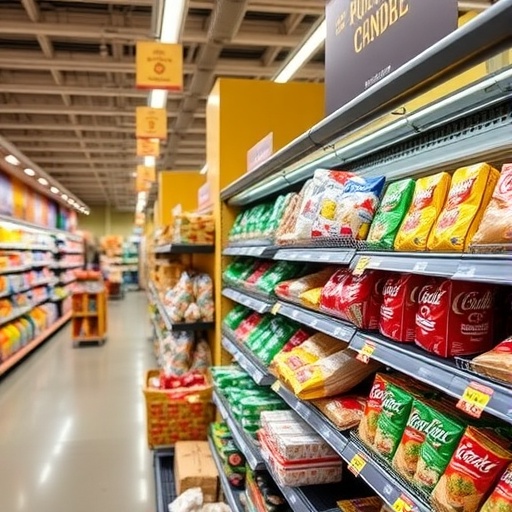
The relationship was especially pronounced in parts of the South and Midwest, where the ratio of dollar stores to traditional grocery stores was reported to be close to one-to-one. Bruellman suggested that the larger number of dollar stores in these regions may amplify their influence on local shopping patterns. Dollar stores often stock shelf-stable and highly processed products, including packaged snacks, sweetened beverages, refined carbohydrates, and ready-to-eat meals. These foods can be inexpensive, convenient, and calorically dense, but they may also contain high levels of sodium, added sugars, and saturated fats while providing relatively little fiber, protein, or micronutrients. A diet dominated by such products can promote excess calorie intake and metabolic stress. Over time, high sodium consumption may contribute to elevated blood pressure, while excessive sugar and refined carbohydrate intake can worsen insulin resistance. These biological pathways are consistent with the cluster of conditions observed in the study, including obesity, hypertension, high cholesterol, and type 2 diabetes.
The researchers emphasize that the study does not demonstrate that shopping at a dollar store directly causes disease. Its design is observational, meaning it identifies statistical associations between retail patterns and population health rather than proving a cause-and-effect relationship in individual consumers. Communities with many dollar stores may also face other challenges, such as lower wages, limited public transportation, reduced access to medical care, housing instability, or higher levels of stress. Although the analysis adjusted for several socioeconomic variables, no statistical model can completely eliminate the possibility of unmeasured influences. There is also a risk of ecological bias: a relationship observed across neighborhoods or cities may not apply identically to every person living there. Nevertheless, the consistency of the association across multiple regions, together with the biological plausibility of a highly processed food environment affecting metabolic health, makes the findings relevant for public-health planning.
The strength of the relationship varied from city to city, illustrating why national averages cannot fully describe local food systems. In Philadelphia, for example, the available data may not have captured the influence of bodegas, neighborhood markets, and small independent grocers. Such businesses can offer products that are absent from large retail databases, including fresh produce, culturally specific foods, and prepared meals. Their presence may reduce the health effects associated with a high concentration of dollar stores, even if they are not classified as traditional supermarkets. This limitation points to a broader problem in food-access research: official categories often fail to reflect how residents actually obtain food. A neighborhood’s food environment may include corner stores, farmers markets, food banks, mobile vendors, community gardens, and informal shopping networks. Understanding their combined influence will require more detailed data on product availability, purchasing behavior, prices, transportation, and the nutritional quality of food sold at each location.
Bruellman’s interpretation is that the answer is not necessarily to eliminate dollar stores. For many households, these retailers provide essential goods and may remain financially or geographically indispensable. Instead, the study suggests that policy efforts should focus on improving the quality of food available inside and around them. Dollar stores could partner with local farmers, regional distributors, or community organizations to offer more fresh fruits and vegetables. They might also expand refrigeration capacity, improve stocking systems for perishable foods, and devote more shelf space to minimally processed products. These changes would present logistical challenges, since fresh food requires reliable transportation, temperature control, and rapid inventory turnover. Yet targeted incentives, grants, tax policies, or municipal partnerships could help retailers overcome those barriers. Public programs that increase the purchasing power of low-income consumers for fruits and vegetables could further strengthen demand for healthier products.
Where retailers are unwilling or unable to change their food offerings, cities could bring alternative sources of nutritious food closer to the communities that need them. Farmers markets are often located in more affluent or central areas, potentially leaving residents who rely on dollar stores with limited access to fresh products. Placing markets near dollar stores, transit stops, public housing, schools, or community centers could make them more convenient and familiar. Food banks and mobile produce markets could serve a similar function, particularly in neighborhoods where commercial demand alone may not support a full-service supermarket. The larger goal is to treat food access as a health intervention rather than merely a retail issue. If the only nearby options are inexpensive foods designed for long shelf life, residents may face a structural barrier to maintaining a diet that protects against chronic disease.
The UC Riverside study arrives as food prices continue to shape household decisions throughout the United States. When budgets tighten, consumers frequently prioritize calories, convenience, and storage life, especially when healthier alternatives cost more or require additional travel. The research suggests that public-health officials should broaden the way they define food access and examine not only where stores are located, but what they sell and who depends on them. Traditional supermarkets remain important, but they are not the only places where people buy food. By placing dollar stores within the same analytical framework as grocery stores, researchers can more accurately map the environments that influence dietary choices and disease risk. Bruellman hopes the findings will encourage lawmakers to expand access to healthier options while recognizing the realities of low-income communities. The study’s central message is straightforward: proximity may determine where people shop, but food quality may help determine how those choices affect their health.
Subject of Research: The relationship between dollar-store and traditional grocery-store food access, food quality, and chronic health conditions in U.S. communities.
Article Title: Beyond proximity: how food quality in dollar and grocery stores influences health
Web References: https://link.springer.com/article/10.1186/s12889-026-28145-y
References: BMC Public Health, DOI: 10.1186/s12889-026-28145-y
Keywords: Dollar stores, grocery stores, food quality, food access, food security, obesity, hypertension, high cholesterol, type 2 diabetes, metabolic health, health disparities, health equity, public health, food environment, socioeconomic vulnerability, GIS analysis, processed foods
Tags: affordability and nutritional quality of dollar store foodsDollar store health risksdollar stores and chronic disease prevalencefood access in low-income communitiesgrocery store accessibility and health outcomeshealth costs associated with low-cost grocery optionshealth disparities in food desertsimpact of dollar stores on public healthlong-term health effects of shopping at dollar storespublic health implications of dollar store proliferationrelationship between dollar stores and obesitysocioeconomic factors influencing food choices