• HOME
  • NEWS
  • EXPLORE
    • CAREER
      • Companies
      • Jobs
    • EVENTS
    • iGEM
      • News
      • Team
    • PHOTOS
    • VIDEO
    • WIKI
  • BLOG
  • COMMUNITY
    • FACEBOOK
    • INSTAGRAM
    • TWITTER
Saturday, May 23, 2026
BIOENGINEER.ORG
No Result
View All Result
  • Login
  • HOME
  • NEWS
  • EXPLORE
    • CAREER
      • Companies
      • Jobs
        • Lecturer
        • PhD Studentship
        • Postdoc
        • Research Assistant
    • EVENTS
    • iGEM
      • News
      • Team
    • PHOTOS
    • VIDEO
    • WIKI
  • BLOG
  • COMMUNITY
    • FACEBOOK
    • INSTAGRAM
    • TWITTER
  • HOME
  • NEWS
  • EXPLORE
    • CAREER
      • Companies
      • Jobs
        • Lecturer
        • PhD Studentship
        • Postdoc
        • Research Assistant
    • EVENTS
    • iGEM
      • News
      • Team
    • PHOTOS
    • VIDEO
    • WIKI
  • BLOG
  • COMMUNITY
    • FACEBOOK
    • INSTAGRAM
    • TWITTER
No Result
View All Result
Bioengineer.org
No Result
View All Result
Home NEWS Science News Biology

DNA provides new insights on the control of invasive Russian knapweed

Bioengineer by Bioengineer
August 3, 2017
in Biology
Reading Time: 2 mins read
0
Share on FacebookShare on TwitterShare on LinkedinShare on RedditShare on Telegram
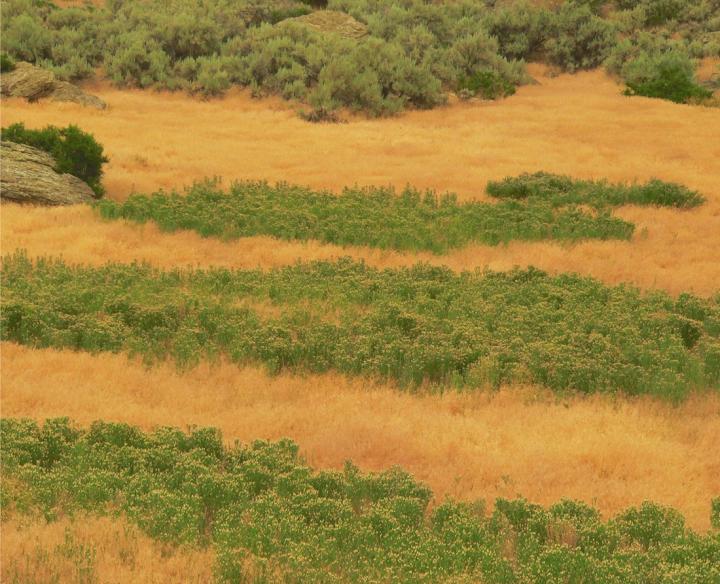
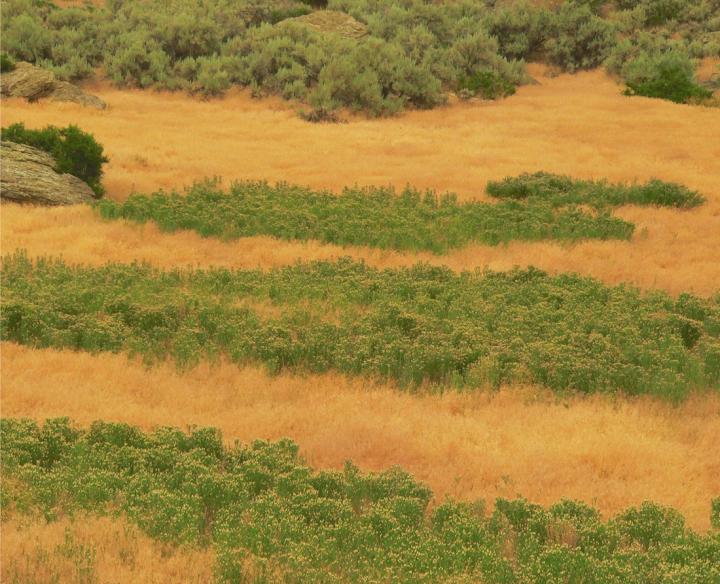
IMAGE

Credit: Jeffrey L. Littlefield.

A recent study featured in the journal Invasive Plant Science and Management sheds new light on the control of Russian knapweed, an invasive plant found in the western U.S.

Russian knapweed grows in dense patches that can survive for decades. It can crowd out more valuable forage plants and is toxic to horses. As a result, it is classified as a noxious weed in 18 U.S. states.

Russian knapweed can spread two ways – by seed and by new shoots that emerge from root growth. To date it has been unclear which method is most common in local invasions, which makes it hard to develop an effective management plan.

To shed light on the best control methods, scientists from the USDA Agricultural Research Service and Montana State University analyzed DNA samples collected from six patches of Russian knapweed. The analysis showed each patch was largely or entirely composed of a single plant genotype, which indicates localized patches were spreading from Russian knapweed roots. Seed dispersal was shown to be the source of new patches, though, since each of the patches investigated was genetically distinct from other patches studied.

"Our findings provide important insights in how to best manage localized knapweed outbreaks," says John Gaskin, a botanist with the USDA Agricultural Research Service. "Controlling seed development may be effective at stopping long-distance dispersal of knapweed to create new patches, but is unlikely to control expansion of existing patches."

Land managers may want to reevaluate the controls they use based on the study findings. For example, with biological control, two of the three agents approved for use on Russian knapweed in the U.S. – a gall midge and a nematode – reduce seed production and above ground growth, thereby helping to reduce long-distance dispersal. The third biological control agent – a gall wasp – is able to stress existing Russian knapweed plants and thus may be more effective at controlling the growth of individual Russian knapweed patches.

###

Full text of the article "Invasive Russian Knapweed (Acroptilon repens) Creates Large Patches Almost Entirely by Rhizomic Growth" is available in Volume 10, Issue 2 of the journal Invasive Plant Science and Management.

Media Contact

Natalie Warrender
[email protected]
01-223-347-944

http://www.cambridge.org/

Original Source

http://ow.ly/sm6F30e8tRh http://dx.doi.org/10.1017/inp.2017.9

Share12Tweet8Share2ShareShareShare2

Related Posts

Rising Sightings of Blue and Fin Whales in the South East Atlantic — Biology

Rising Sightings of Blue and Fin Whales in the South East Atlantic

May 23, 2026
New Maps Reveal How European Landscapes Can Simultaneously Promote Climate Action and Biodiversity Conservation — Biology

New Maps Reveal How European Landscapes Can Simultaneously Promote Climate Action and Biodiversity Conservation

May 22, 2026

University of Cincinnati Structural Biologists Achieve World First in Visualizing Crucial Cell Protein

May 22, 2026

Reducing Fertilizer Use Through Strategic Scientific Partnerships

May 22, 2026
Please login to join discussion

POPULAR NEWS

  • blank

    New Study Reveals Plants Can Detect the Sound of Rain

    734 shares
    Share 293 Tweet 183
  • ESMO 2025: mRNA COVID Vaccines Enhance Efficacy of Cancer Immunotherapy

    312 shares
    Share 125 Tweet 78
  • Research Indicates Potential Connection Between Prenatal Medication Exposure and Elevated Autism Risk

    847 shares
    Share 339 Tweet 212
  • Common Food Preservatives Associated with Elevated Blood Pressure and Increased Heart Disease Risk

    55 shares
    Share 22 Tweet 14

About

We bring you the latest biotechnology news from best research centers and universities around the world. Check our website.

Follow us

Recent News

Music and Motion Shape Emotion in Chinese Performance

N-acetylcysteine Trials for Preterm Birth Prevention

Nomogram Predicts Early Outcomes in Childhood Aplastic Anemia

Subscribe to Blog via Email

Enter your email address to subscribe to this blog and receive notifications of new posts by email.

Join 83 other subscribers
  • Contact Us

Bioengineer.org © Copyright 2023 All Rights Reserved.

Welcome Back!

Login to your account below

Forgotten Password?

Retrieve your password

Please enter your username or email address to reset your password.

Log In
No Result
View All Result
  • Homepages
    • Home Page 1
    • Home Page 2
  • News
  • National
  • Business
  • Health
  • Lifestyle
  • Science

Bioengineer.org © Copyright 2023 All Rights Reserved.