DNA from ancient feces can offer archaeologists new clues about the life and health of Japanese people who lived thousands of years ago, according to a study published January 24, 2024 in the open-access journal PLOS ONE by Luca Nishimura and Ituro Inoue from the National Institute of Genetics, Japan, Hiroki Oota from The University of Tokyo, Mayumi Ajimoto from Wakasa History Museum, and colleagues.
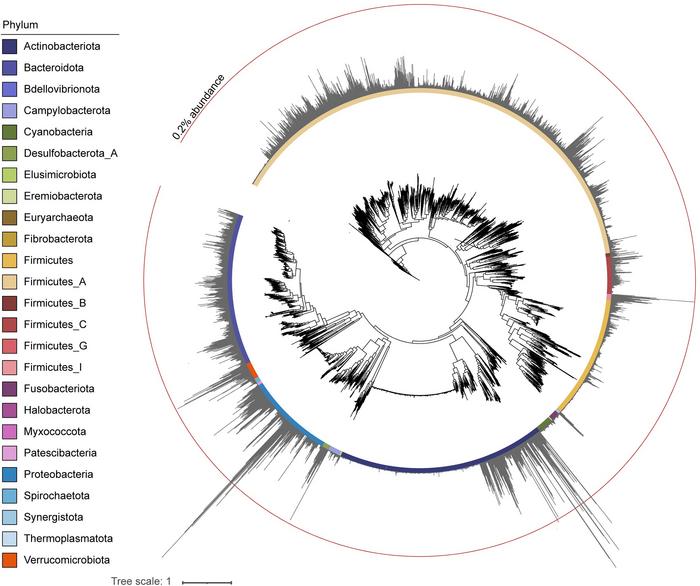
Credit: Nishimura et al., 2024, PLOS ONE, CC-BY 4.0 (https://creativecommons.org/licenses/by/4.0/)
DNA from ancient feces can offer archaeologists new clues about the life and health of Japanese people who lived thousands of years ago, according to a study published January 24, 2024 in the open-access journal PLOS ONE by Luca Nishimura and Ituro Inoue from the National Institute of Genetics, Japan, Hiroki Oota from The University of Tokyo, Mayumi Ajimoto from Wakasa History Museum, and colleagues.
Fossilized feces, also known as coprolites, can preserve an array of genetic material from the digestive tracts of ancient people. This includes the DNA of the microbes and viruses that lived in their digestive system—all of which could help archaeologists understand more details about their culture and lifestyle. In this study, researchers analyzed the genetic traces left behind in four coprolites collected at Japan’s Torihama shell-mound archaeological site to assess what details of the ancient people’s lives could be ascertained from these samples.
The fecal samples were between 5,500 and 7,000 years old, dating back to the island chain’s Early Jomon period. The researchers collectively sampled all of the genetic material from the coprolites and compared the DNA they found with known genetic sequences. Within the fecal samples, they found DNA fragments of the viruses which are homology with human betaherpesvirus 5 and human adenovirus F.
DNA breaks down over time, so the genomes represented in the coprolites were often highly fragmented. But despite this degradation, the researchers were still able to assess what kinds of microbes and viruses may have been present in people’s digestive systems thousands of years ago. In addition, the authors suggest that the coprolites’ preservation of both viral and bacterial genetic material could help scientists explore how bacteria and the viruses that infect those bacteria have co-evolved over time.
#####
In your coverage please use this URL to provide access to the freely available article in PLOS ONE: https://journals.plos.org/plosone/article?id=10.1371/journal.pone.0295924
Citation: Nishimura L, Tanino A, Ajimoto M, Katsumura T, Ogawa M, Koganebuchi K, et al. (2024) Metagenomic analyses of 7000 to 5500 years old coprolites excavated from the Torihama shell-mound site in the Japanese archipelago. PLoS ONE 19(1): e0295924. https://doi.org/10.1371/journal.pone.0295924
Author Countries: Japan
Funding: This work was supported by JSPS KAKENHI (grant numbers JP17H03738(HO), JP18H05506(II), JP20H01370(HO), JP20K21405(II), JP21H05362(HO), JP21J22509 (LN), JP21K19289(HO), JP22F22075(HO)), AMED under Grant Number JP23ek0109650h0001(II)), and Research Organization of Information and Systems (Investment program for futuristic research projects) (RS). The funders had no role in study design, data collection and analysis, decision to publish, or preparation of the manuscript.
Journal
PLoS ONE
DOI
10.1371/journal.pone.0295924
Method of Research
Observational study
Subject of Research
People
Article Title
Metagenomic analyses of 7000 to 5500 years old coprolites excavated from the Torihama shell-mound site in the Japanese archipelago
Article Publication Date
24-Jan-2024
COI Statement
The authors have declared that no competing interests exist.