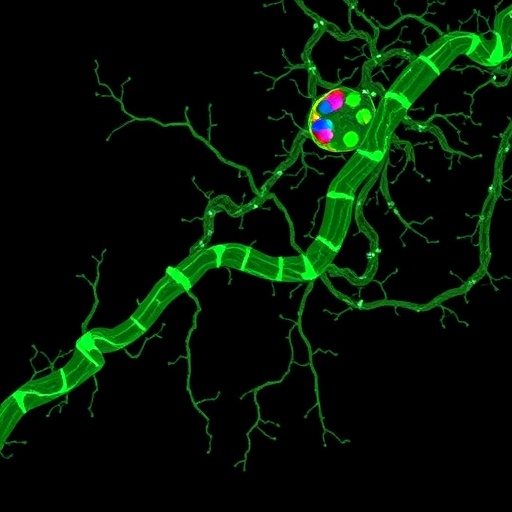
Australian researchers have unveiled a groundbreaking approach to tracking the complex landscape of cancer cells within tumors through the innovative use of DNA barcoding. This cutting-edge technique promises to revolutionize breast cancer diagnosis and treatment by offering unprecedented insight into tumor heterogeneity, a characteristic that has long complicated clinical outcomes. By exploiting DNA barcodes—that is, unique genetic tags inserted into individual cancer cells—scientists can now map the diverse clonal composition of tumors with remarkable precision, both in solid tissue biopsies and in liquid biopsies derived from blood samples.
At the heart of this advancement lies the concept of tumor heterogeneity, which refers to the existence of multiple genetically distinct subpopulations of cancer cells within one tumor. These subpopulations differ widely in their capacity to grow, spread, and resist therapies, posing a significant hurdle for effective treatment. Conventional biopsies capture only a fraction of this diversity, often skewing diagnostic and treatment decisions. However, the Australian team, spearheaded by experts from the Olivia Newton-John Cancer Research Institute, WEHI, and Peter MacCallum Cancer Centre, has demonstrated that genetic barcoding can be harnessed to comprehensively interrogate this cellular mosaicism.
The method involves the use of lentiviruses to introduce unique DNA tags into individual cancer cells within living tumor models. Each tag functions as a “barcode,” persistently marking the cell and its progeny, thus enabling researchers to track the fate and distribution of multiple clones in solid tumors and matched liquid biopsies. This approach facilitates a longitudinal and spatial understanding of how tumor clones disseminate, evolve, and contribute to disease progression. Notably, the team applied an optimized protocol that enhances barcode labeling efficiency and recovery, ensuring robust mapping of tumor composition.
One astonishing discovery was the observation that different tumor models shed DNA into the bloodstream at varying rates, a finding that deepens our understanding of circulating tumor DNA dynamics. Despite similar cellular compositions, some tumors release copious amounts of DNA fragments into plasma, whereas others release strikingly little. This variability in DNA shedding was not simply tied to tumor size or necrosis but appeared to be model-dependent, a nuance that carries profound implications for the interpretation of liquid biopsies. Importantly, the detection of these DNA barcodes in blood samples marks the first time researchers have been able to non-invasively monitor the genetic makeup of primary tumors through circulating DNA tags.
Understanding these shedding patterns exposes a potential pitfall in existing liquid biopsy diagnostics—the prevalence of false negatives arising when tumors fail to release detectable amounts of DNA despite aggressive behavior. This model-specific shedding phenomenon calls for a recalibration of how clinicians interpret negative liquid biopsy results, emphasizing the necessity for integrating multiple surveillance methods. The differing barcode diversity found between a tumor’s core and periphery further complicates the scenario, highlighting that traditional biopsies targeting peripheral regions may underestimate the true genetic heterogeneity within a tumor.
Dr. Antonin Serrano, who led much of this pioneering research at ONJCRI and WEHI before joining the University of Melbourne’s Department of Medicine, emphasized the transformative nature of DNA barcoding technology. “Our work enabled us to quantify, with great accuracy, how much of the tumor’s cellular diversity is actually captured by both solid and liquid biopsies. This understanding is crucial for improving diagnostic precision,” he stated. The insights into the spatial variation of barcode diversity within tumors could reshape sampling strategies, ensuring that biopsies better reflect the complex biology of the disease.
Senior author Professor Delphine Merino elaborated on the translational potential of the findings. “While both liquid and solid biopsy approaches provide valuable snapshots of tumor composition, the variability between tumors suggests that a combined strategy could yield a more comprehensive picture. Such multifaceted monitoring may ultimately guide personalized therapeutic interventions, improving outcomes for patients,” she explained. The integration of DNA barcoding into clinical workflows could thus bridge the gap between molecular complexity and manageable cancer care.
Renowned breast cancer clinician Professor Sarah-Jane Dawson from Peter MacCallum Cancer Centre, co-senior author of the study, highlighted the clinical implications. “Liquid biopsies are increasingly used to non-invasively monitor how patients respond to treatment over time. By understanding the mechanisms driving differential DNA shedding among tumors, we can refine these tools to enhance sensitivity and reliability, paving the way for better disease surveillance,” she remarked. Such advancements hold promise for early detection of relapse and for tailoring therapies dynamically during treatment.
The context of this research gains urgency considering the substantial breast cancer burden in Australia, where in 2025 alone, over 20,000 new cases were diagnosed with more than 3,000 deaths reported. Improving diagnostic tools that can accurately capture tumor heterogeneity is paramount to reducing mortality rates and fostering the development of targeted therapies. This development exemplifies how molecular innovations converge with patient care to address pressing oncological challenges.
Co-first authorship was shared by Dr. Tom Weber of WEHI, reflecting the collaborative nature of this interstate effort, while co-senior authorship was also attributed to Professor Shalin Naik at WEHI. The team acknowledges support from philanthropic entities such as Love Your Sister, and from national funding bodies including the National Health and Medical Research Council and the National Breast Cancer Foundation. Their collective efforts symbolize a potent alliance between scientific innovation, clinical expertise, and community engagement.
This research, published in the peer-reviewed journal Molecular Systems Biology on February 11, 2026, sets a new benchmark for studies of tumor genetics and liquid biopsy technologies. The open DOI link offers full access to the experimental design, data, and comprehensive analysis underpinning these findings. With no competing interests declared, the work establishes an impartial and impactful contribution to cancer biology, encouraging further exploration and application worldwide.
By deploying sophisticated genetic barcoding to unravel the clonal architecture of tumors and their manifestations in liquid biopsies, Australian scientists have charted a course towards more reliable, non-invasive diagnostic tools. Such tools are critical for adapting therapeutic regimens in real time, monitoring treatment effectiveness, and ultimately improving survival rates for breast cancer patients worldwide. This innovation marks a pivotal step in personalized oncology, where the genetic fingerprint of every tumor can be traced and targeted with unprecedented clarity.
Subject of Research: Cells
Article Title: Genetic barcoding uncovers the clonal makeup of solid and liquid biopsies and their ability to capture intra-tumoral heterogeneity
News Publication Date: 11-Feb-2026
Web References: 10.1038/s44320-026-00194-w
References: Molecular Systems Biology, 2026
Keywords: Cancer, Tumor Heterogeneity, DNA Barcoding, Liquid Biopsy, Breast Cancer, Oncology, Molecular Biology
Tags: Australian cancer research breakthroughsbreast cancer diagnosis advancementsclonal composition of tumorsDNA barcoding technologygenetic tagging of cancer cellsinnovative cancer research techniquesliquid biopsies for cancer detectionOlivia Newton-John Cancer Research Institute discoveriesovercoming challenges in cancer treatmentpersonalized cancer treatment strategiesprecision mapping of tumorstumor heterogeneity in cancer