• HOME
  • NEWS
  • EXPLORE
    • CAREER
      • Companies
      • Jobs
    • EVENTS
    • iGEM
      • News
      • Team
    • PHOTOS
    • VIDEO
    • WIKI
  • BLOG
  • COMMUNITY
    • FACEBOOK
    • INSTAGRAM
    • TWITTER
Wednesday, May 13, 2026
BIOENGINEER.ORG
No Result
View All Result
  • Login
  • HOME
  • NEWS
  • EXPLORE
    • CAREER
      • Companies
      • Jobs
        • Lecturer
        • PhD Studentship
        • Postdoc
        • Research Assistant
    • EVENTS
    • iGEM
      • News
      • Team
    • PHOTOS
    • VIDEO
    • WIKI
  • BLOG
  • COMMUNITY
    • FACEBOOK
    • INSTAGRAM
    • TWITTER
  • HOME
  • NEWS
  • EXPLORE
    • CAREER
      • Companies
      • Jobs
        • Lecturer
        • PhD Studentship
        • Postdoc
        • Research Assistant
    • EVENTS
    • iGEM
      • News
      • Team
    • PHOTOS
    • VIDEO
    • WIKI
  • BLOG
  • COMMUNITY
    • FACEBOOK
    • INSTAGRAM
    • TWITTER
No Result
View All Result
Bioengineer.org
No Result
View All Result
Home NEWS Science News Biology

DNA analyses show a dynamic coevolutionary relationship between birds and their feather mites

Bioengineer by Bioengineer
January 17, 2019
in Biology
Reading Time: 3 mins read
0
IMAGE
Share on FacebookShare on TwitterShare on LinkedinShare on RedditShare on Telegram

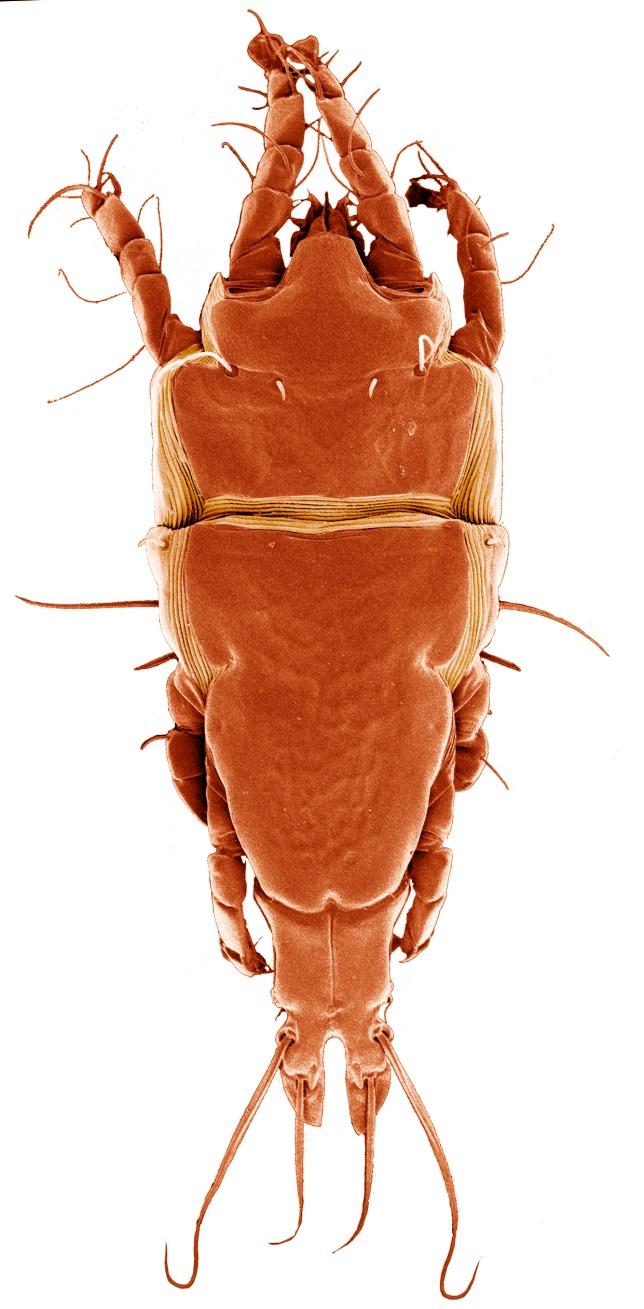
A research in collaboration with the Spanish National Research Council (CSIC) has carried out a massive genetic study of the relationships between feather mites and birds
IMAGE

Credit: Heather Proctor (University of Alberta)


A genetic study uncovers that birds maintain a dynamic coevolutionary relationship with their feather mites. The study has involved the participation of the Estación Biológica de Doñana from the CSIC, and its results have just been published in the journal Molecular Ecology.

“This study shows that the host-switching – or colonization – of symbionts (in this case, bird-feather mites) towards other host species is a frequent phenomenon even for highly host-specific symbionts, suggesting a dynamic coevolutionary and codiversification scenario,” explains Roger Jovani, CSIC researcher from the Estación Biológica de Doñana.

In this work, it has been carried out a massive genetic study of the associations between the birds and their feather mites (25,500 mites analysed in 1,100 birds approximately) with the aim of identifying mites in unexpected host species. “The results show that, surprisingly, a 7.4% of the hosts and a 4.8% of the mites were part of the unexpected associations”, says Jovani.

The researcher explains that “furthermore, we have found no random patterns behind the unexpected associations which prove the relevance of ecological factors within the regulation of these dynamics: a higher frequency within the modules of the ecological mite-bird network and similar sizes among host species that shared unexpected mite species.

This work modifies the traditional belief that argued that the relationship of the symbionts with their hosts was highly stable at an ecological scale. “For example, in the case of host-specific symbionts (those associated with very few host species,), the colonization or host-switching was thought to be a very rare phenomenon, and therefore the coevolutionary and cospeciation processes should be the main responsibles of their coevolutionary dynamics,” says Jorge Doña, lead author of the study, current head of the R+D at AllGenetics and Postdoctoral Research Affiliate at the University of Illinois (USA).

Bird-feather mites are permanent symbionts of birds (they live their whole life cycle on their host). They are highly host-specific symbionts. Each species of these mites inhabits one or a few bird species; and therefore it was supposed that they maintained a highly stable relationship with their hosts at an ecological end evolutionary scale.

“However, recent studies at an evolutionary scale have inferred that the speciation process resulting from host-switching (speciation when reaching a new host species) and not the cospeciation (symbiont speciation after its host’s speciation) is the main process behind the diversification of these symbionts,” adds Jovani.

The relevance of the symbionts

The symbionts (that maintain a close parasistic, commensal or mutualistic relationship with their hosts) constitute the largest and most diverse group of organisms on the planet and are crucial for the ecosystem stability. In this sense, the study of the ecological and evolutionary aspects of the symbionts is vital to understand processes such as the emergence of transmissible diseases, pests in crops or the effect of climate change on the biodiversity.

###

Media Contact
Roger Jovani
[email protected]
0034-954-466-700

Related Journal Article

http://dx.doi.org/10.1111/mec.14968

Tags: BiologyEcology/EnvironmentEvolution
Share12Tweet8Share2ShareShareShare2

Related Posts

UMass Chan Scientists Pioneer Gene Editing Technology That Rewrites Entire Genome Chapters — Biology

UMass Chan Scientists Pioneer Gene Editing Technology That Rewrites Entire Genome Chapters

May 13, 2026
Scientists Observe Rice Plants Capturing and Eliminating Fall Armyworm Caterpillars — Biology

Scientists Observe Rice Plants Capturing and Eliminating Fall Armyworm Caterpillars

May 13, 2026

Study Finds Genetic Risk for Schizophrenia Emerges in Early Adolescence

May 13, 2026

How Water Fleas Sense Their Predators: A Scientific Insight

May 13, 2026
Please login to join discussion

POPULAR NEWS

  • Research Indicates Potential Connection Between Prenatal Medication Exposure and Elevated Autism Risk

    842 shares
    Share 337 Tweet 211
  • New Study Reveals Plants Can Detect the Sound of Rain

    729 shares
    Share 291 Tweet 182
  • Salmonella Haem Blocks Macrophages, Boosts Infection

    62 shares
    Share 25 Tweet 16
  • Breastmilk Balances E. coli and Beneficial Bacteria in Infant Gut Microbiomes

    57 shares
    Share 23 Tweet 14

About

We bring you the latest biotechnology news from best research centers and universities around the world. Check our website.

Follow us

Recent News

New Global Study Reveals Challenges in Combating High Blood Pressure Effectively

Ultra-Faint Primitive Galaxy Forms During Reionization

New Study Finds Significant Weight Gain More Than Doubles Risk of Certain Cancers

Subscribe to Blog via Email

Enter your email address to subscribe to this blog and receive notifications of new posts by email.

Join 82 other subscribers
  • Contact Us

Bioengineer.org © Copyright 2023 All Rights Reserved.

Welcome Back!

Login to your account below

Forgotten Password?

Retrieve your password

Please enter your username or email address to reset your password.

Log In
No Result
View All Result
  • Homepages
    • Home Page 1
    • Home Page 2
  • News
  • National
  • Business
  • Health
  • Lifestyle
  • Science

Bioengineer.org © Copyright 2023 All Rights Reserved.