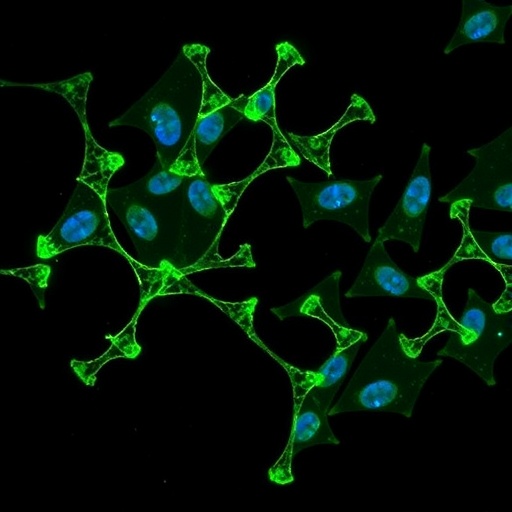
In a groundbreaking study poised to shift our understanding of Parkinson’s disease and neurological function, researchers have uncovered the pivotal role of a specific molecular interaction in brain signaling and behavior regulation. Published recently in npj Parkinson’s Disease, the investigation led by Li, Chen, Wang, and colleagues centers on the LRRK2 substrate RAB12, revealing that its disruption results in enhanced neurotransmission and markedly increased motor activity in mice. This discovery not only elucidates critical aspects of neuronal communication but also opens exciting avenues for therapeutic interventions targeting Parkinson’s and related neurodegenerative disorders.
The complexity of Parkinson’s disease has long challenged scientists due to its multifaceted etiology, involving genetic, environmental, and cellular contributors. Central to this is the leucine-rich repeat kinase 2 (LRRK2) gene, whose mutations are among the most common genetic risk factors linked to both inherited and sporadic forms of Parkinson’s disease. LRRK2 operates as a kinase enzyme that modifies downstream proteins through phosphorylation, influencing numerous cellular pathways including vesicle trafficking and autophagy. However, the precise substrates and mechanisms through which LRRK2 exerts its deleterious effects have remained elusive.
Focusing on RAB12, a small GTPase involved in membrane trafficking, the research team embarked on an in-depth exploration of its interaction with LRRK2 and its impact on synaptic function. RAB12 belongs to the RAB family of proteins, which orchestrate the transport and fusion of vesicles within neurons—a process fundamental to neurotransmitter release and synaptic strength modulation. By genetically disrupting RAB12 in murine models, they observed a notable upregulation of synaptic neurotransmission, a finding that challenges previous assumptions about the dampening effects of LRRK2 activity on neuronal signaling.
Electrophysiological recordings from brain slices illustrated that RAB12 deficiency leads to increased frequency and amplitude of miniature excitatory postsynaptic currents (mEPSCs), indicative of enhanced synaptic vesicle release probability. This hyperactive synaptic state translates into a vastly increased behavioral output, as observed in vivo through heightened locomotor activity and exploration in RAB12 knockout mice compared to wild-type controls. These phenotypic manifestations suggest that RAB12 plays a repressive role in modulating neurotransmitter release, acting as a critical brake on neuronal excitability downstream of LRRK2.
Given that LRRK2 dysfunction is closely linked with hyperphosphorylation and subsequent aberrant activity of its substrates, the disruption of RAB12 sheds light on a possible pathogenic pathway where impaired vesicle trafficking contributes to synaptic imbalance. This imbalance may exacerbate dopaminergic neuron vulnerability, facilitating the progressive motor symptoms characteristic of Parkinson’s disease. The observed hyperactivity in mice potentially reflects compensatory mechanisms or early-stage synaptic dysregulation preceding neurodegeneration.
Further biochemical analyses revealed that LRRK2 phosphorylates RAB12 at specific serine residues, regulating its activity and localization within neuronal compartments. Loss of this modification interferes with normal recycling of synaptic vesicles, culminating in altered neurotransmitter release dynamics. Importantly, the authors demonstrate that pharmacological inhibition of LRRK2 kinase activity mimics some of the effects seen with RAB12 disruption, reinforcing the therapeutic potential of targeting this pathway.
The implications of these findings extend beyond Parkinson’s disease, offering insights into fundamental neurobiological processes governing synaptic plasticity and behavioral regulation. Hyperactivity and neurotransmission enhancement resulting from RAB12 perturbation may serve as a model to study other neuropsychiatric and movement disorders. Moreover, the identification of RAB12 as a critical effector in LRRK2 signaling provides a novel biomolecular target for drug development, where modulating this axis could restore synaptic homeostasis and slow disease progression.
This study also emphasizes the importance of precise molecular interventions in neurological disorders, as traditional symptomatic treatments often fall short of addressing underlying cellular dysfunctions. The specificity of the LRRK2-RAB12 interaction in synaptic vesicle dynamics exemplifies how dissecting cellular signaling pathways can lead to highly targeted therapies with potentially fewer side effects. Additionally, genetic animal models such as those employed here provide valuable platforms for preclinical drug screening and mechanistic dissection.
As Parkinson’s disease afflicts millions worldwide, with incidence rising due to aging populations, the urgency for innovative treatments is paramount. Understanding the molecular choreography of synapse regulation through proteins like RAB12 not only enriches our scientific knowledge but also inspires hope for improved patient outcomes. Early intervention strategies aiming at normalizing LRRK2 and RAB12 interactions might delay or prevent the disabling motor symptoms that compromise quality of life for patients.
Complementing the molecular and behavioral data, advanced imaging techniques employed in this research unveiled subcellular alterations in synaptic terminals of affected neurons. Disrupted vesicle pools and altered endosomal trafficking were visualized, providing a tangible correlate to biochemical insights. Such interdisciplinary approaches strengthen the robustness of the conclusions and highlight the multifaceted nature of LRRK2-related pathology.
Looking forward, the team advocates for expanded investigations into the downstream signaling networks influenced by RAB12 and related GTPases. Mapping these pathways comprehensively could unearth additional intervention points and clarify the molecular cascade from gene mutation to neuronal demise. Ongoing clinical trials targeting LRRK2 inhibitors will benefit from these foundational discoveries, potentially enabling biomarker-driven patient stratification and refined therapeutic regimens.
Ultimately, this pioneering work by Li, Chen, Wang, and colleagues represents a significant leap in Parkinson’s research, underscoring the nuanced interplay between kinase activity, vesicle trafficking, and neuronal excitability. It reinforces the paradigm that synaptic regulation is a cornerstone in neurodegenerative disease mechanisms, calling for intensified focus on molecular substrates like RAB12. The path to conquering Parkinson’s may well hinge on these microscopic modulators that govern the delicate balance of brain signaling and behavior.
Subject of Research: The role of LRRK2 substrate RAB12 in neurotransmission and behavioral regulation in the context of Parkinson’s disease.
Article Title: Disruption of the LRRK2 substrate RAB12 facilitates neurotransmission and causes hyperactivity in mice.
Article References:
Li, X., Chen, Y., Wang, H. et al. Disruption of the LRRK2 substrate RAB12 facilitates neurotransmission and causes hyperactivity in mice. npj Parkinsons Dis. (2026). https://doi.org/10.1038/s41531-026-01353-4
Image Credits: AI Generated
Tags: autophagy pathways in Parkinson’senhanced neurotransmission in micegenetic risk factors in Parkinson’sLRRK2 kinase enzyme functionLRRK2 substrate RAB12 interactionmotor activity regulation in neurological disordersneurodegenerative disorder interventionsneuronal communication and behavior regulationParkinson’s disease molecular mechanismsRAB12 role in membrane traffickingtherapeutic targets for Parkinson’s diseasevesicle trafficking in neurodegeneration