A research group led by Associate Professor Ryushiro Kasahara at Nagoya University in Japan, identified a genetic sequence in thale cress that is essential for plant reproduction. As this region is found in all plant species, it is expected to contribute to future crossbreeding between plant species. The results were published in Frontiers in Plant Biology.
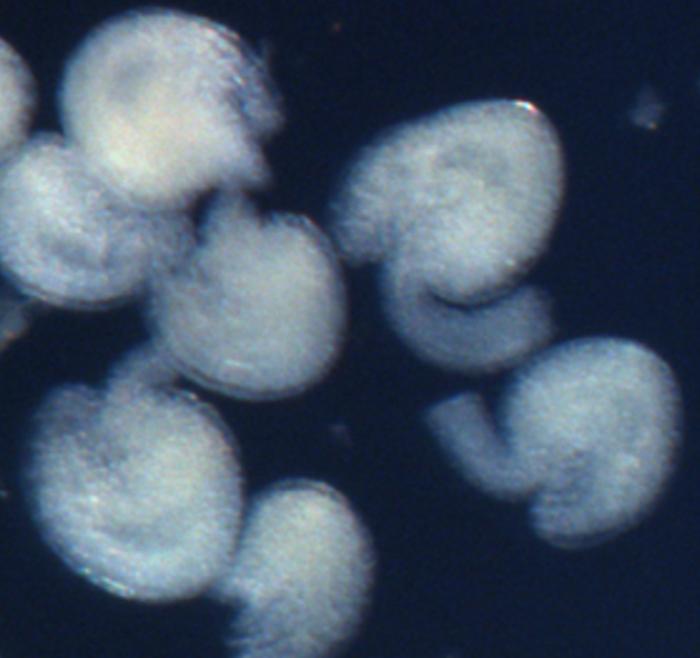
Credit: Ryushiro Kasahara and Gary Drews
A research group led by Associate Professor Ryushiro Kasahara at Nagoya University in Japan, identified a genetic sequence in thale cress that is essential for plant reproduction. As this region is found in all plant species, it is expected to contribute to future crossbreeding between plant species. The results were published in Frontiers in Plant Biology.
Understanding plant fertilization is important to secure food stocks and increase plant yields. A key part of this process involves signaling molecules. In the reproduction of thale cress, the male pollen tube is attracted and guided toward the female ovule by signaling molecules, called LURE proteins, released from the female reproductive tissues. Previous studies identified a gene called MYB98 that enhances the synthesis of LURE proteins.
However, identifying the parts of the genetic code that activate the expression of MYB98 and any other genes is a daunting challenge due to the complexity of the genome. The plant genome constitutes high levels of non-coding regions, which also include potential sequences involved in gene activation. Most of Kasahara’s career has been dedicated to finding the gene sequences – identifying the sequences responsible for the activation of MYB98 gene took him almost 18 years.
“Since the discovery of MYB98 in 2009, its downstream genes, such as LUREs, have been identified. However, the upstream genes controlling MYB98 were not identified until our group discovered them,” Dr. Kasahara said. The group called their discovery Synergid-specific Activation Element of MYB98 (SaeM). “I was so happy to discover SaeM, as it is the starting point to explore the genes required for driving MYB98.
Their efforts paid off when they found that SaeM was present in almost all plant species. The group realized that this meant their research could help with the important problem of seed formation defects, the underdevelopment or defective growth of seeds. Seed formation defects are often caused by reproductive isolation, a series of mechanisms that prevent successful reproduction between different plant populations. By modifying SaeM, it may be possible to prevent this reproductive isolation and create useful hybrids through crossbreeding.
The finding could also improve fertilization rates and solve cross-incompatibility issues in some crop species. Incompatibility is caused by the failure of the proper fertilization process when the flower is pollinated with pollens from different species. One of the reasons for incompatibility is that the growing pollen tube can fail to sense cues from the ovule. The newly discovered element could be useful to activate and enhance the expression of genes responsible for the synthesis of the cue. This may help produce seeds in otherwise incompatible lines.
“The discovery will certainly benefit the seed production industry,” Kasahara said. “It may help improve the fertilization rates of plants that are relatively less efficient in terms of their pollen tube attraction towards ovules. Our research has the potential to improve fertilization and the initial seed development process.”
Kasahara is enthusiastic about the potential uses of his research. “New discoveries, like this often open up avenues that have yet to be realized,” he said. “Our team is very ambitious and open to the practical application of this new discovery.”
Journal
Frontiers in Plant Science
DOI
10.3389/fpls.2023.1177058
Method of Research
Experimental study
Article Title
Discovery of a cis-regulatory element SaeM involved in dynamic regulation of synergid-specific MYB98
Article Publication Date
8-May-2023