• HOME
  • NEWS
  • EXPLORE
    • CAREER
      • Companies
      • Jobs
    • EVENTS
    • iGEM
      • News
      • Team
    • PHOTOS
    • VIDEO
    • WIKI
  • BLOG
  • COMMUNITY
    • FACEBOOK
    • INSTAGRAM
    • TWITTER
Wednesday, May 6, 2026
BIOENGINEER.ORG
No Result
View All Result
  • Login
  • HOME
  • NEWS
  • EXPLORE
    • CAREER
      • Companies
      • Jobs
        • Lecturer
        • PhD Studentship
        • Postdoc
        • Research Assistant
    • EVENTS
    • iGEM
      • News
      • Team
    • PHOTOS
    • VIDEO
    • WIKI
  • BLOG
  • COMMUNITY
    • FACEBOOK
    • INSTAGRAM
    • TWITTER
  • HOME
  • NEWS
  • EXPLORE
    • CAREER
      • Companies
      • Jobs
        • Lecturer
        • PhD Studentship
        • Postdoc
        • Research Assistant
    • EVENTS
    • iGEM
      • News
      • Team
    • PHOTOS
    • VIDEO
    • WIKI
  • BLOG
  • COMMUNITY
    • FACEBOOK
    • INSTAGRAM
    • TWITTER
No Result
View All Result
Bioengineer.org
No Result
View All Result
Home NEWS Science News Chemistry

Discovery of a tripole winter precipitation change pattern around the Tibetan Plateau in the late 1990s

Bioengineer by Bioengineer
May 31, 2022
in Chemistry
Reading Time: 2 mins read
0
Snow-covered mountains on the Tibetan Plateau
Share on FacebookShare on TwitterShare on LinkedinShare on RedditShare on Telegram

The Tibetan Plateau (TP) is referred to as the “water tower” of Asia for being home to the headwaters of many major rivers in Asia, including the Yangtze, Yellow, Ganges, and Indus. Therefore, TP precipitation is important for not only local, but regional water resources too. On the other hand, the TP can strongly modulate the Asian climate through dynamic and thermal processes. Previous studies have shown that TP snow in winter/spring can significantly influence the Asian monsoon at interannual to interdecadal time scales. TP snow increased after the late 1970s and decreased after the late 1990s, contributing to simultaneous East Asian summer rainfall changes. However, little attention has been paid to the possible mechanism of TP precipitation change at interdecadal time scales.
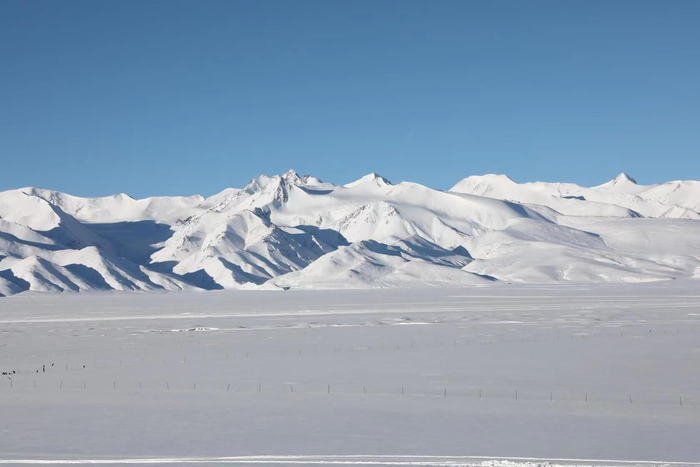
Snow-covered mountains on the Tibetan Plateau

Credit: Yanbin Lei

The Tibetan Plateau (TP) is referred to as the “water tower” of Asia for being home to the headwaters of many major rivers in Asia, including the Yangtze, Yellow, Ganges, and Indus. Therefore, TP precipitation is important for not only local, but regional water resources too. On the other hand, the TP can strongly modulate the Asian climate through dynamic and thermal processes. Previous studies have shown that TP snow in winter/spring can significantly influence the Asian monsoon at interannual to interdecadal time scales. TP snow increased after the late 1970s and decreased after the late 1990s, contributing to simultaneous East Asian summer rainfall changes. However, little attention has been paid to the possible mechanism of TP precipitation change at interdecadal time scales.

In an attempt to understand this issue, Associate Prof. Yali Zhu from the Institute of Atmospheric Physics, Chinese Academy of Sciences, has uncovered a tripole winter precipitation change pattern around the TP in the late 1990s. In this pattern, the precipitation decreased over eastern India, to the southern TP, to southern China, and increased in the two regions to the north and south. The results have been published in Atmospheric and Oceanic Science Letters.

Further dynamical diagnosis and numerical experiment results show that tropical Pacific SST changes can induce strengthened Walker circulation over the Pacific, causing ascending motion anomalies over the Indo-Pacific region. The regional meridional–vertical circulation is thus modulated, leading to descending motion anomalies over eastern India, to the southern TP, to southern China. Combined with the effect of the changes in the East Asian westerly jet stream, a tripole precipitation pattern is formed around the TP.

“But other factors can also influence TP precipitation change, and more investigation is needed,” adds Associate Prof. Zhu. Against the background of global warming, the impact of high-latitude climate systems, such as the Arctic sea ice, as well as anthropogenic activity, on TP precipitation, requires further analysis.


Journal

Atmospheric and Oceanic Science Letters

DOI

10.1016/j.aosl.2022.100223

Article Title

A tripole winter precipitation change pattern around the Tibetan Plateau in the late 1990s

Article Publication Date

15-May-2022

Share12Tweet8Share2ShareShareShare2

Related Posts

Sunspot Peaks Speed Up Space Junk Reentry, Aiding Satellite Collision Prevention

May 6, 2026
OpenBind’s Inaugural Data and Model Release Sets a New Benchmark in AI-Driven Drug Discovery — Chemistry

OpenBind’s Inaugural Data and Model Release Sets a New Benchmark in AI-Driven Drug Discovery

May 6, 2026

Step Aside Cassette Tapes, Adhesive Tape Holds Memory Too

May 5, 2026

Astronomers Trace the Origins of a Peculiar Planetary Pair

May 5, 2026

POPULAR NEWS

  • Research Indicates Potential Connection Between Prenatal Medication Exposure and Elevated Autism Risk

    836 shares
    Share 334 Tweet 209
  • New Study Reveals Plants Can Detect the Sound of Rain

    722 shares
    Share 288 Tweet 180
  • Scientists Investigate Possible Connection Between COVID-19 and Increased Lung Cancer Risk

    68 shares
    Share 27 Tweet 17
  • Salmonella Haem Blocks Macrophages, Boosts Infection

    61 shares
    Share 24 Tweet 15

About

We bring you the latest biotechnology news from best research centers and universities around the world. Check our website.

Follow us

Recent News

Double Strand Breaks Fuel Toxicity in Huntington’s Disease

Bio-Inspired Mechanical Pattern Generator Scales Pneumatic Control

Soft Robots Powered by Embedded Liquid Crystal Holography

Subscribe to Blog via Email

Enter your email address to subscribe to this blog and receive notifications of new posts by email.

Join 82 other subscribers
  • Contact Us

Bioengineer.org © Copyright 2023 All Rights Reserved.

Welcome Back!

Login to your account below

Forgotten Password?

Retrieve your password

Please enter your username or email address to reset your password.

Log In
No Result
View All Result
  • Homepages
    • Home Page 1
    • Home Page 2
  • News
  • National
  • Business
  • Health
  • Lifestyle
  • Science

Bioengineer.org © Copyright 2023 All Rights Reserved.