• HOME
  • NEWS
  • EXPLORE
    • CAREER
      • Companies
      • Jobs
    • EVENTS
    • iGEM
      • News
      • Team
    • PHOTOS
    • VIDEO
    • WIKI
  • BLOG
  • COMMUNITY
    • FACEBOOK
    • INSTAGRAM
    • TWITTER
Monday, May 18, 2026
BIOENGINEER.ORG
No Result
View All Result
  • Login
  • HOME
  • NEWS
  • EXPLORE
    • CAREER
      • Companies
      • Jobs
        • Lecturer
        • PhD Studentship
        • Postdoc
        • Research Assistant
    • EVENTS
    • iGEM
      • News
      • Team
    • PHOTOS
    • VIDEO
    • WIKI
  • BLOG
  • COMMUNITY
    • FACEBOOK
    • INSTAGRAM
    • TWITTER
  • HOME
  • NEWS
  • EXPLORE
    • CAREER
      • Companies
      • Jobs
        • Lecturer
        • PhD Studentship
        • Postdoc
        • Research Assistant
    • EVENTS
    • iGEM
      • News
      • Team
    • PHOTOS
    • VIDEO
    • WIKI
  • BLOG
  • COMMUNITY
    • FACEBOOK
    • INSTAGRAM
    • TWITTER
No Result
View All Result
Bioengineer.org
No Result
View All Result
Home NEWS Science News Biology

Discovery fills gap in search for better treatments for Ebola, other viruses

Bioengineer by Bioengineer
March 7, 2018
in Biology
Reading Time: 2 mins read
0
Share on FacebookShare on TwitterShare on LinkedinShare on RedditShare on Telegram
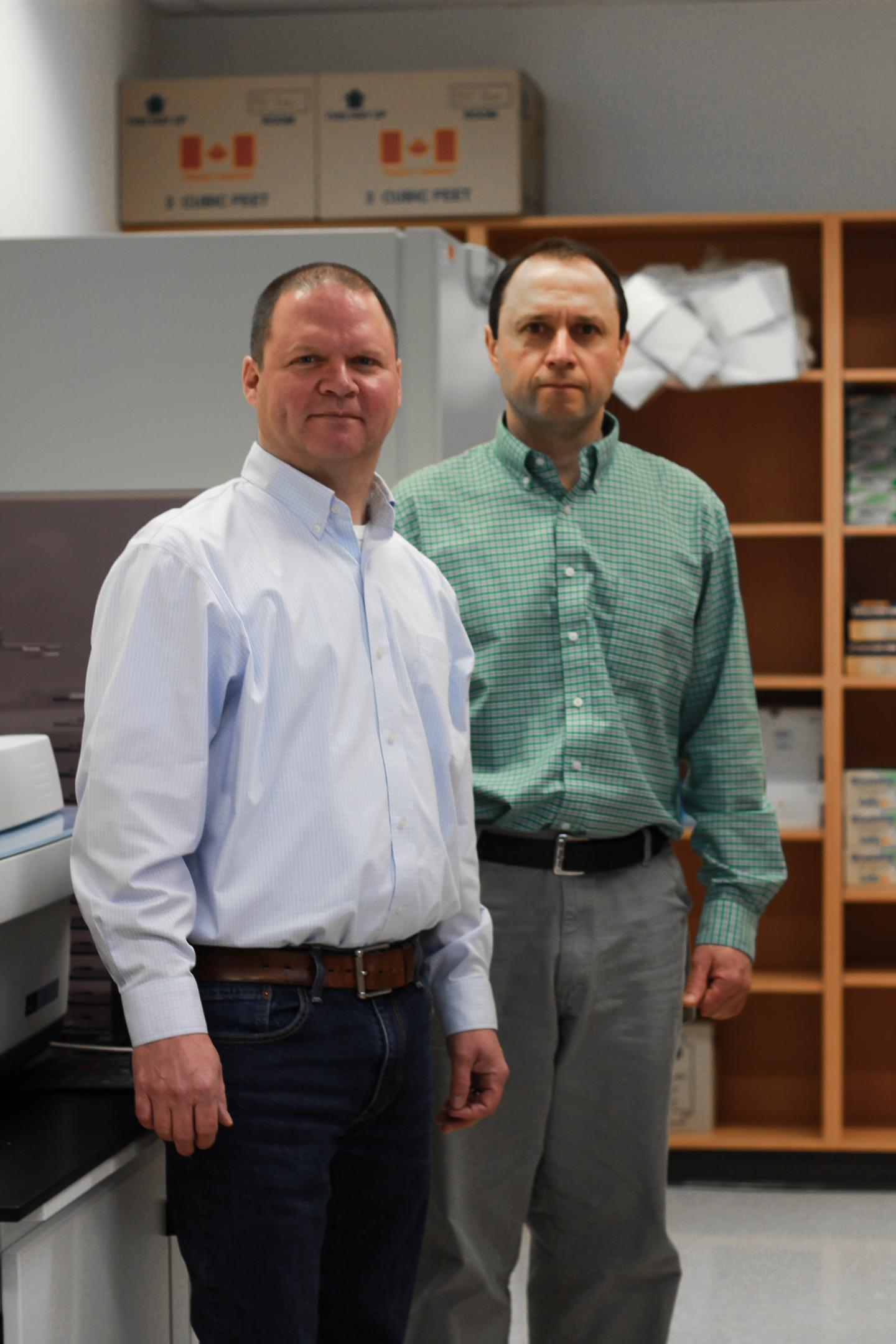
IMAGE

Credit: Melissa Fabrizio

University of Alberta researchers have found the Ebola polymerase (enzyme), which may lead to more effective research and better treatments for the often fatal infection, and other related viral diseases.

"Our study reports the expression, purification and biochemical characterization of an active, recombinant EBOV polymerase complex that is responsible for the propagation of the Ebola virus. It will give researchers worldwide the tool they need to study Ebola inhibitors in any lab environment."

Until now, research with the Ebola virus has been largely limited to a few extreme biosafety labs," explained lead author Matthias Götte, professor and chair of the U of A's Department of Medical Microbiology & Immunology and a member of the Li Ka Shing Institute of Virology.

"These labs were not unlike what you've seen in Hollywood movies like Outbreak," he said.

The discovery should also allow researchers to better search for antiviral medicines for viruses that don't currently have effective treatments but are major public health risks, such as influenza, measles, mumps and respiratory syncytial virus (RSV).

"Our discovery is not an actual cure for these diseases, but rather fills a major gap that existed in the search for treatments. The hope is that it accelerates further research into medicines, such as polymerase inhibitors, that will help to save lives," said Götte.

The last Ebola outbreak in 2014 in West Africa took 11,000 lives. It required a massive international effort to minimize and eventually contain the spread of the disease.

"Ebola is a very serious threat that is not limited by borders," added Götte.

The discovery required persistence on the part of the researchers.

"Isolating the RNA polymerase has proven to be a challenge for so many researchers simply because it is a difficult protein to produce in the lab," explained Götte.

More than two years ago, Götte and his team set out to look for other protocols related to the enzyme.

"While there has been progress in producing related enzymes in other labs, there was no unifying protocol. So really, it was a case of trial and error," he said.

The difficulty is not only in creating and purifying the protein, but also in developing an assay to show that the protein is active, he added.

"The first time we yielded an active polymerase for the Ebola virus in the lab, we couldn't believe it. Then we ran many controlled experiments to see if it was real. It was an exciting time."

###

The study was published in Scientific Reports and funded by the Canadian Institutes of Health Research.

Media Contact

Ross Neitz
[email protected]
780-492-5986
@ualberta_fomd

http://www.med.ualberta.ca

Related Journal Article

http://dx.doi.org/10.1038/s41598-018-22328-3

Share13Tweet7Share2ShareShareShare1

Related Posts

Uncovering C. elegans Immunity via Genetic Screens — Biology

Uncovering C. elegans Immunity via Genetic Screens

May 16, 2026
Single mother must adapt swiftly — the survival of her colony depends on it — Biology

Single mother must adapt swiftly — the survival of her colony depends on it

May 15, 2026

Why Are Nearly Everyone Right-Handed? It Might Be Linked to How We Learned to Walk

May 15, 2026

Excessive Neuronal Activity Initiates Severe Autoimmune Brain Disorder

May 15, 2026
Please login to join discussion

POPULAR NEWS

  • Research Indicates Potential Connection Between Prenatal Medication Exposure and Elevated Autism Risk

    844 shares
    Share 338 Tweet 211
  • New Study Reveals Plants Can Detect the Sound of Rain

    731 shares
    Share 292 Tweet 182
  • Salmonella Haem Blocks Macrophages, Boosts Infection

    62 shares
    Share 25 Tweet 16
  • Breastmilk Balances E. coli and Beneficial Bacteria in Infant Gut Microbiomes

    58 shares
    Share 23 Tweet 15

About

We bring you the latest biotechnology news from best research centers and universities around the world. Check our website.

Follow us

Recent News

Micronutrients Linked to Mood and Psychotic Disorders

AI Tool in Radiotherapy Advances Global Fight to Eradicate Cervical Cancer

Detecting Illicit Bitcoin Transactions with Temporal Graph Learning

Subscribe to Blog via Email

Enter your email address to subscribe to this blog and receive notifications of new posts by email.

Join 82 other subscribers
  • Contact Us

Bioengineer.org © Copyright 2023 All Rights Reserved.

Welcome Back!

Login to your account below

Forgotten Password?

Retrieve your password

Please enter your username or email address to reset your password.

Log In
No Result
View All Result
  • Homepages
    • Home Page 1
    • Home Page 2
  • News
  • National
  • Business
  • Health
  • Lifestyle
  • Science

Bioengineer.org © Copyright 2023 All Rights Reserved.