New technique targets cancer cells and leaves healthy ones alone; patients would receive less chemo and fewer side effects
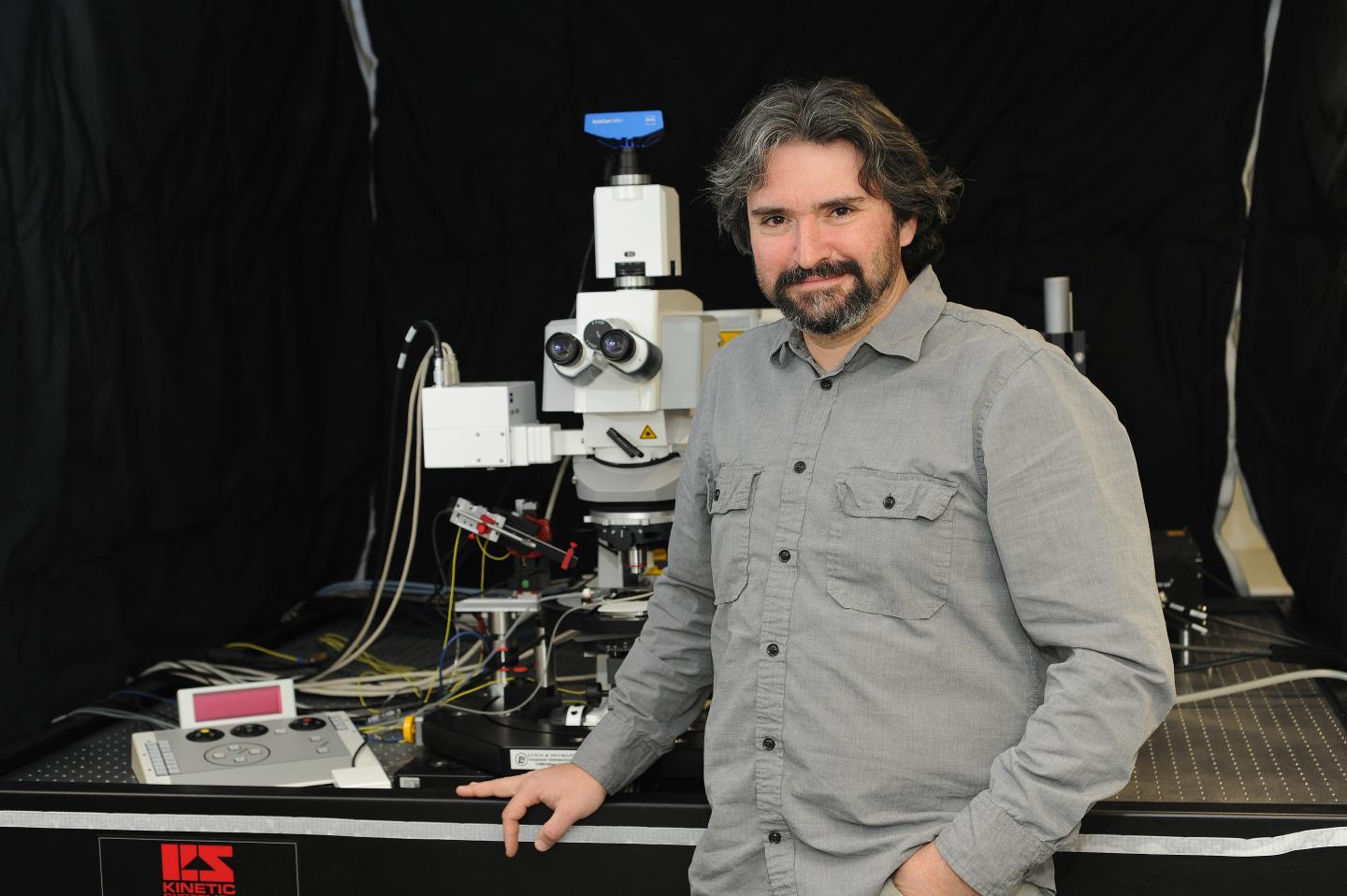
Credit: Hadas Parush/Flash 90
(Jerusalem, November 26, 2019)–It is a feeling that many who receive a cancer diagnosis can identify with: heartbreak and fear, followed by hopes that chemotherapy will save the day. Unfortunately, for many patients, chemo’s painful side effects cause them to stop treatment prematurely.
Now, a research team headed by Professor Alexander Binshtok, head of the Pain Plasticity Research Group at the Hebrew University of Jerusalem’s Faculty of Medicine and Edmond & Lily Safra Center for Brain Sciences, has developed a method that delivers chemotherapy drugs directly to malignant cells and bypasses healthy ones. This discovery could allow doctors to reduce chemo doses for patients, thereby reducing the unpleasant side-effects associated with the treatment, and improve treatment compliance and overall prognoses.
“Most anti-cancer treatments are not sufficiently specific, meaning they attack healthy cells together with the malignant ones they’re trying to get rid of,” explained Binshtok. “This leads to the many serious side-affects associated with chemo therapy. Eliminating cancerous cells while leaving healthy ones alone is an important step towards reduce patients’ suffering.”
The new findings were published in a recent issue of Frontiers in Pharmacology. The study focuses on the selective expression of the TRPV2 protein by cancer cells. When activated, TRPV2 protein opens a canal inside cell membranes. Binshtok and his team studied liver cancer cells and were able to successfully insert a low dose of doxorubicin, a chemotherapeutic agent, through the canal and directly into cancer cells. Not only did the new method target cancer cells without harming healthy ones. In the future, the precision of this delivery method may allow doctors to prescribe lower chemo doses and to relieve patients from some of the harsher effects of chemo.
“It’s too early to make concrete predictions but we are hopeful this discovery will lead the way towards a new, more targeted delivery method for chemotherapy treatment, one that will drastically reduce patients’ pain,” Binshtok concluded.
###
CITATION: 2-APB and CBD-Mediated Targeting of Charged Cytotoxic Compounds Into Tumor Cells Suggests the Involvement of TRPV2 Channels. Hagit Neumann-Raziel, Asaf Shilo, Shaya Lev, Maxim Mogilevsky, Ben Katz, David Shneor, Yoav D. Shaul, Andreas Leffler, Alberto Gabizon, Rotem Karni, Alik Honigman, and Alexander M. Binshtok, Frontiers in Pharmacology. https:/
FUNDING: Deutsche Forschungsgemeinschaft (DIP), Israel Science Foundation, Marie Curie International Reintegration Grant, Rosetrees Trust.
The Hebrew University of Jerusalem (HU) is Israel’s leading academic and research institution, serving 23,000 students from 80 countries. HU produces a third of Israel’s civilian research and is ranked 12th worldwide in biotechnology patent filings and commercial development. To date, HU faculty and alumni have won 8 Nobel Prizes. For more information, visit http://new.
Hebrew University’s Edmond and Lily Safra Center for Brain Sciences (ELSC) is revolutionizing neuroscience research. ELSC aims to develop a thriving interface between theory and experiments across levels – cognitive, biological, and computational neuroscience, paving the way to innovative discovery in brain research.
Media Contact
Tali Aronsky
[email protected]
055-666-4371
Related Journal Article
http://dx.