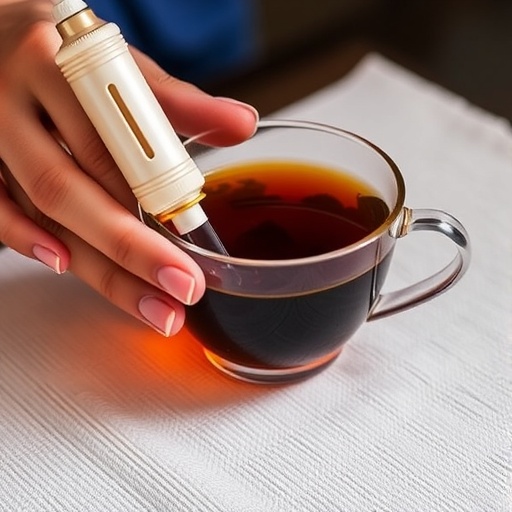
A data-driven method is giving tea authentication a technological upgrade. Researchers report that Minnan oolong teas can be distinguished by variety using a two-part strategy: electronic sensory instruments paired with non-targeted high-resolution metabolomics. Instead of relying solely on subjective tasting, the approach links measurable aroma- and taste-related signals to the underlying molecular composition that creates flavor identity.
The study focused on five representative Minnan cultivars: Baiya Qilan, Huangdan, Mingke 1, Tieguanyin, and Foshou. All samples were processed under the same oolong workflow—whether withering, tumbling, fixation, rolling, drying, cloth-wrapped kneading, or final drying—so that cultivar-driven differences could be isolated rather than blurred by processing variation.
First, a trained seven-member panel evaluated aroma and taste attributes to establish sensory baselines. Distinct patterns emerged: Baiya Qilan showed a persistent orchid character, Huangdan leaned toward floral and sweet notes, Mingke 1 delivered a rich and balanced profile, Tieguanyin stood out for elegant orchid fragrance and “Yin rhyme,” and Foshou expressed sweet, fruity, and woody traits.
To move from perception to quantification, the team used an electronic nose and electronic tongue to digitize aroma and taste. The electronic nose separated the five varieties effectively, with specific sensor contributions identified (including W3C, W6S, and W3S). Meanwhile, the electronic tongue highlighted key taste dimensions—such as bitterness, richness, and saltiness—providing an objective sensory signature.
For molecular profiling, ultra-high-performance liquid chromatography-tandem mass spectrometry detected 3,949 non-volatile metabolites. Multivariate statistics narrowed this to 65 key differential candidates for varietal marking. Quantification of caffeine, catechins, and L-theanine further clarified taste mechanisms: caffeine and catechins tracked bitterness and astringency, while L-theanine supported umami and lingering aftertaste.
A parallel volatile analysis employed headspace solid-phase microextraction combined with comprehensive two-dimensional gas chromatography-quadrupole time-of-flight mass spectrometry. Among 111 volatile compounds, VIP and relative odor activity analyses pinpointed 14 aroma-active drivers—such as nerol and phenethyl alcohol—explaining floral, fruity, sweet, citrus, orchid-like, rose-like, and woody impressions.
Together, these layers create a traceable “fingerprint” connecting cultivar, sensation, and chemistry. The framework offers an objective tool for varietal authentication, quality assessment, flavor standardization, and future tea breeding or product design—an innovation positioned for viral attention among both tea professionals and consumers.
Subject of Research: Not applicable
Article Title: Variety-driven flavor differentiation in Minnan oolong teas: integrative analysis by electronic sensory technologies and non-targeted metabolomics
News Publication Date: 26-Apr-2026
Web References: http://dx.doi.org/10.48130/bpr-0026-0001
References: 10.48130/bpr-0026-0001
Image Credits: Beverage Plant Research
Keywords: Minnan oolong, tea varietal authentication, electronic nose, electronic tongue, non-targeted metabolomics, aroma-active compounds, UHPLC-MS/MS, 2D GC-QTOF-MS, flavor fingerprint
Tags: cultivar-specific aroma and taste profilesdigital sensors for tea quality assessmentelectronic nose and tongue sensory instrumentsflavor characterization of Minnan oolong varietieshigh-resolution metabolomics in tea analysisMinnan oolong tea authenticationmolecular basis of tea flavormolecular fingerprinting of oolong tea cultivarsnon-targeted metabolomics for tea classificationsensory and instrumental analysis in tea scienceTea flavor fingerprintingtechnological advancements in tea authentication