Despite a long-standing hypothesis that personality traits are relatively impervious to environmental pressures, the COVID-19 pandemic may have altered the trajectory of personality across the United States, especially in younger adults, according to a new study published this week in the open-access journal PLOS ONE by Angelina Sutin of Florida State University College of Medicine, and colleagues.
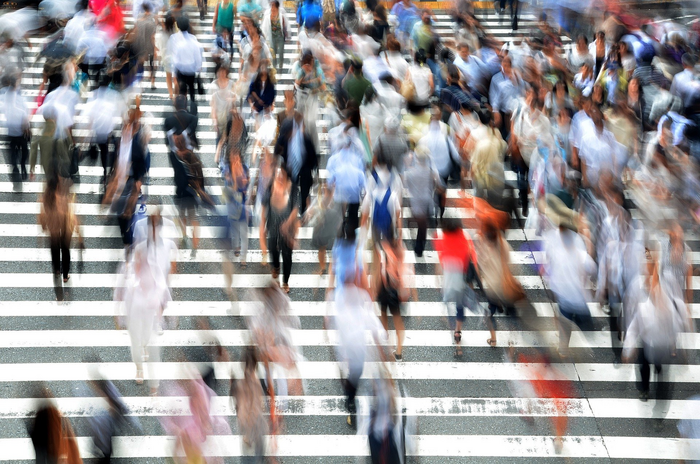
Credit: Brian Merrill, Pixabay, CC0 (https://creativecommons.org/publicdomain/zero/1.0/)
Despite a long-standing hypothesis that personality traits are relatively impervious to environmental pressures, the COVID-19 pandemic may have altered the trajectory of personality across the United States, especially in younger adults, according to a new study published this week in the open-access journal PLOS ONE by Angelina Sutin of Florida State University College of Medicine, and colleagues.
Previous studies have generally found no associations between collective stressful events—such as earthquakes and hurricanes—and personality change. However, the coronavirus pandemic has affected the entire globe and nearly every aspect of life.
In the new study, the researchers used longitudinal assessments of personality from 7,109 people enrolled in the online Understanding America Study. They compared five-factor model personality traits—neuroticism, extraversion, openness, agreeableness and conscientiousness—between pre-pandemic measurements (May 2014 – February 2020) and assessments early (March – December 2020) or later (2021-2022) in the pandemic. A total of 18,623 assessments, or a mean of 2.62 per participant, were analyzed. Participants were 41.2% male and ranged in age from 18 to 109.
Consistent with other studies, there were relatively few changes between pre-pandemic and 2020 personality traits, with only a small decline in neuroticism. However, there were declines in extraversion, openness, agreeableness, and conscientiousness when 2021-2022 data was compared to pre-pandemic personality. The changes were about one-tenth of a standard deviation, which is equivalent to about one decade of normative personality change. The changes were moderated by age, with younger adults showing disrupted maturity in the form of increased neuroticism and decreased agreeableness and conscientiousness, and the oldest group of adults showing no statistically significant changes in traits.
The authors conclude that if these changes are enduring, it suggests that population-wide stressful events can slightly bend the trajectory of personality, especially in younger adults.
The authors add: “There was limited personality change early in the pandemic but striking changes starting in 2021. Of most note, the personality of young adults changed the most, with marked increases in neuroticism and declines in agreeableness and conscientiousness. That is, younger adults became moodier and more prone to stress, less cooperative and trusting, and less restrained and responsible.”
#####
In your coverage please use this URL to provide access to the freely available article in PLOS ONE: https://journals.plos.org/plosone/article?id=10.1371/journal.pone.0274542
Citation: Sutin AR, Stephan Y, Luchetti M, Aschwanden D, Lee JH, Sesker AA, et al. (2022) Differential personality change earlier and later in the coronavirus pandemic in a longitudinal sample of adults in the United States. PLoS ONE 17(9): e0274542. https://doi.org/10.1371/journal.pone.0274542
Author Countries: USA, France
Funding: Research reported in this publication was supported by the National Institute on Aging of the National Institutes of Health under Award Number R01AG053297 to ARS. The content is solely the responsibility of the authors and does not necessarily represent the official views of the National Institutes of Health. The funders had no role in study design, data collection and analysis, decision to publish, or preparation of the manuscript.
Journal
PLoS ONE
DOI
10.1371/journal.pone.0274542
Method of Research
Observational study
Subject of Research
People
Article Title
Differential personality change earlier and later in the coronavirus pandemic in a longitudinal sample of adults in the United States
Article Publication Date
28-Sep-2022
COI Statement
The authors have declared that no competing interests exist.