

• HOME
  • NEWS
  • EXPLORE
    • CAREER
      • Companies
      • Jobs
    • EVENTS
    • iGEM
      • News
      • Team
    • PHOTOS
    • VIDEO
    • WIKI
  • BLOG
  • COMMUNITY
    • FACEBOOK
    • INSTAGRAM
    • TWITTER
Thursday, March 26, 2026
BIOENGINEER.ORG
No Result
View All Result
  • Login
  • HOME
  • NEWS
  • EXPLORE
    • CAREER
      • Companies
      • Jobs
        • Lecturer
        • PhD Studentship
        • Postdoc
        • Research Assistant
    • EVENTS
    • iGEM
      • News
      • Team
    • PHOTOS
    • VIDEO
    • WIKI
  • BLOG
  • COMMUNITY
    • FACEBOOK
    • INSTAGRAM
    • TWITTER
  • HOME
  • NEWS
  • EXPLORE
    • CAREER
      • Companies
      • Jobs
        • Lecturer
        • PhD Studentship
        • Postdoc
        • Research Assistant
    • EVENTS
    • iGEM
      • News
      • Team
    • PHOTOS
    • VIDEO
    • WIKI
  • BLOG
  • COMMUNITY
    • FACEBOOK
    • INSTAGRAM
    • TWITTER
No Result
View All Result
Bioengineer.org
No Result
View All Result
Home NEWS Science News Health

Diagnostic radiologists with lifetime ABR certificates less likely to participate in MOC

Bioengineer by Bioengineer
September 20, 2019
in Health
Reading Time: 2 mins read
0
IMAGE
Share on FacebookShare on TwitterShare on LinkedinShare on RedditShare on Telegram

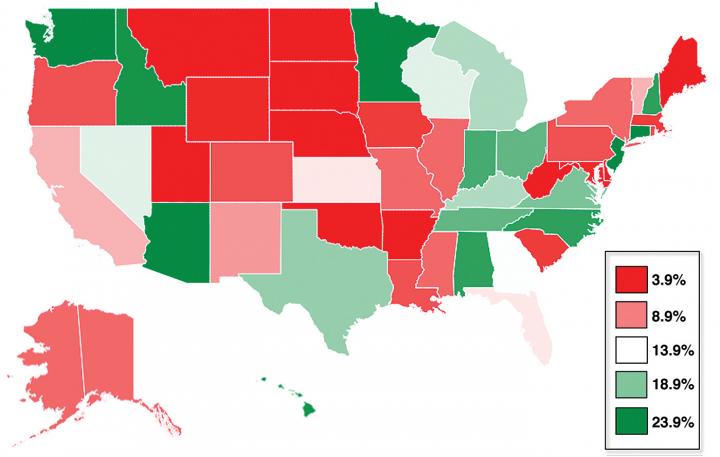
American Journal of Roentgenology research determines lifetime-certified diagnostic radiologists whose Maintenance of Certification was not mandated by the American Board of Radiology were far less likely to participate in MOC programs
IMAGE

Credit: American Journal of Roentgenology (AJR)

Leesburg, VA, September 20, 2019–According to an ahead-of-print article published in the December issue of the American Journal of Roentgenology (AJR), lifetime-certified diagnostic radiologists whose Maintenance of Certification (MOC) was not mandated by the American Board of Radiology (ABR) were far less likely to participate in ABR MOC programs–especially general radiologists and those working in smaller, nonacademic practices in states with lower population densities.

Defining diagnostic radiologists as those whose only ABR certificate is in diagnostic radiology, lead author Andrew B. Rosenkrantz of NYU Langone Medical Center and colleagues cross-referenced Medicare and Medicaid data with ABR’s own public search engine to determine that 11,479 of 20,354 total diagnostic radiologists (56.4%) participated in MOC.

Although diagnostic radiologists with time-limited certificates nearly universally participate in ABR MOC–99.6% (10,058/10,099)–participation rates were only 13.9% (1421/10,225) among the cohort with lifetime ABR certificates.

“Many opinions have been expressed regarding MOC in radiology,” says Rosenkrantz, the 2017 ARRS Leonard Berlin Scholar. “But there is actually very little public data on the matter. Through this work, we hope to bring objective findings to help inform the discussions.”

The rates of nonmandated participation were higher (all p

State-level rates of nonmandated participation varied from 0.0% (South Dakota, Montana) to 32.6% (Virginia) and positively correlated with state population density (r = 0.315).

###

Founded in 1900, the American Roentgen Ray Society (ARRS) is the first and oldest radiology society in the North America, dedicated to the advancement of medicine through the profession of radiology and its allied sciences. An international forum for progress since the discovery of the x-ray, ARRS maintains its mission of improving health through a community committed to advancing knowledge and skills with an annual scientific meeting, monthly publication of the peer-reviewed American Journal of Roentgenology (AJR), quarterly issues of InPractice magazine, topical symposia and AJR Live Webinars, print and online educational materials, as well as awarding scholarships via The Roentgen FundĀ®.

Media Contact
Logan K. Young
[email protected]

Original Source

https://arrs.org/ARRSLIVE/Pressroom/PressReleases/diagnostic-radiologists-lifetime-ABR-certificates-less-likely-participate-MOC.aspx

Related Journal Article

http://dx.doi.org/10.2214/AJR.19.21724

Tags: EducationGuidelines/Treaties/AgreementsHealth CareMedicine/HealthPolicy/EthicsProfessionalPublic HealthScience/Health and the Law
Share12Tweet8Share2ShareShareShare2

Related Posts

Aversive Learning Hijacks Brain Sugar Sensor

March 25, 2026

Can Psychosocial Factors Influence Cancer Risk?

March 23, 2026

Depression Factors in Elderly: Pre vs. Post-COVID Analysis

March 23, 2026

Hidden Health Crises Among US and UK Volunteers in Ukraine Uncovered in New Study

March 23, 2026
Please login to join discussion

POPULAR NEWS

  • blank

    Revolutionary AI Model Enhances Precision in Detecting Food Contamination

    96 shares
    Share 38 Tweet 24
  • Imagine a Social Media Feed That Challenges Your Views Instead of Reinforcing Them

    1003 shares
    Share 397 Tweet 248
  • Uncovering Functions of Cavernous Malformation Proteins in Organoids

    54 shares
    Share 22 Tweet 14
  • Promising Outcomes from First Clinical Trials of Gene Regulation in Epilepsy

    51 shares
    Share 20 Tweet 13

About

We bring you the latest biotechnology news from best research centers and universities around the world. Check our website.

Follow us

Recent News

In-Sensor Cryptography Links Physical Process to Digital Identity

Can Psychosocial Factors Influence Cancer Risk?

Depression Factors in Elderly: Pre vs. Post-COVID Analysis

Subscribe to Blog via Email

Success! An email was just sent to confirm your subscription. Please find the email now and click 'Confirm' to start subscribing.

Join 78 other subscribers
  • Contact Us

Bioengineer.org Ā© Copyright 2023 All Rights Reserved.

Welcome Back!

Login to your account below

Forgotten Password?

Retrieve your password

Please enter your username or email address to reset your password.

Log In
No Result
View All Result
  • Homepages
    • Home Page 1
    • Home Page 2
  • News
  • National
  • Business
  • Health
  • Lifestyle
  • Science

Bioengineer.org Ā© Copyright 2023 All Rights Reserved.


