Financial payments made by land developers to offset their impacts on threatened species may fall short, according to University of Queensland-led research.
Professor Jonathan Rhodes from the School of the Environment focused on koala populations in the fast-developing South East Queensland region and a government scheme which allows developers to make financial payments to compensate for environmental consequences.
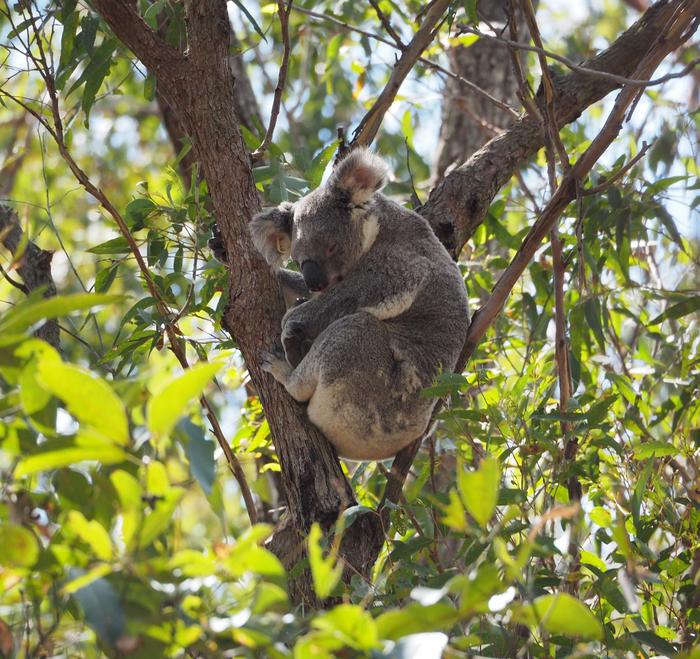
Credit: Courtney Morgans
Financial payments made by land developers to offset their impacts on threatened species may fall short, according to University of Queensland-led research.
Professor Jonathan Rhodes from the School of the Environment focused on koala populations in the fast-developing South East Queensland region and a government scheme which allows developers to make financial payments to compensate for environmental consequences.
“Just like when you make a financial contribution to offset your carbon emissions when purchasing a flight, developers can make a financial payment to the Queensland Government to offset their impacts on koala habitat,” Professor Rhodes said.
“These payments are then used to plant trees to restore koala habitat in offset sites elsewhere.
“But we found that when suitable places to restore koala habitat are difficult to find, the financial payments required under the Queensland Environmental Offset Policy are often insufficient to achieve its intended outcomes and this is a major problem.
“In the South East Queensland region, only 0.7 of 13.4 hectares of impacts on koala habitat offset through financial payments since 2018 so far have offset sites in place and this is concerning for the future of this beloved, endangered species.
“Unfortunately, land supply can make suitable offset sites hard to find and this pushes up the cost of delivering habitat restoration and securing those sites in the long-term can fail to guarantee sufficient gains in habitat to counterbalance losses.”
Professor Rhodes said funding from developer payments may be insufficient to buy enough offset sites for habitat restoration.
“South East Queensland is the most densely human-populated area in the state, growing from 2.4 million people in 2001 to 3.5 million people in 2016, with 5.3 million people expected by 2041,” Professor Rhodes said.
“It is also home to an enormous number of threatened species, including some of the most significant koala populations in Australia which have declined 50 to 80 per cent over the past two decades.
“This problem will become worse as the region expands and competition for land for development intensifies, making offset sites either impossible to find or more expensive to secure.”
The study mapped and modelled development in eight Local Government Areas (LGAs) within the South East Queensland Planning Region, applying ecological data and projecting anticipated development and offset outcomes.
While the researchers propose some solutions, they also call for consideration of immediate changes to the current offset policy.
“On one hand, financial payments by developers can provide flexibility for the State Government to deliver the most effective offsets to help threatened species such as koalas, but on the other hand, it’s essential that developers pay the true cost of those offsets,” Professor Rhodes said.
“Otherwise, offsets will fall short of compensating for habitat losses and species will continue to decline or taxpayers via the State Government will have to make up the shortfall in developer contributions.”
The research is published in People and Nature.
Journal
People and Nature
DOI
10.1002/pan3.10494
Article Title
Performance of habitat offsets for species conservation in dynamic human-modified landscapes
Article Publication Date
10-Jul-2023