

• HOME
  • NEWS
  • EXPLORE
    • CAREER
      • Companies
      • Jobs
    • EVENTS
    • iGEM
      • News
      • Team
    • PHOTOS
    • VIDEO
    • WIKI
  • BLOG
  • COMMUNITY
    • FACEBOOK
    • INSTAGRAM
    • TWITTER
Sunday, May 17, 2026
BIOENGINEER.ORG
No Result
View All Result
  • Login
  • HOME
  • NEWS
  • EXPLORE
    • CAREER
      • Companies
      • Jobs
        • Lecturer
        • PhD Studentship
        • Postdoc
        • Research Assistant
    • EVENTS
    • iGEM
      • News
      • Team
    • PHOTOS
    • VIDEO
    • WIKI
  • BLOG
  • COMMUNITY
    • FACEBOOK
    • INSTAGRAM
    • TWITTER
  • HOME
  • NEWS
  • EXPLORE
    • CAREER
      • Companies
      • Jobs
        • Lecturer
        • PhD Studentship
        • Postdoc
        • Research Assistant
    • EVENTS
    • iGEM
      • News
      • Team
    • PHOTOS
    • VIDEO
    • WIKI
  • BLOG
  • COMMUNITY
    • FACEBOOK
    • INSTAGRAM
    • TWITTER
No Result
View All Result
Bioengineer.org
No Result
View All Result
Home NEWS Science News Biology

Designer cells: Artificial enzyme can activate a gene switch

Bioengineer by Bioengineer
May 22, 2018
in Biology
Reading Time: 2 mins read
0
Share on FacebookShare on TwitterShare on LinkedinShare on RedditShare on Telegram
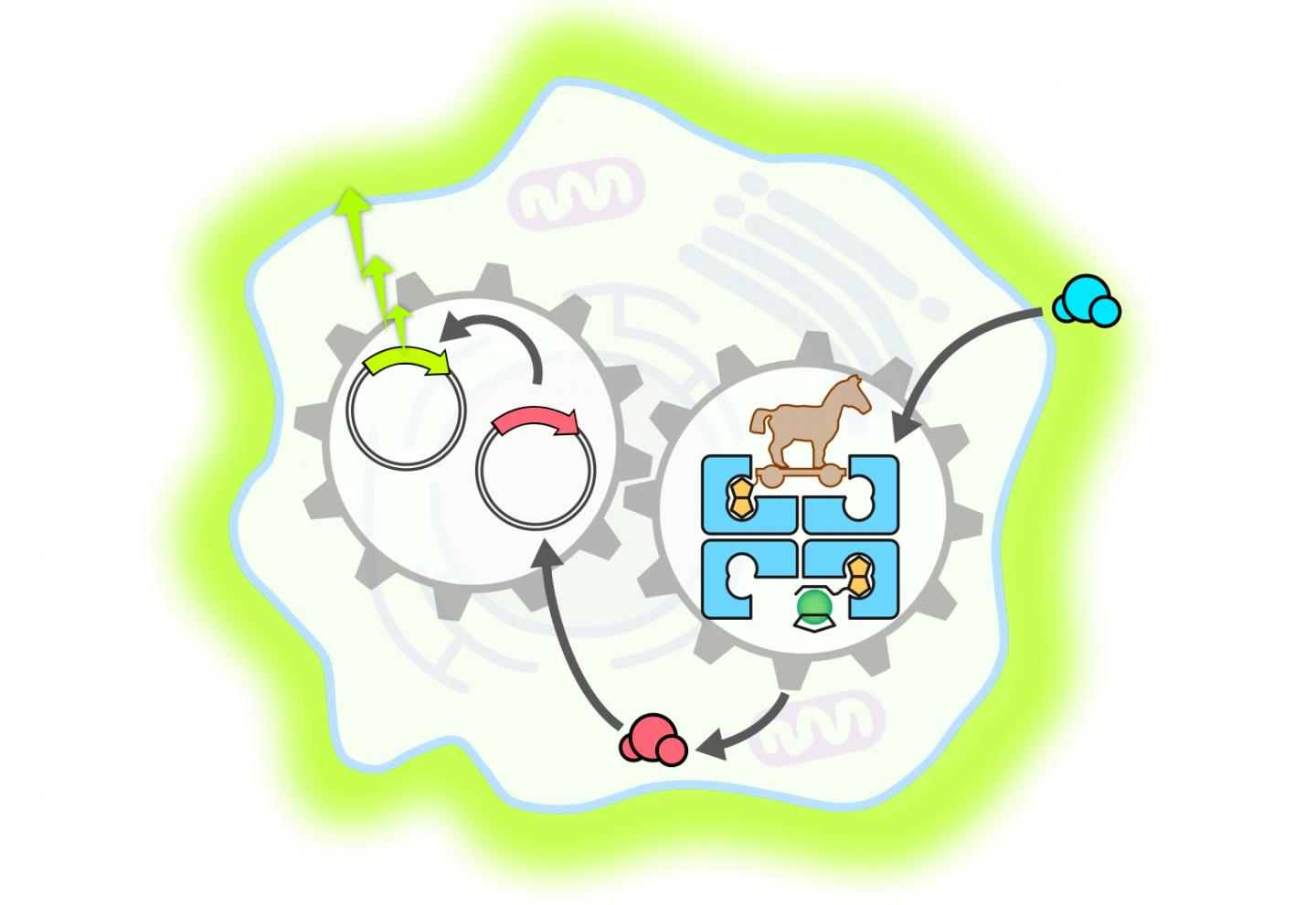
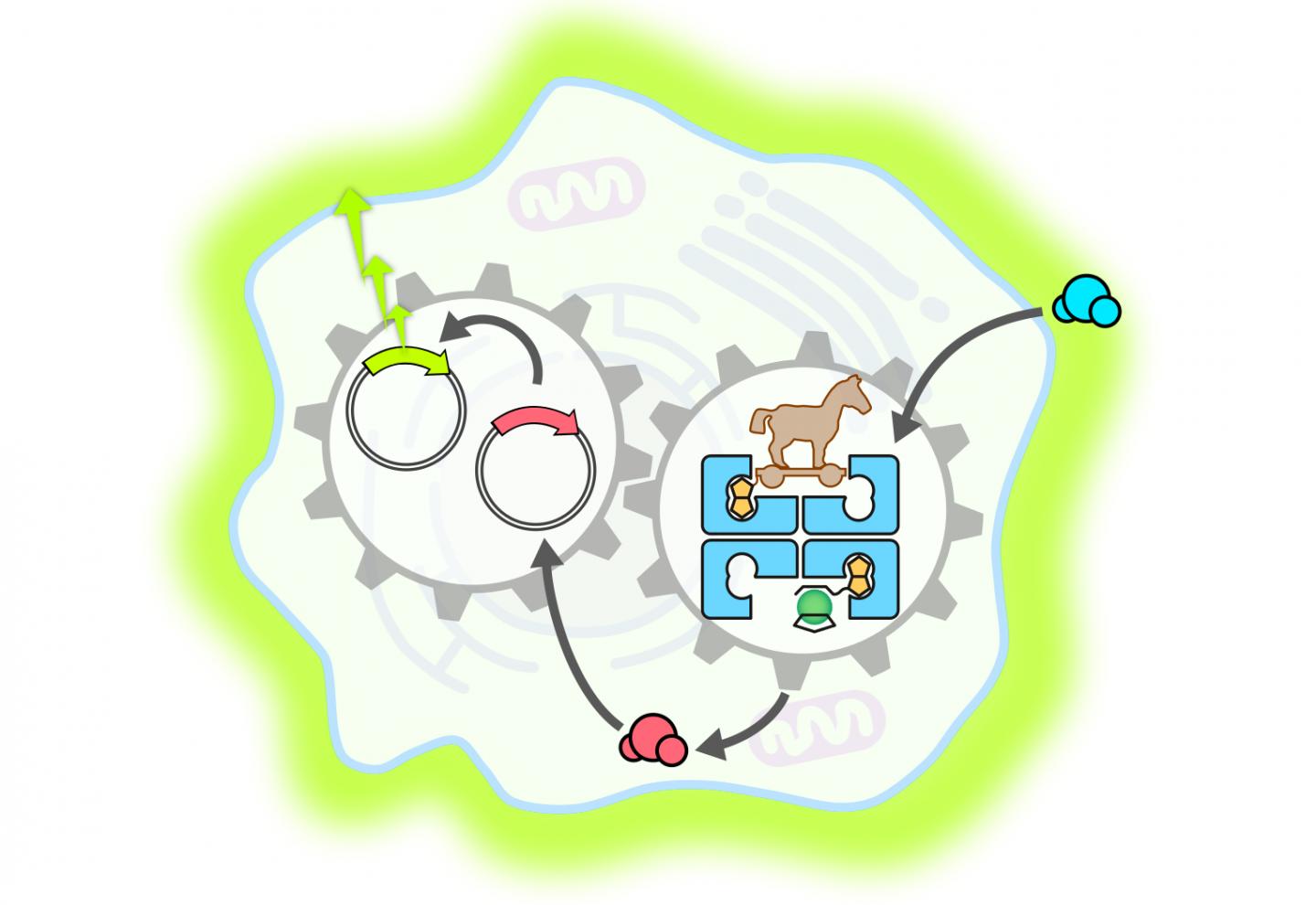
IMAGE

Credit: University of Basel, Yasunori Okamoto

Complex reaction cascades can be triggered in artificial molecular systems: Swiss scientists have constructed an enzyme than can penetrate a mammalian cell and accelerate the release of a hormone. This then activates a gene switch that triggers the creation of a fluorescent protein. The findings were reported by researchers from the NCCR Molecular Systems Engineering, led by the University of Basel and ETH Zurich.

Nature relies on enzymes to accelerate energy-intensive biochemical reactions that are necessary for the preservation of life. However, natural enzymes are not all equally suited for all reaction types. Artificially created catalysts are much more versatile, as they can promote many more chemical synthesis processes.

There is therefore great potential in introducing artificial catalysts into living cells and organs in order to modify cell functions on a genetic level or to create a drug from a harmless precursor in the cell itself. However, such catalysts often work only under strictly controlled conditions that are almost impossible to achieve in living cells.

Cascade of artificial components

To overcome this restriction, researchers from the Universities of Basel (Professor Thomas Ward) and Geneva (Professor Stefan Matile) and from ETH Zurich (Professor Martin Fussenegger) developed a small-molecule catalyst that can control a gene switch. If this switch is activated, the desired cell function is triggered.

For the current study, the researchers produced a metalloenzyme – a biocompatible protein in which a catalytically active metal fragment (in this case ruthenium) is incorporated. With this method, they succeeded for the first time in developing an artificial metalloenzyme that was able to penetrate a mammalian cell.

Once in the cell, the metalloenzyme – like a Trojan horse – deployed its catalytic function and accelerated the production of a particular thyroid hormone. This hormone then activated a synthetic gene switch that led to the creation of a fluorescent protein called luciferase.

A new kind of chemistry in living organisms

The study, published in Nature Communications, proves the feasibility of an innovative approach that targets the development of cell functions and aims to complement traditional biochemical processes. The work is a good example of the opportunities offered by the combination of synthetic biology and organometallic chemistry for the control of cell functions in living organisms.

###

Media Contact

Cornelia Niggli
[email protected]
@UniBasel_en

http://www.unibas.ch/

Original Source

https://www.unibas.ch/en/News-Events/News/Uni-Research/Artificial-enzyme-can-activate-a-gene-switch.html http://dx.doi.org/10.1038/s41467-018-04440-0


Share13Tweet8Share2ShareShareShare2

Related Posts

Uncovering C. elegans Immunity via Genetic Screens — Biology

Uncovering C. elegans Immunity via Genetic Screens

May 16, 2026
Single mother must adapt swiftly — the survival of her colony depends on it — Biology

Single mother must adapt swiftly — the survival of her colony depends on it

May 15, 2026

Why Are Nearly Everyone Right-Handed? It Might Be Linked to How We Learned to Walk

May 15, 2026

Excessive Neuronal Activity Initiates Severe Autoimmune Brain Disorder

May 15, 2026
Please login to join discussion

POPULAR NEWS

  • Research Indicates Potential Connection Between Prenatal Medication Exposure and Elevated Autism Risk

    844 shares
    Share 338 Tweet 211
  • New Study Reveals Plants Can Detect the Sound of Rain

    730 shares
    Share 291 Tweet 182
  • Salmonella Haem Blocks Macrophages, Boosts Infection

    62 shares
    Share 25 Tweet 16
  • Breastmilk Balances E. coli and Beneficial Bacteria in Infant Gut Microbiomes

    58 shares
    Share 23 Tweet 15

About

We bring you the latest biotechnology news from best research centers and universities around the world. Check our website.

Follow us

Recent News

Evaluating Corporate Transitions with Asset-Based Planning

Interacting with an AI Doctor Before In-Person Consultations Enhances Cancer Patients’ Comprehension and Lowers Anxiety

Cerebellar Growth Links Brain Maturation and Language

Subscribe to Blog via Email

Enter your email address to subscribe to this blog and receive notifications of new posts by email.

Join 82 other subscribers
  • Contact Us

Bioengineer.org © Copyright 2023 All Rights Reserved.

Welcome Back!

Login to your account below

Forgotten Password?

Retrieve your password

Please enter your username or email address to reset your password.

Log In
No Result
View All Result
  • Homepages
    • Home Page 1
    • Home Page 2
  • News
  • National
  • Business
  • Health
  • Lifestyle
  • Science

Bioengineer.org © Copyright 2023 All Rights Reserved.
