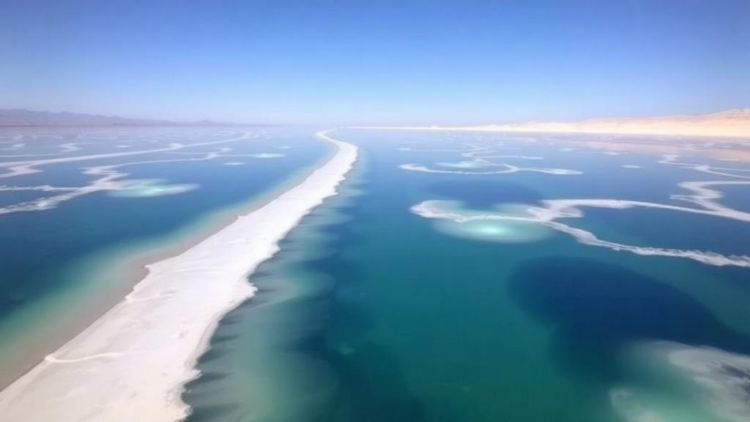
Every liter of freshwater produced by a desalination plant leaves behind roughly 1.5 to 2.0 liters of brine, a hypersaline concentrate that can carry up to twice the salt load of seawater. For decades this effluent has been treated as an unavoidable nuisance, piped back into the ocean or pumped into deep wells. But a new review published in Advances in Industrial and Engineering Chemistry argues that the world’s fastest-growing water technology is simultaneously generating one of its most underexploited resource streams. With more than 300 million people already depending on desalinated water and global contracted capacity reaching 109.22 million cubic meters per day, the authors contend that brine management has become a pressing environmental and economic challenge that demands a fundamental rethink.
The scale of the disposal problem is considerable. Coastal discharge can deliver salinity shocks to marine ecosystems, harming corals, seagrasses and shellfish that cannot tolerate hypersaline conditions. Elevated salinity disrupts the osmotic balance of marine organisms, causing dehydration, impaired reproduction and elevated mortality among juvenile fish and larvae. Chemical residues from antiscalants, coagulants and chlorine-based disinfectants add a toxic dimension, while heavy metals such as lead, mercury and chromium, released through pipeline and equipment corrosion, accumulate in marine sediments and can bioaccumulate through the food chain. Thermal desalination plants, which use multi-stage flash and multi-effect distillation, discharge brine at elevated temperatures that can trigger thermal shock in sensitive species and promote algal blooms, whereas reverse osmosis plants produce cooler brine with fewer temperature-related impacts.
Inland disposal carries its own hazards. Deep-well injection risks aquifer salinization if brine migrates through geological formations into freshwater reserves, and poorly lined evaporation ponds can leak salt and contaminants into surrounding soils and groundwater. Regulators have responded with an increasingly complex patchwork of rules. The United Nations Environment Programme recommends limiting discharge salinity to no more than 5 percent above ambient seawater, while the International Maritime Organization’s MARPOL Convention classifies brine as non-harmful only if pre-treated to remove toxic additives. In the United States, the Environmental Protection Agency enforces limits on total dissolved solids and boron under the Clean Water Act, and California’s Carlsbad plant now recovers 98 percent of its brine for industrial salt production. Saudi Arabia mandates offshore diffuser systems, and the United Arab Emirates caps brine temperature at 3 degrees Celsius above ambient seawater.
Yet the same chemistry that makes brine an environmental liability makes it a potential treasure trove. Sodium chloride constitutes roughly 60 to 70 percent of the dissolved solids in brine and can feed the chlor-alkali, Solvay and Hargreaves industrial processes. Magnesium, present at 1350 to 1660 milligrams per cubic decimeter, can be precipitated as magnesium hydroxide and converted into fertilizers or magnesium oxide. Calcium supports the production of gypsum and calcium carbonate, materials consumed at more than 200 million and 100 million tons per year worldwide respectively. Potassium and sulfate are valuable for fertilizers, and trace elements including strontium, boron, rubidium and cesium serve niche markets in drilling fluids, glass and electronics.
The most coveted target is lithium. Although seawater-derived brine contains only about 0.17 milligrams of lithium per cubic decimeter, surging battery demand has strained terrestrial supply chains and focused attention on unconventional sources. Recent pilot projects have achieved lithium concentrations 43,000 times seawater levels through iterative membrane sieving, and electrochemical intercalation and manganese dioxide-based adsorption offer selective extraction routes. Market analyses project that global demand for lithium will rise by 300 percent by 2030, with magnesium demand growing 50 percent, underscoring the strategic value of securing these elements from an existing industrial waste stream rather than opening new mines.
Brine also offers a surprising climate benefit. Its high magnesium and calcium content makes it a potent medium for carbon dioxide mineralization, in which carbonation reactions convert these ions into stable carbonates such as magnesium carbonate and calcium carbonate. The process can sequester up to 2 tons of carbon dioxide per ton of magnesium while producing marketable materials for cement and soil stabilization. A California brackish water treatment plant already produces calcium carbonate pellets that offset 15 percent of its operational emissions, and electrodialysis-coupled carbonation systems have demonstrated feasibility at pilot scale. Advances in pH control and antiscalant-free precipitation are narrowing the gap between laboratory success and commercial deployment.
The salinity gradient between brine and freshwater represents a third avenue of value: renewable energy. Pressure retarded osmosis and reverse electrodialysis harness the chemical potential difference across semi-permeable membranes, and pilot-scale systems have achieved power densities of 2 to 4 watts per square meter. A 240 cubic meter per day pilot plant combining seawater reverse osmosis with pressure retarded osmosis demonstrated a potential 20 percent energy reduction, while hybrid reverse electrodialysis systems integrated with nanofiltration aim to offset desalination energy costs by 20 to 30 percent. Each approach has trade-offs: pressure retarded osmosis delivers higher power density but is more vulnerable to membrane fouling, whereas reverse electrodialysis offers more stable output with lower pretreatment demands.
The technology portfolio for brine valorization is expanding rapidly. Nanofiltration serves as a pretreatment that separates monovalent from divalent ions, generating enriched streams for targeted extraction, while ultra-high pressure reverse osmosis, osmotically assisted reverse osmosis and high-pressure nanofiltration overcome the extreme osmotic pressures of concentrated brines. Electrodialysis with bipolar membranes produces acid and alkaline solutions, and capacitive deionization achieves unprecedented lithium selectivity through electrochemical adsorption. Eutectic freeze crystallization offers an energy-efficient alternative to thermal evaporation for recovering high-purity sodium and potassium chlorides, and membrane distillation-crystallization enables zero-liquid discharge while recovering gypsum and salt. Even biotechnology is entering the field, with halophilic microbes and algal biosorption providing low-energy pathways for metal recovery.
Real-world deployments are beginning to validate the concept. Saudi Arabia’s Water Authority has developed pilot projects recovering magnesium, calcium and sodium chloride from brine, and the Shoaiba nanofiltration facility generates magnesium-enriched streams of up to 1530 milligrams per cubic decimeter for drinking water supplementation and liquid fertilizers. The UAE’s Masdar Initiative has integrated brine management into its sustainability goals, and the EU-funded SEA4VALUE project has demonstrated a modular multimineral recovery process. In the United States and Europe, brine-to-energy pilots are testing osmotic power generation, though scaling these systems remains technically and economically difficult.
Significant barriers persist. Concentrating hypersaline brine can demand 10 to 15 kilowatt-hours per cubic meter, far above the 3 to 4 kilowatt-hours of standard reverse osmosis, and electrochemical lithium extraction currently requires more than 20 kilowatt-hours per kilogram, exceeding terrestrial mining costs by 50 percent. Adsorption systems that perform well in controlled settings lose efficiency in real brine matrices laden with competing ions, and capacitive deionization electrodes degrade during continuous operation. The review’s authors argue that the path forward lies in modular designs, artificial intelligence-driven process optimization, ion-selective membranes including graphene oxide composites, and emerging photoelectrochemical methods that have demonstrated lithium recovery rates of up to 90 percent at around 5 kilowatt-hours per kilogram. Integrated with renewable energy and circular economy frameworks such as the EU’s ZERO BRINE project, brine mining could transform desalination from a water-security measure into a resource-positive industry aligned with the United Nations Sustainable Development Goals on clean water and climate action.
Subject of Research: Recovery of minerals, carbon dioxide sequestration and energy generation from desalination brine
Article Title: Challenges, opportunities, and technological advances in desalination brine mining: a mini review
Article References: Lee, J., & Lee, S. (2025). Challenges, opportunities, and technological advances in desalination brine mining: a mini review. Advances in Industrial and Engineering Chemistry, 1(1), Article 7. https://doi.org/10.1007/s44405-025-00007-y
Image Credits: AI Generated
DOI: 10.1007/s44405-025-00007-y
Keywords: desalination, brine mining, lithium extraction, magnesium recovery, CO2 sequestration, salinity gradient power, reverse osmosis, nanofiltration, electrodialysis, zero liquid discharge, circular economy, water scarcity
Cite Scienmag News
APA MLA Chicago
Faith Mcneil. (October 4, 2026). Desalination Brine: The Salty Waste Stream Becoming a Mine for Lithium, Magnesium and Clean Energy. Scienmag. https://scienmag.com/desalination-brine-the-salty-waste-stream-becoming-a-mine-for-lithium-magnesium-and-clean-energy/
Faith Mcneil. “Desalination Brine: The Salty Waste Stream Becoming a Mine for Lithium, Magnesium and Clean Energy.” Scienmag, 4 October 2026, https://scienmag.com/desalination-brine-the-salty-waste-stream-becoming-a-mine-for-lithium-magnesium-and-clean-energy/. Accessed 4 October 2026.
Faith Mcneil. “Desalination Brine: The Salty Waste Stream Becoming a Mine for Lithium, Magnesium and Clean Energy.” Scienmag. October 4, 2026. https://scienmag.com/desalination-brine-the-salty-waste-stream-becoming-a-mine-for-lithium-magnesium-and-clean-energy/
Copy citation Download RIS
Tags: brine management challengesbrine miningCircular economyclean energy from brineCO2 sequestrationdesalinationdesalination brine recyclingdesalination environmental impactelectrodialysisheavy metals in desalination effluenthypersaline waste streamlithium extractionlithium extraction from brinemagnesium recoverymagnesium recovery from seawatermarine ecosystem salinity stressnanofiltrationocean ecosystem protectionreverse osmosissaline wastewater treatmentsalinity gradient powersustainable water desalinationwater scarcityzero liquid discharge