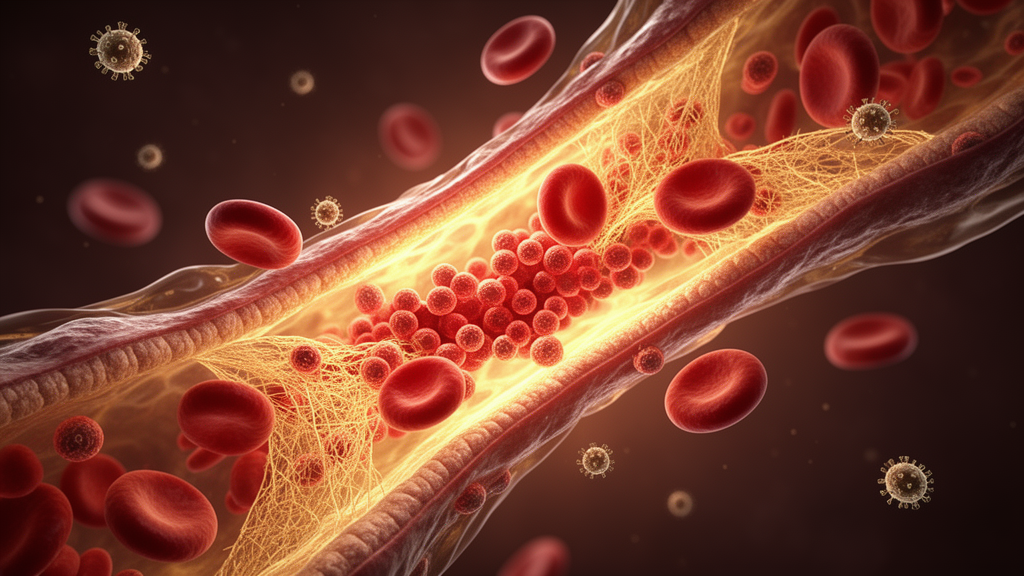
A retrospective cross-sectional study published in BMC Infectious Diseases has identified specific platelet kinetic phenotypes that are associated with disseminated intravascular coagulation (DIC) in patients with laboratory-confirmed dengue. The research, led by Bashir Abdrhman Bashir and colleagues, aimed to clarify the relationship between platelet behavior and coagulation status, a connection that remains incompletely characterized in current medical literature. By integrating platelet kinetics with coagulation dysfunction, the study explores a new framework for understanding the hemostatic complications of dengue fever.
The study included 334 patients with laboratory-confirmed dengue. The researchers classified concurrent laboratory findings using the International Society on Thrombosis and Haemostasis (ISTH) 2001 overt DIC score, which distinguishes between patients with scores below 5 and those meeting the threshold of 5 or higher for overt DIC.
Among the 334 patients, 309 (92.5%) had ISTH scores below 5, indicating they did not meet the criteria for overt DIC, while 25 patients (7.5%) met the threshold. The researchers identified four exploratory platelet kinetic phenotypes: inadequate response, hyperdestructive, hypoproductive, and lazy-suppressed.
The hyperdestructive phenotype was the most common, observed in 167 patients (50.0%), followed by the inadequate response phenotype in 73 patients (21.9%). The lazy-suppressed phenotype was present in 57 patients (17.1%), while the hypoproductive phenotype was the least common, affecting 37 patients (11.1%).
Overt DIC occurred in 3 out of 73 patients (4.1%) with the inadequate response phenotype, 21 out of 167 patients (12.6%) with the hyperdestructive phenotype, 0 out of 37 patients (0.0%) with the hypoproductive phenotype, and 1 out of 57 patients (1.8%) with the lazy-suppressed phenotype. A Fisher–Freeman–Halton exact test yielded a p-value of 0.0043, indicating a statistically significant association between the phenotypes and the presence of overt DIC.
The researchers also evaluated three composite hemostatic indices: the Thrombo-Platelet Consumption Ratio (TPCR), the Platelet-Coagulation Imbalance Index (PCI-I), and the Platelet-Coagulation Dissociation Index (PCDI). These indices were assessed using receiver operating characteristic (ROC) analyses to determine their discriminatory power for overt DIC. The apparent area under the curve (AUC) values were 0.941 for D-dimer, 0.953 for TPCR, 0.960 for PCI-I, and 0.945 for PCDI, suggesting high discriminatory performance for all markers.
Although the PCI-I demonstrated the highest AUC at 0.960, the study notes that its discriminatory performance was not statistically superior to the other biomarkers after adjustment for multiple comparisons.
The study concludes that exploratory platelet kinetic phenotypes are associated with concurrent ISTH-defined overt DIC status in dengue patients. However, the authors emphasize that these findings do not establish prediction of clinical outcomes. The composite indices, while showing high apparent discrimination, share components with the reference score, which creates incorporation bias.
This research contributes to the understanding of hemostatic phenotypes in dengue by integrating platelet kinetics and coagulation dysfunction across the spectrum of DIC.
Subject of Research: Association between platelet kinetic phenotypes and disseminated intravascular coagulation in dengue patients
Article Title: Hemostatic phenotypes in dengue: integrating platelet kinetics and coagulation dysfunction across the spectrum of disseminated intravascular coagulation
Article References: Bashir, B. A., Mohamed, H. M., Ghazawi, K. F., Mohamed, G. A., & Ibrahim, S. R. M. (2026). Hemostatic phenotypes in dengue: integrating platelet kinetics and coagulation dysfunction across the spectrum of disseminated intravascular coagulation. BMC Infectious Diseases. https://doi.org/10.1186/s12879-026-14817-y
Image Credits: AI Generated
DOI: 10.1186/s12879-026-14817-y
Keywords: dengue fever, disseminated intravascular coagulation, platelet kinetics, coagulation dysfunction, hemostatic phenotypes, ISTH DIC score, thrombocytopenia, retrospective study, cross-sectional analysis, TPCR index, PCI-I index, PCDI index, D-dimer, clinical hematology, infectious disease complications, platelet consumption, coagulation biomarkers, dengue complications, hemostasis, clinical validation
News Source: Ophelia Keating. (November 13, 2026). Dengue Study Links Platelet Kinetics to DIC Severity. Scienmag.